‘I had an affair but couldn’t understand why’: How your childhood may hold clues to what happened
An intense attraction can feel impossible to explain, particularly when it leads somewhere you never intended to go. Could old emotional wounds be part of the story? A psychotherapist explains how our earliest relationships can influence the way we connect as adults and why they could lead to infidelity.
 Amy Mica Marsden
Words: Amy Mica Marsden. Images: Shutterstock.
People who’ve had affairs are often labelled as ‘bad’ people, but there are a multitude of reasons behind infidelity that could help us to understand the causes.
According to a 2016 study, 20-25% of married partners admitted they had cheated sexually in their relationship. In another survey, 13% of women said they’d had sex with someone other than their spouse while married (compared with 20% of men).
Though this doesn’t make it ‘okay’ or excuse the behavior, if you’re among that percentage, the shame you may feel can actually make things worse rather than better.
Psychotherapist Carol Covelli, LCSW, believes shame and self-loathing are actually enemies of healing and growing from an affair – and recognising childhood triggers may be the solution.
‘Guilt is the regret for an action or behavior (“I did something bad”),’ she explains. ‘Shame is devaluing yourself because of the action or behavior (“I am bad because I did this”)… When [a woman who has had an affair] feels shame, she keeps herself and her feelings hidden where self-judgment perpetuates and healing cannot occur.’
This means that, instead of shame and self-loathing, it can be more useful to understand why the behavior occurred in the first place.
How your childhood could explain your affair
Increasingly, psychologists and therapists are discovering that early life experiences can affect almost every aspect of our lives later on, meaning that the environment in which we grew up could influence how likely we are to cheat in adulthood.
‘Yes, there are practical aspects, such as opportunity and marital circumstances,’ says Carol, ‘but in my work, it seems that the behavior, choice, and emotional effects surrounding the affair can connect to what a woman has learned about herself and relationships from her early family life’s experiences…’
‘How she has learned to view herself, others, and the world around her, based on her history, may leave her more vulnerable to having an affair.’
When asked what kind of experiences might shape the way someone seeks love, validation, or emotional safety as an adult, Carol explains there are two things that play a key role: what a child is exposed to, and what protects them from it. In other words, the (negative) experience, and, equally, the thing they sought comfort in.
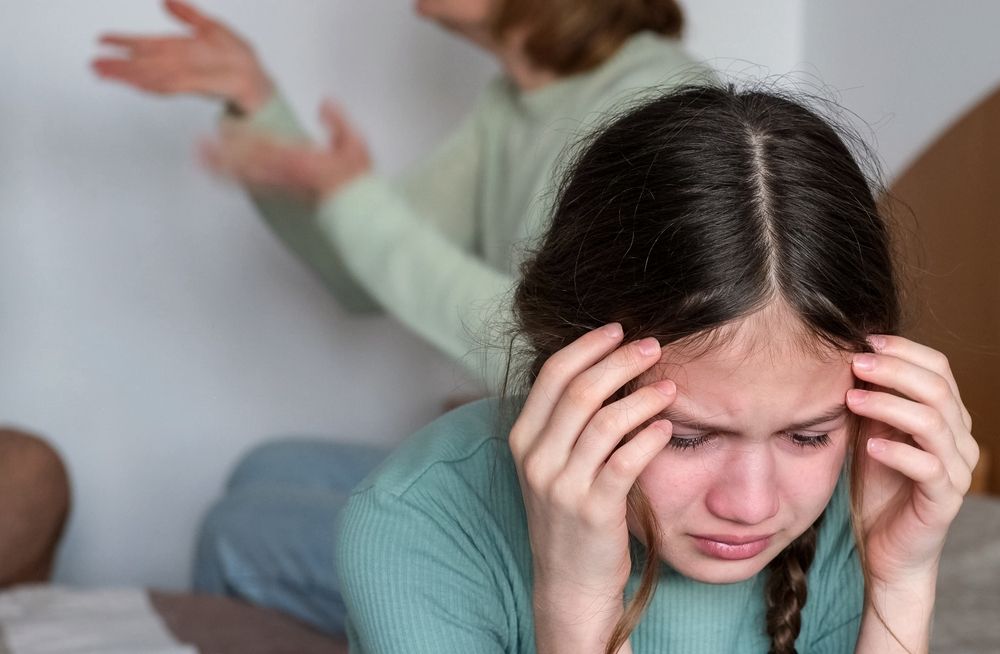
‘Adverse childhood experiences can shape a child’s belief that she doesn’t deserve love, or that she’s defective or not good enough. A singular trauma or disturbing experience, or chronic and complex trauma, can all contribute.’
Carol also notes that parents who are physically or emotionally distant, who put their children in the role of caretaker (‘parentifying’), or who don’t offer a solid support system can all affect how a person treats emotional bonds as an adult.

What makes affairs more likely?
According to a survey by the extramarital dating app Ashley Madison, 29% of surveyed people who’ve had an affair say they did it because they ‘wanted more attention and affection’, while 20% say they did it to boost their self-esteem. These urges in particular can often stem from deep emotional wounds sustained in childhood.
‘Common themes from childhood I’ve noticed in working with women in midlife who struggle with emotional boundaries (and who have had affairs) are connected to situations where usually a father, but can also be her mother, was not emotionally available to her,’ says Carol. She cites emotional distance, divorce, abandonment (outside of death), and death as potential triggers.
‘When a parent isn’t emotionally available to the child, that child will carry painful feelings of longing that must be suppressed as a matter of survival, along with self-blame and negative self-beliefs that become her truth.’
‘When she encounters someone who activates these underlying feelings of longing or self-blame, she may cast this person as the unavailable parent [in her mind], seeking to resolve these painful feelings through them.’
Carol notes that many will not even be consciously aware that this is happening, instead putting it down to intense chemistry or attraction. In turn, this can mean the strength of the emotional attraction can override her ability to resist.

What an affair says about you and your childhood
Carol believes affairs can be an indication (and a direct result) of past painful experiences with prominent adults in your life ‘that still feel emotionally and physically as if they happened yesterday.’
‘Affairs are inherently based in fantasy and escapism,’ she goes on to say, ‘and it’s this aspect, where the affair is sealed off from day-to-day life, that can allow her to believe she is finding fulfillment of her unmet needs.’
This fantasy and escapism feel good at the time, until they come into contact with reality – often when the partner discovers the affair, or when the person having the affair receives a wake-up call: ‘What can then resurface is the original pain the affair was trying to fix, but wasn’t able to.’
Can understanding your childhood prevent an affair?
The good news is that Carol believes it’s possible to purposefully avoid this behavior if someone understands and acknowledges their childhood triggers — to a point.
‘Understanding is an important part of preventing the repetition of the same patterns, but understanding is only part of the process,’ she says.
‘[A person who had an affair] can have insight on a logical level about her history and how it contributed to unhealthy patterns and her affair, but such knowledge on its own may not be enough to stop her from making decisions that are not in her best interest.’
Carol, who is certified in Brainspotting and EMDR (Eye Movement Desensitization and Reprocessing) therapies, believes these and similar approaches can help to untangle the emotions held from childhood trauma from our nervous system’s response in adulthood.
‘Stopping the pattern happens when logic and emotion are both worked through, where she gains rational understanding and also processes her pain emotionally and somatically.’
Healing from your affair
Individual healing is independent of whether or not the relationship survives, explains Carol.
‘Part of healing is redesigning her relationship with herself. This is where she understands the unhealthy patterns she’s been living in and that what she believed to be self-sabotage is, in fact, self-protection.’
‘Moving beyond an affair is also about synthesizing her affair and personal history to find meaning and growth now and in the future.’
It’s important to note that negative childhood experiences do not guarantee an affair will happen, and equally don’t excuse the behavior. However, if an affair does occur, therapy and understanding can help a person heal and grow – and stop repeating a pattern in future relationships.
Carol Covelli, LCSW, is a US-based depth-oriented psychotherapist who works with women in midlife in the aftermath of their affair. Find her at carolcovelli.com or on LinkedIn here.