‘The shame was never ours to bear’: how Ruth Ellis’s execution scarred generations of her family
For decades, the execution of Ruth Ellis cast a long shadow over her family, shaping childhoods, relationships and a legacy of trauma. Now, after securing a historic posthumous pardon for her grandmother, Laura Enston tells us how she is reclaiming a story that was once a source of shame.
By 
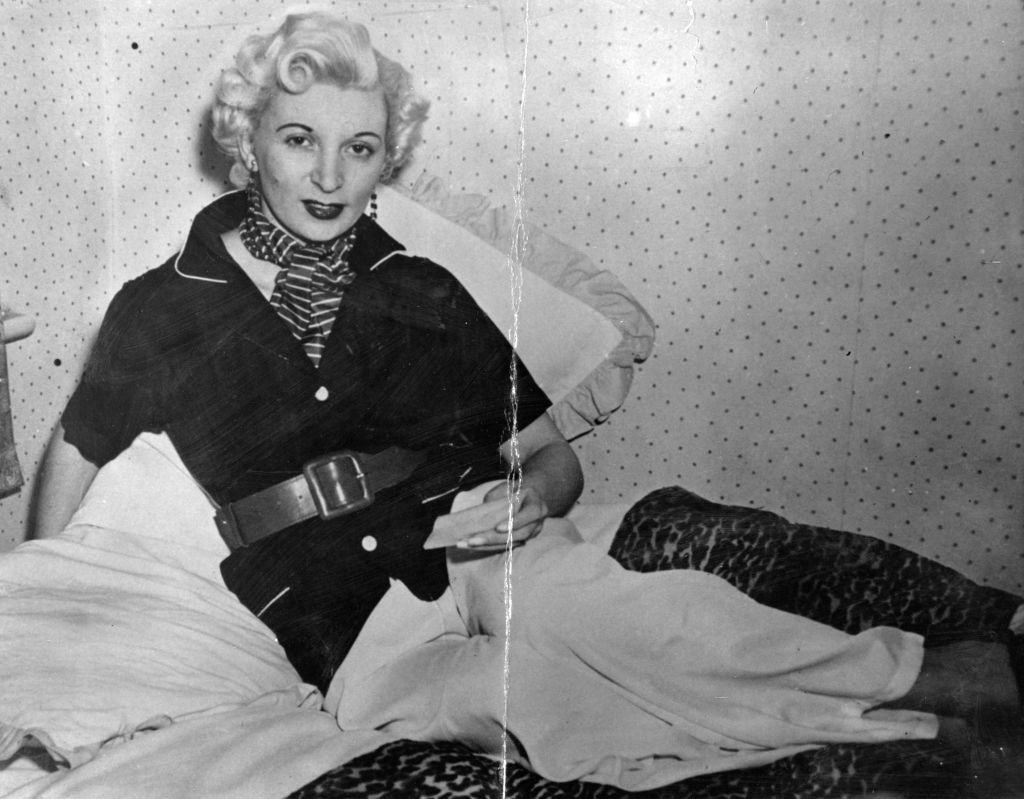
Ruth Ellis was the last woman to be hanged in Britain. But while her execution in 1955 ended her life, its consequences continued for generations. Now, her granddaughter Laura is challenging the stigma surrounding her family’s history – and confronting the lasting psychological impact of inherited trauma.
Some family histories are difficult to talk about. Others become so painful that the people who inherit them spend years trying to escape their shadow.
For Laura Enston, the granddaughter of Ruth Ellis, the last woman to be executed in Britain, her family’s past was never simply a story about a woman convicted of murder. It was a history that shaped her childhood, influenced her relationships and left behind a legacy of trauma that would take decades to understand.
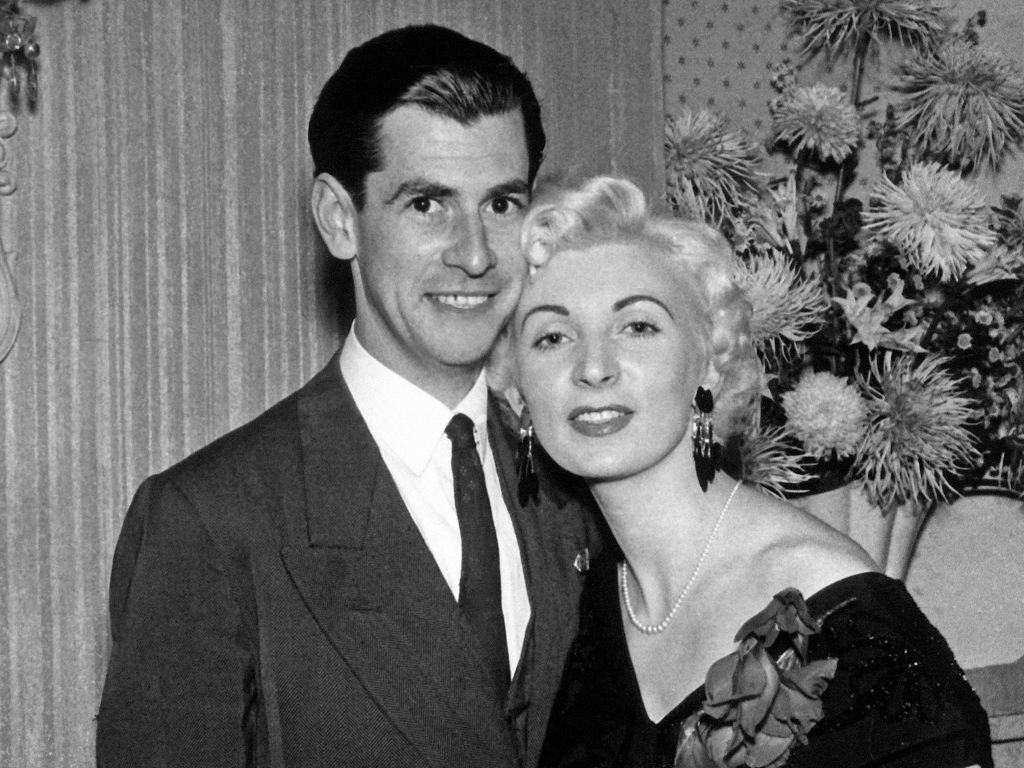
Ruth was just 28 when she was hanged at Holloway Prison on 13 July 1955, after being convicted of shooting dead her lover, upper-class racing driver David Blakely, outside a pub in Hampstead, north London.
She left behind two young children, Andy, then 10, and Georgina, then three. The consequences of her execution extended far beyond the prison walls, affecting the family members who had to grow up without her and those who came after them.
For Laura, childhood was marked by bullying, her mother’s chaotic lifestyle and a fear of being judged because of her grandmother’s history. For many years, she distanced herself from this painful legacy, worried about what it meant for her own identity.
How reading about Ruth changed Laura’s understanding
In 2023, Laura’s understanding of Ruth began to change when she read A Fine Day for a Hanging by Carol Ann Lee.
The book revealed more about the physical, sexual, financial and emotional abuse Ruth had experienced throughout her life, prompting Laura to look beyond the familiar narrative of a woman convicted of murder.
“I grew up believing this sort of fake persona, this crime of passion, this cold-blooded killer,” Laura says. “And it wasn’t until I read the book that I was literally like, ‘Oh my God.’”
Instead, she began to examine the circumstances surrounding her grandmother’s actions and the way the justice system had treated her.
That re-evaluation would eventually lead Laura to speak publicly about Ruth’s life and campaign to have the injustice surrounding her execution formally acknowledged.
How trauma can echo through generations
The psychological impact of a traumatic event does not necessarily end with the people who experience it directly.
When a family suffers a devastating loss, the consequences can be felt through relationships, parenting, family dynamics and the stories that are passed down – or left unspoken.
For Laura, Ruth’s execution was an event that happened before she was born, yet it influenced how she understood her family and how she feared others might perceive her.
Looking back, Laura believes the execution profoundly affected her mother and uncle, who were left to grow up without Ruth.
“I think when that death sentence was handed out to Ruth, the clock was started on Mum’s life and her brother’s too,” she says.
The lasting impact of losing a mother
Laura has come to see her mother’s subsequent struggles in the context of that early loss, rather than viewing them simply as a series of personal choices.
Georgina had a turbulent life, marrying four times, having six children and struggling with alcohol. Laura says none of her mother’s children lived with her.
“I had quite a difficult relationship with Mum, where I was just incredibly frustrated by her because I used to think, ‘Why do you choose to act like you do?’” she says.
“But I’ve started to realise she was so hardwired into the tragedy of it all. She had a real identity crisis and she just sort of led a life of chaos.”
Laura is careful not to suggest that she can diagnose her mother retrospectively. But learning about childhood trauma has helped her reconsider the experiences that shaped Georgina’s life.
“I realise now that she didn’t really have the capacity to be a present mother and a present wife,” she says.
For Laura, understanding this history has been a painful but important process. She can now look back at her mother with greater compassion, recognising that the impact of losing Ruth may have extended far beyond what the family was able to acknowledge at the time.
How childhood adversity can affect a child’s sense of safety
As chartered psychologist Dr Ravi Gill explains, adverse childhood experiences can have lasting consequences for mental health and wellbeing.
Research into adverse childhood experiences, commonly known as ACEs, has linked childhood adversity with an increased risk of later mental health difficulties. However, these experiences do not determine an individual’s future, and people respond to trauma in different ways.
Dr Gill explains that when children lose a parent or grow up without a stable family environment, their sense of safety and hope can be profoundly affected.
Reflecting on Ruth’s children, Dr Gill says: “You’ve essentially taken away those two children’s sense of safety, sense of hope.”
The loss of a parent can affect a child’s understanding of the world, particularly when that loss occurs in traumatic circumstances. The consequences may be compounded when the remaining family is struggling with grief, instability or the wider impact of what happened.
For some, the effects may emerge in childhood. For others, difficulties may become more apparent later in life, particularly when relationships or other circumstances bring painful memories to the surface.
The trauma that continued into the next generation
In Ruth’s family, the consequences continued into the next generation. Laura’s uncle struggled with his mental health, developed schizophrenia and died by suicide at the age of 37.
Laura does not claim that Ruth’s execution alone explains what happened to him. But she believes his experiences underline the importance of recognising the cumulative effects of childhood adversity, particularly when children have little support to help them process it.
Her mother and uncle grew up in an era when conversations about trauma and mental health were far less common.
“They never got any help with it,” Laura says of her mother and uncle.
She believes that greater awareness of the psychological impact of childhood experiences has helped her make sense of her family’s history – and has strengthened her determination to stop the cycle from continuing.
“I wanted to break the cycle of tragic women in my family,” she says. “Otherwise it just goes on and on and on. Where does it end?”
Growing up afraid of being judged for her grandmother’s crime
One of the most difficult aspects of Laura’s childhood was the fear that she would be judged for something her grandmother had done.
Although Laura was not responsible for Ruth’s actions, the association could not easily be separated from her family’s identity.
When Laura was seven, her mother introduced her and her younger siblings to Ruth’s story by making them watch Dance with a Stranger, the 1985 film about her grandmother’s life. Laura remembers being confused by what she was watching.
“I didn’t want to discuss it, didn’t want to talk about it. I didn’t want any association with it whatsoever,” she says.
Rather than helping her understand her family’s history, the experience prompted her to distance herself from it. Over time, that avoidance became a secret she carried into adulthood.
How labels and stigma can stay with a child
Dr Gill explains how labels attached to a parent can follow a child into everyday life, including the school playground.
Questions about an absent parent or comments about why they are not there may seem innocent to the person asking them. But for a child already coping with loss or family difficulties, such remarks can leave a lasting impression.
“As a trauma victim, those are the ones that are going to imprint with you and stay,” Dr Gill says.
For Laura, the fear of being judged extended well beyond childhood.
She worried that people might make assumptions about her character because of her grandmother’s conviction, despite having had no involvement in the events.
“I was absolutely petrified of what people might think of me if they found out,” she says.
“I remember sitting in interviews thinking, ‘What if they find out? I’m never going to get this job.’”
She even considered avoiding a particular career path because she feared employers might not want to hire her if they knew her family history.
The secret Laura carried into adulthood
Laura became skilled at keeping that part of her life private. She had a different surname from her grandmother, and people she had known for decades had no idea of the connection.
The secret affected her both personally and professionally, even when nobody else knew it existed.
Shame can be particularly difficult because it reaches beyond an event and affects how someone feels about themselves. While guilt concerns something a person believes they have done wrong, shame can create a sense that there is something wrong with who they are.
For descendants of people associated with notorious crimes, this can mean feeling responsible for a history they had no part in creating.
They may avoid talking about their family, distance themselves from the person at the centre of the story or worry that others will make assumptions about their character.
For Laura, stepping away from Ruth’s history was, in part, a way of protecting herself from that judgement.
But as she learned more about the circumstances of Ruth’s life, she began to see the possibility of telling a different story – one that acknowledged the crime while also recognising the abuse and injustice that surrounded it.
Re-examining the story of Ruth Ellis
The more Laura learned about her grandmother, the more determined she became to challenge the way Ruth had been remembered.
Ruth was convicted of murder at a time when the law required a death sentence for the offence. At her trial, the jury was instructed to disregard the fact that she had been badly treated by Blakely when considering the murder charge.
Today, there is a greater public understanding of domestic abuse, coercive control and the psychological consequences of sustained violence. That does not erase Ruth’s responsibility for killing Blakely, but it provides important context for understanding her circumstances.
For Laura, the discovery of Ruth’s experiences also helped her reconsider her mother’s life. Georgina had grown up with the same public narrative about Ruth, without necessarily having access to the fuller picture of the abuse her mother had endured.
“I felt also a bit sorry for my mum, because she didn’t understand this side of Ruth and she grew up believing that fake persona as well,” Laura says.
She describes feeling angry that it had taken somebody outside the family to uncover so much about Ruth’s life, but also grateful that her grandmother’s story was finally being revisited.
Why Laura decided to speak out
Laura’s decision to speak out has helped connect Ruth’s case with contemporary conversations about violence against women and girls.
It has also allowed her to challenge the stigma that affected her own family.
Alongside this work, Laura has built a successful marketing career, gained a postgraduate qualification and become a mother of two daughters. She lived in Toronto before returning to the UK to focus on correcting her grandmother’s legacy.
Her life is not defined solely by what happened to Ruth. Yet she has chosen to use her family’s experience to encourage a wider conversation about justice, abuse and the consequences of historical decisions.
What Ruth Ellis’s conditional pardon changes
In July 2026, that work reached a significant milestone when Laura and her siblings secured a posthumous conditional pardon for Ruth from King Charles, following advice from the Deputy Prime Minister and Justice Secretary.
The pardon does not overturn Ruth’s murder conviction. It formally recognises that she should not have been executed in the circumstances of her case.
For the family, it was an acknowledgement that the injustice they had spent decades seeking to address had finally been recognised.
Laura says that while the pardon does not “restore the lives that were broken,” the acknowledgement that the justice system failed her “matters profoundly to our family”.
Taking control of a story that was already being told
But Laura’s decision to speak publicly was not solely about securing the pardon. It was also about taking control of a story she had spent most of her life trying to hide.
When she learned that ITV was making A Cruel Love: The Ruth Ellis Story, she initially felt dismayed that her grandmother’s story was returning to the public eye.
But she also realised that it was happening whether she participated or not.
“I thought, ‘This train is moving with or without me,’” she says.
With a background in marketing, Laura understood how quickly a public narrative could take shape – and how little control a family might have over the way it was presented.
“If I can be part of the conversation, I can help control the narrative,” she says.
She had already begun reconsidering her relationship with her mother and grandmother. Speaking publicly offered a way to continue that process rather than retreat into silence.
“I thought by me speaking out about it, it’s going to help me heal,” she says.
Can acknowledgement help a family heal?
A formal recognition of injustice cannot undo the past. It cannot restore the years Ruth’s children spent without their mother or erase the difficulties experienced by subsequent generations.
But it can change how a family understands its history.
When a painful experience has been surrounded by stigma or silence, having the circumstances acknowledged may help relatives separate what happened from the shame they have carried because of it.
It can also create space for a more nuanced understanding of the people involved.
For Laura, Ruth is no longer defined solely by the crime that led to her execution. Her life can also be understood in the context of the abuse she experienced, the limitations of the justice system and the devastating consequences of her death for her children.
This does not mean that healing follows automatically from recognition. Grief and trauma can be complicated, and a public acknowledgement cannot resolve every difficulty experienced by a family.
Why Laura sought therapy
Reclaiming a story can offer a different relationship with the past.
Rather than feeling compelled to hide it, descendants can decide how they want to understand and discuss it. They can recognise the harm that occurred without accepting responsibility for it themselves.
For Laura, the pardon represents an important step in that process. So does the decision to talk openly about her experiences, even when doing so takes her outside her comfort zone.
She has also had therapy herself. While working in event production in Canada, she experienced an emotional reaction to a speech by motivational speaker Mel Robbins that prompted her to seek help.
Laura says she had previously compared her experiences with those of people who had endured more obvious or direct forms of abuse, dismissing her own difficulties as less significant.
“I used to almost play trauma top trumps with myself,” she says.
“What I realise now is that all trauma is valid. All trauma is worthy of conversation and therapy if needed.”
Telling her daughters the truth about Ruth
For Laura, this understanding has become particularly important because she has two daughters of her own.
When she decided to tell them about Ruth, she was determined not to pass on the same secrecy that had shaped her childhood.
She began by explaining the abuse Ruth had experienced, gradually building towards the shooting and execution. At the time, her daughters were 10 and eight.
One of them responded with a remark that has stayed with Laura.
“Mummy, it sounds like Ruth had already died,” her daughter said.
For Laura, the comment showed that her daughter had begun to understand how sustained abuse could affect a person long before their life officially ended.
She believes that talking openly about the family’s history has helped her daughters approach it without the same fear and shame she experienced.
They have taken the story in their stride, she says, and she hopes they will grow up understanding that their great-grandmother’s actions do not define them.
Why talking about family trauma matters
Laura believes that confronting the shame surrounding a traumatic event can help people develop a different relationship with their past – one in which they can acknowledge what happened without accepting responsibility for it themselves.
Her advice to other families dealing with painful histories is simple: talk about them.
“I think you’ve got to talk about this stuff,” she says. “One of my big takeaways from my upbringing was that it was just never spoken about.”
She believes that the protective barriers children build around themselves in response to trauma can remain in place long after the original danger has passed.
“I feel like by living with secrets and living with shame, living with that embarrassment, you’re never going to live a fulfilled life.”
Sharing an experience will not be right for everyone, and no one should feel pressured to disclose private family matters publicly. But Laura believes that finding a safe way to talk – whether with trusted people or a therapist – can help people stop carrying the burden alone.
‘It wasn’t my shame to take on’
She also wants people to understand that they are not responsible for the actions of their relatives.
“It wasn’t my shame, wasn’t my embarrassment to take on,” she says.
That is the message she hopes others will take from her story: that a family history can shape you without defining you, and that the judgement attached to someone else’s actions does not have to become your own identity.
For Laura, the journey has involved confronting difficult memories, rethinking her relationship with her mother and finding the confidence to speak about a history she once desperately wanted to hide.
She acknowledges that it has not been easy, and that the work of understanding trauma is ongoing. But she feels lighter now that the secret is no longer hers to carry alone.
“What I realise is shame and embarrassment doesn’t exist when it’s spoken out loud,” she says.
The execution of Ruth Ellis cannot be undone. The pain experienced by her descendants cannot simply be erased. But after more than seven decades, the family has secured formal recognition of an injustice that shaped its history.
And Laura has helped ensure that Ruth’s story is no longer told only through the crime for which she was condemned.
Her grandmother’s legacy now includes a wider conversation about domestic abuse, justice and the way trauma can echo through generations.
For a family that spent so long living under the shadow of an execution, that is a significant change.
It is also a reminder that the consequences of a traumatic event may continue long after the event itself – and that challenging the shame surrounding it can be an important part of reclaiming a family’s story.
As Laura says, “The shadow of Ruth’s execution has fallen across two generations. We have carried shame that was never ours to bear.”
Pics: Getty Images
Follow Laura on Instagram: @laura.enston
Dr Ravi Gill, CPsychol, PsyD, is a chartered psychologist specialising in trauma. For more information on her work, visit Smart Mind Health or Instagram: @dr.ravi_gill