
Why the empty nest may reveal ADHD symptoms men never knew they had
When children leave home for university, the sudden loss of family routines can expose long-hidden ADHD traits in fathers — from procrastination and time blindness to restlessness and emotional sensitivity
By 

When children leave home for university, the sudden loss of family routines can expose long-hidden ADHD traits in fathers — from procrastination and time blindness to restlessness and emotional sensitivity
Pics: Getty Images
At this time of year, when many kids make the transition to university, parents can be left with an empty nest. When children leave home, emotions can run high but in some circumstances, previously unrecognised ADHD traits may become more noticeable in fathers. We asked some neurodiversity experts why this may happen.
It goes without saying that an empty nest does not cause ADHD. However, for some parents who may have masked or had their symptoms masked for a long time, they may start wondering why their usual coping mechanisms have become less effective.
Whilst it’s normal to feel lonely without your kids around and be less busy due to having a different structured routine, for men who suddenly begin to struggle doing tasks they once did effortlessly, an empty nest may expose ADHD traits they’ve never acknowledged.
Why an empty nest can expose previously hidden ADHD traits
Perhaps best to explain why this may be the case for some men is Roman Goldvarg, President of the Global Neurodiversity Association (GNA) and Founder & CEO of Tami Space, a global ecosystem supporting neurodivergent people, families and professionals.
“One of the most overlooked things about parenting is how much external structure it creates,” he explained.
“School runs, meals, appointments, family calendars and the needs of other people create deadlines, transitions and accountability. For someone with previously unrecognised ADHD, that structure can act almost like scaffolding around executive-function difficulties.
“When the children leave home, the ADHD has not suddenly appeared. What has disappeared is some of the structure that may have been helping the person compensate for it for years.”

The family routine may have been masking ADHD symptoms
The signs are often less dramatic than people expect, he adds.
“A man may suddenly struggle to start tasks when nobody else is waiting for him, lose track of time, repeatedly postpone ordinary responsibilities, forget appointments, move between unfinished projects, or become intensely absorbed in work or a hobby while basic routines start to fall away.
“Sleep, meals and daily organisation can become less consistent, and some men experience internal restlessness or irritability rather than obvious physical hyperactivity.”
Why ADHD doesn’t suddenly start when children leave home
He is quick to point out that an empty nest does not cause ADHD, and it should not be treated as a diagnostic test.
“ADHD is neurodevelopmental, so a proper adult assessment looks for a pattern that was present much earlier in life and affected more than one area of functioning. Anxiety, depression, burnout, sleep problems and the emotional impact of children leaving home can produce similar difficulties.
“For men who recognise themselves in this, I think the most useful question is not, ‘Why am I suddenly more distracted?’ It is, ‘Was this pattern already there, and has the loss of structure simply made it much harder to compensate for?’”
When everyday structure disappears, coping strategies can too
Without family demands shaping their day, mental health counselor Amber Kovach, who works with Prosper Health, the largest health provider for neurodiverse adults in the US, explains how dads may suddenly notice certain traits that have been lying dormant.
“They could be more procrastination, forgetfulness, losing things, difficulty managing time, restlessness, unfinished projects, or trouble creating a routine without family demands shaping their day,” she explained.
“Some may also realize they have long relied on urgency, staying busy, or very specific systems to keep themselves on track or to be able to function on the next obligation.
“Parenting can sometimes create a surprising amount of external structure: school drop-offs, sports schedules, meal times, homework, appointments, and routines built around your children. For someone with previously unrecognized ADHD, that structure may have helped compensate for difficulties with organization, time management, or task initiation.
“When children leave home, those supports can suddenly disappear, making long-standing challenges more noticeable and the mask harder to keep on without the structure of the routines in place.
“Someone who has spent years functioning well because other people depended on them may be confused when they suddenly struggle with motivation or routine once those demands disappear. An empty nest doesn’t only create a feeling of sadness, for some, it creates an identity crisis to untangle.”
How some fathers may have masked ADHD for years
However, like Roman Goldvarg, she stresses the point that the important distinction is that ADHD does not suddenly begin when children leave home.
“In someone who truly has ADHD, the underlying pattern would generally have roots earlier in life, even if it was overlooked, masked, or manageable because their environment provided enough structure that they didn’t need to create it themselves originally.”
As someone who works closely with men and fathers around neurodivergence and relational conflict, psychotherapist Dipesh Patel, founder of Dipesh Patel Counseling, agrees that when the structure of caring for your kids is removed, it can start to cause issues.
“What’s been so fascinating working with so many different fathers and couples is that sometimes you would expect individuals to struggle when it comes with certain family related tasks, however sometimes the family routine itself operates as a built in external structure.
“However, sometimes when children leave home this can remove the organic structure that was there and start to bring up problems. Many times fathers with undiagnosed ADHD that become empty nesters might suddenly realize that they weren’t the ones organizing the lives of their kids, it was the other way around.
“Masking for many fathers with undiagnosed ADHD can look a number of different ways. For some fathers, they might appear like they are very hard working and might pull in late nights at work, but in reality they’re trying to keep up with the typical workload but struggling with completing work within reasonable timeframes.”
The ADHD traits that can emerge in midlife men
Another example he gives is that with fathers who have really leaned into the fun, spontaneous dad identity, suddenly may struggle with impulsivity or constantly feeling restless.
“Many fathers or dads with undiagnosed ADHD also experience various levels of rejection sensitivity. Rejection sensitivity is used to describe an emotional response that might feel imbalanced in comparison to the event that triggered it. In my experiences, many times this becomes one of the reasons why fathers finally decide to get help.
“For example, when a child leaves for university they might start calling home less frequently as part of developing independence. However, for a father with undiagnosed ADHD experiencing rejection sensitivity this might be experienced as I must not matter to them anymore.
“Sometimes as well, fathers with undiagnosed ADHD might have more reactive responses to these experiences of rejection sensitivity such as repeated calling, excessive checking, even making guilt ridden remarks such as ‘I guess you’re too busy for us now’. These protective measures often backfire as adult children might seek further distance from their fathers, and the cycle continues to get exasperated until it reaches a boiling point.
“In my experiences, many times this becomes one of the moments why fathers finally decide to get help.”
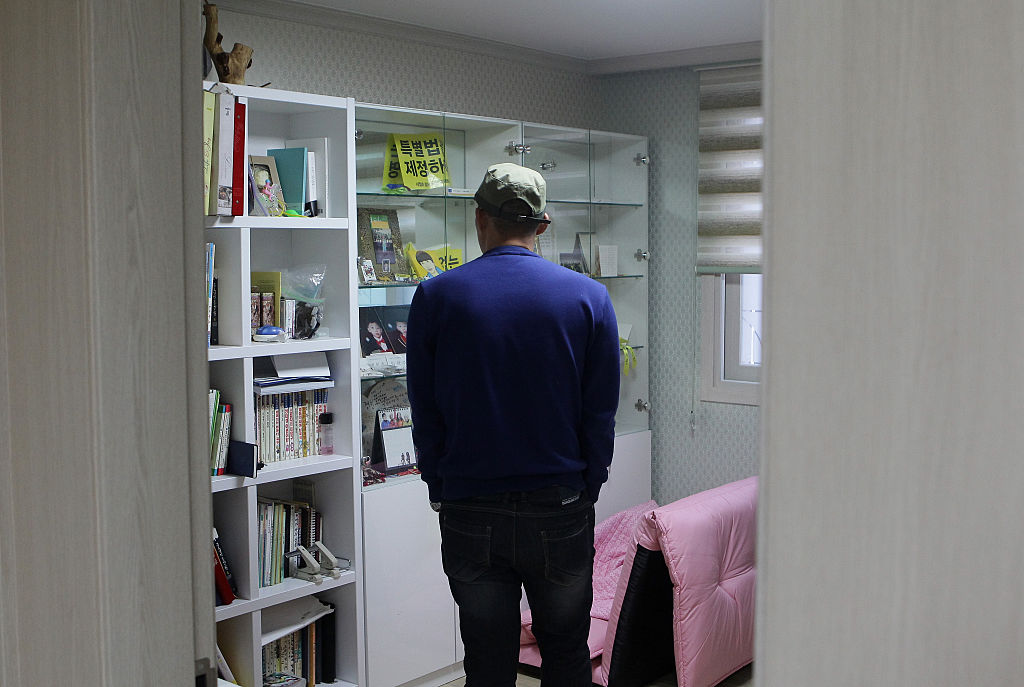
When a child’s independence feels like rejection
Again, like the other experts advise, he adds:
“ADHD sometimes can be a fickle thing to diagnose, what I would recommend for any fathers that are questioning if they might have an underlying ADHD diagnosis is to have an appropriate comprehensive evaluation with their respective providers.”
What ADHD unmasking can look like in midlife
Finally, Carla Houghton, Doctoral Candidate in Behavioral Health and founder of The Neura Architect, lists some ways in which unmasking can show up in mid-life men.
“School drop-offs, weekend soccer tournaments, and high-demand family schedules force an artificial circadian and operational rhythm. The external urgency compensates for the neurodivergent brain’s baseline dopamine deficit. When kids launch for university, that structural scaffolding collapses overnight. What looks on the surface like an empty-nest identity crisis or sudden burnout is frequently the unmasking of lifelong, compensated ADHD.
Executive paralysis after freedom
Men anticipate finally having time for hobbies, home renovations, or self-directed projects. Instead, without external stakes, they experience severe task paralysis, chronic doomscrolling, or the inability to initiate tasks without urgency.
Loss of somatic and kinetic regulation
Active parenting provides constant kinetic output — coaching, physical chores, family logistics. In a quiet home, unchanneled restlessness often manifests as sudden irritability, hyper-fixation spirals, or profound somatic agitation.
Misattributing symptoms to a ‘midlife crisis’
When structure disappears, midlife men often seek high-stimulation substitutions, such as impulsive spending, sudden career shifts, or excessive risk-taking, to jump-start dopamine production, mistaking a neurobiological regulation deficit for emotional dissatisfaction.
Relationship friction under unfiltered contact
Without child-centred routines buffering daily life, executive dysfunctions — such as working memory lapses, interrupting, or time blindness — become glaringly visible to partners in a one-on-one dynamic.
Could it be ADHD or simply the emotional impact of an empty nest?
While the departure of a child can bring profound changes to a parent’s daily life, experts stress that new difficulties should not automatically be interpreted as ADHD.
Anxiety, depression, burnout, disrupted sleep and the emotional adjustment to having children leave home can all affect concentration, motivation, mood and daily routines.
The key distinction is whether the difficulties represent a longstanding pattern that has become more noticeable now that the external structure of family life has changed.
Why getting a proper assessment matters
For fathers who recognise some of these experiences in themselves, the experts’ advice is not to assume that an empty nest has caused ADHD.
Instead, looking back at whether similar patterns were present earlier in life may help identify whether there has been a longstanding difficulty with attention, organisation, motivation, impulsivity or emotional regulation.
A comprehensive professional assessment can help determine whether ADHD is present and distinguish it from other issues that can emerge during a major life transition.