Menopause is unmasking autism and ADHD in midlife women – here are the signs to look for
Is it 'menopause brain' - or have you always had ADHD or autism without realising? Here's how to tell.
By 

The hormonal rollercoaster of menopause can bring undiagnosed ADHD or autism to the surface. Here’s why it happens and what you should be looking out for – according to a women’s health expert.
Approaching the menopause can bring a whole host of new mental and physical symptoms – for all women. But for women with undiagnosed ADHD or autism, the sudden hormonal shifts during perimenopause can make it harder to mask the signs of neurodivergence, leading many midlife women to receive a diagnosis they never expected.
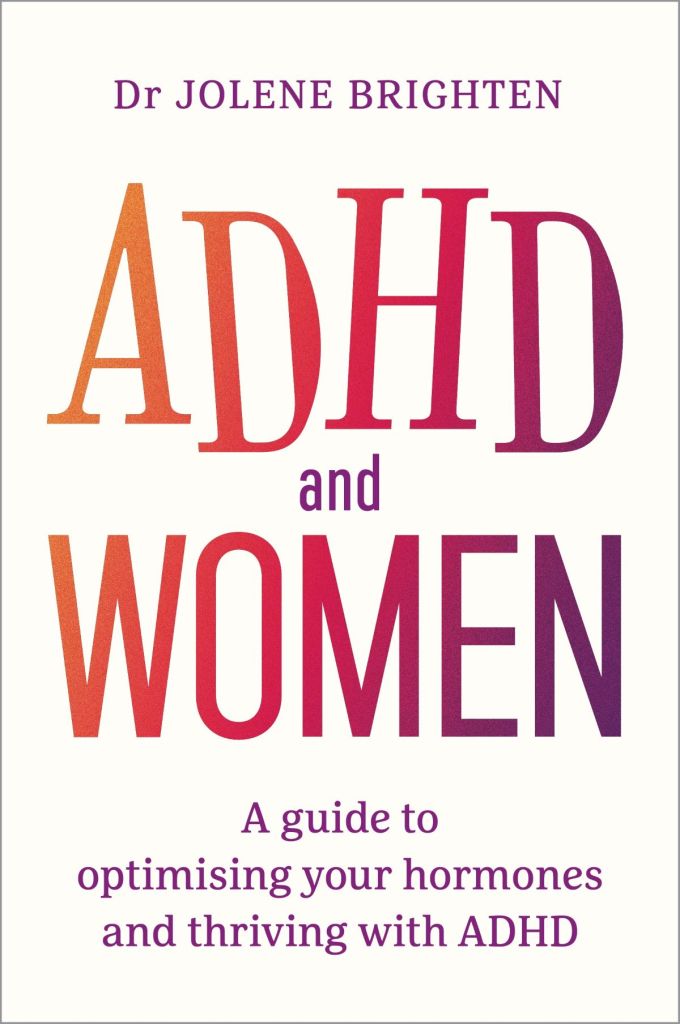
‘For many women, perimenopause, the transitional years leading to menopause, doesn’t just bring hot flushes or disrupted sleep – it brings a brain that suddenly feels unfamiliar,’ comments Dr Jolene Brighten, a women’s health expert and author of upcoming book, ADHD and Women. ‘Women tell me, “I’ve always been able to juggle everything, but now I can’t finish a sentence.” Or, “I’ve become so overwhelmed by noise and crowds that I avoid going out”.’
‘Many assume they’re simply experiencing “menopause brain,’ she continues. ‘Sometimes they are. But increasingly, we’re recognizing something else: menopause can unmask previously undiagnosed ADHD and autism. More than 50-75 per cent of women with ADHD reach adulthood without realizing their brain is wired differently, with perimenopause being a significant time for the diagnosis to happen.’
‘Thousands of women are reaching their 40s and 50s before realizing that the struggles they’ve blamed on anxiety, personality, or not trying hard enough may have been neurodivergence all along,’ she adds.
Why women are diagnosed so much later than men
‘For decades, ADHD and autism research focused almost exclusively on boys,’ Dr Brighten explains. ‘The diagnostic criteria reflected male presentations, leaving countless girls overlooked. Women with ADHD wait, on average, four years longer than men for the right diagnosis and treatment – and in the meantime, get labelled as depressed, dramatic, and too much.’
‘Girls with ADHD are less likely to be disruptive,’ she continues. ‘Instead, they may become perfectionists, people pleasers, high achievers, or chronic overcompensators. They rely on intelligence, structure, and enormous effort to stay afloat.’
‘Autistic girls often become expert maskers,’ Dr Brighten tells us. ‘They consciously study social rules, mimic facial expressions, rehearse conversations, suppress repetitive behaviours, and force themselves through overwhelming sensory environments. Many become so skilled at camouflaging that even they don’t realise how much energy it requires.’
‘These adaptations often work—for decades,’ she adds. ‘Until perimenopause.’
How hormones shape brain function
When we think about the hormones involved in the menopause – namely, estrogen and progesterone – we usually only associate them with fertility and reproduction. But in reality, as hormones begin to change during perimenopause, it can have a huge impact on your brain.
‘One of the biggest misconceptions about hormones is that they only matter for fertility and that once menstruation has ended, which we call menopause, these hormones no longer serve a purpose,’ Dr Brighten explains. ‘In reality, estrogen is one of the brain’s most important signalling molecules. It influences dopamine, which is essential for attention, motivation, reward processing, and executive function. Estrogen supports acetylcholine, a neurotransmitter involved in learning, memory, processing speed, and attention. It helps regulate serotonin, influencing mood, emotional resilience, and cognitive flexibility.’
‘Beyond neurotransmitters, estrogen plays a critical role in maintaining healthy mitochondria (the tiny energy-producing structures inside our cells) and helps regulate neuroinflammation,’ she continues. ‘When estrogen declines, mitochondrial efficiency falls while inflammation within the brain can increase, creating the perfect environment for fatigue, brain fog, cognitive slowing, and executive dysfunction.’
And it’s not all about estrogen. ‘Progesterone also has profound effects on the brain,’ explains Dr Brighten. ‘Its metabolite, allopregnanolone, enhances GABA activity—the brain’s primary calming neurotransmitter—which helps regulate anxiety, sensory input, emotional responses, and sleep. During perimenopause, progesterone often declines before estrogen, removing an important source of neurological stability for many women and often impairing sleep. Compromised sleep alone can exacerbate ADHD and autistic symptoms.’
‘Emerging research suggests that neuroinflammation and impaired mitochondrial function may also play important roles in both ADHD and autism,’ Dr Brighten shares. ‘As hormone levels fluctuate during perimenopause, these underlying biological vulnerabilities may become more pronounced, helping explain why symptoms that were once manageable suddenly become impossible to ignore.’
‘Rather than thinking about menopause as causing ADHD or autism, it’s more accurate to think of declining ovarian hormones as removing layers of neurological support that helped compensate for existing differences in brain function,’ she adds.

Why does menopause unmask ADHD and autism so suddenly?
If someone has had ADHD or autism their whole life, how can it go unnoticed for so long – before suddenly moving to the forefront during menopause? ‘Many women tell me they feel like they “woke up with ADHD”,’ says Dr Brighten. ‘In reality, they often had ADHD all along. What changed wasn’t who they are—it was their ability to compensate.’
‘The combination of fluctuating hormones, increased neuroinflammation, reduced mitochondrial energy production, disrupted sleep, career demands, ageing parents, caregiving responsibilities, and decades of masking creates what I often describe as the perfect storm,’ she adds.
‘Strategies that once worked no longer do. Lists stop helping, calendars become overwhelming, tasks that used to take 20 minutes now take two hours, and background noise becomes intolerable (yes, your brain perceives your partner is, in fact, breathing too loud),’ Dr Brighten explains. ‘Many women begin questioning their intelligence when what’s actually changed is the biology supporting their brain.’
Is it ‘menopause brain’ or undiagnosed ADHD or autism?
If you’re experiencing brain fog, forgetfulness or sensory overwhelm in midlife, you might now be wondering if it’s ‘menopause brain’ – or if it might be ADHD or autism. According to Dr Brighten, there are some key signs to look for. ‘Perimenopause and menopause can cause brain fog, forgetfulness, poor concentration, emotional reactivity, anxiety, sleep disruption, and reduced mental stamina,’ she explains.
‘ADHD can cause lifelong difficulties with executive function, attention regulation, working memory, emotional regulation, and time management,’ she continues. ‘Autism can involve sensory sensitivities, cognitive overload, social fatigue, difficulty with unexpected change, and burnout.’
‘The most important clue is timing,’ Dr Brighten tells us. ‘Menopause symptoms emerge during the menopausal transition, also known as perimenopause. And while it can look a lot like ADHD, we understand from emerging research that these symptoms often resolve in the two years following your final menstrual period, as the brain is able to adapt to the lack of hormones.’
‘ADHD and autism are neurodevelopmental conditions, meaning the signs were present long before hormones began changing – even if they weren’t recognised,’ she explains.
‘Women often look back and realise they were always the child who lost everything despite trying hard, who felt exhausted after social events, who relied on perfectionism to stay organised, who hyperfocused for hours on subjects they loved while struggling with routine tasks, or who constantly wondered why everyday life seemed easier for everyone else,’ Dr Brighten continues.
‘Menopause doesn’t create that history – it shines a light on it,’ she adds. ‘And for these women who truly have ADHD, without intervention, roughly 25 per cent will go on to have severe ADHD symptoms following their final period.’
6 signs of undiagnosed ADHD and autism in midlife
‘If you’ve entered perimenopause or menopause and notice worsening cognitive symptoms, it’s worth asking whether they’ve truly appeared for the first time or whether they’re longstanding patterns that have become more visible or more intense,’ Dr Brighten explains.
Signs that deserve further evaluation include:
- Lifelong difficulties with organisation, prioritisation, time blindness, or procrastination that have become significantly worse.
- Chronic sensory sensitivities that are now harder to tolerate.
- Social exhaustion or masking that has become unsustainable.
- Emotional dysregulation that feels amplified rather than entirely new.
- A history of being labelled “lazy,” “too sensitive,” “scattered,” “dramatic,” or “not living up to your potential.”
- Family members—particularly children—who have ADHD or autism, prompting you to recognise similar lifelong traits in yourself.
‘These patterns don’t automatically mean someone has ADHD or autism, but they do warrant a thoughtful evaluation by a clinician familiar with how neurodivergence presents in women,’ Dr Brighten tells us. ‘In some cases, hypothyroidism, post-traumatic stress disorder (PTSD), or other neurodivergent conditions are masquerading as ADHD or autism.’
‘As I discuss throughout ADHD and Women, the goal isn’t to put every woman experiencing menopause into a diagnostic box,’ Dr Brighten continues. ‘It’s to help women understand that hormones, brain biology, immune signalling, and energy production are deeply interconnected. When we recognise that connection, we stop blaming ourselves and start asking better questions.’
‘For many women, menopause isn’t the beginning of the story,’ she adds. ‘It’s the moment the story finally makes sense.’
Dr. Jolene Brighten, an internationally recognized expert in women’s hormones, menopause, and ADHD across the female lifespan. Her upcoming book, ADHD and Women (on sale 6 October, available to pre-order now), tackles a major blind spot in both healthcare and performance: the powerful connection between hormones and ADHD symptoms in women.