Why I’m standing up against the “cool-girl” aesthetic trend on social media
Unless you are not on social media, you have probably seen the “cool-girl” posts that claim this is what to wear if you want to fit in. From being ageist and clique to insensitive and downright patronising, I unpack why this toxic trend is not empowering women.
By 

Pictures: Getty images
What is the “cool-girl” trend?
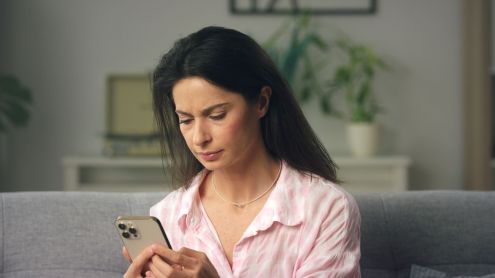
My social media feed is full of dog reels, padel posts and fitness videos. Things I am not only interested in but which I find amusing, interesting and uplifting. Yet, there is another topic – or wording, should I say – that is constantly being served up to me that I find patronising, embarrassing and downright ridiculous. And that’s the “cool girl” trend – the posts that claim “this is what the cool girls are wearing.” In fact, it doesn’t just stop at fashion – the “cool girls” posts are being attached to everything from beauty and skincare to where the “cool girls” are travelling and even what they are drinking. Pass me the tequila now!
As an older woman who doesn’t fall for this trend and who has spent much of the past decade writing on and celebrating inclusivity and body confidence, I know why it irks me. That is because it goes against everything that I’ve just mentioned. Whilst I’m old enough to not give a damn about whether I’m cool or not, I pity younger girls who are trying hard to fit in, and facing social media toxicity trends, like this one.
Put simply, women and girls don’t need a hierarchy group of others telling them what is cool and what isn’t. To start with, it sounds exclusionary and reminds me of schoolyard intimidation in a way – the cool girl friendship sets versus the others. And I’m glad to report I’m not alone in my feelings – the cool-girl aesthetic is grating on the nerves of a lot of women I speak too and it should be called out.
What do the experts think?
According to clinical psychologist Avigail Lev, founder of Bay Area CBT Center, the “cool girl” message works by dividing women into two groups: the ones who are in and the ones who aren’t.
“It sounds like fashion advice, but what it’s really selling is belonging. Humans are wired to care about being accepted by the group, and when a message suggests there’s an inner circle you might not be part of, it creates a low-level anxiety that’s hard to ignore,” she explained. “That’s why it’s so irritating. It pokes at the fear of being left out, then offers a product as the fix.” She couldn’t explain my own thoughts better!
“In relationships, we call this triangulation. One person keeps two others insecure by comparing them to each other, so they compete for approval instead of noticing who’s creating the competition. The “cool girl” message does the same thing on a cultural level. It puts women side by side and invites them to measure themselves against one another. It also works like breadcrumbing.
“You get small, temporary hits of approval when you get it right, but the standard keeps moving, so you never actually arrive. That keeps people hooked, trying harder, and putting up with feeling insecure.”
It is, she adds, a very old and very effective tool. “When women see each other as competition, they’re too busy comparing and judging to notice what they have in common or to stand together. Dividing women is one of the ways patriarchy keeps going. It doesn’t need to openly control women if women are kept busy monitoring and ranking each other.
“It also turns style into a test. Instead of wearing something because you like it or feel good in it, the question becomes “Does this make me one of the cool ones?” That shifts women from expressing themselves to monitoring themselves. This is the opposite of body confidence. Confidence comes from feeling acceptable as you are. The “cool girl” message says you’re acceptable only if you get it right.”
Why midlife women find the “cool-girl” trend irritating
And then there is the wording of “cool girl” that ties in with being young so it excludes older women like myself.
“It quietly ties being cool to being young, which leaves older women feeling invisible or out of date,” added Avigail.
“Many women spent years learning to stop chasing approval and to dress for themselves, and this kind of messaging pulls them back into the same comparison and self-criticism they worked hard to leave behind. For younger girls who are still forming their sense of identity, it teaches them that their worth depends on keeping up with a standard that keeps changing.
“The healthiest response is to notice the message for what it is, a strategy built on insecurity and division, and to come back to simpler questions: Do I like this? Is it comfortable? Does it feel like me? Anyone can wear anything. There’s no club to get into, and other women aren’t the competition.” I want to SHOUT this from the rooftops!
In the same way I compared the trend to a hierarchy of cool girls in the playground,
Jane Eagle, Inclusion Manager and Designated Safeguarding Lead at Crimson Global Academy School agrees it’s like an “us and them” comparison.
“For women and girls who are already surrounded by messages about how they should look, it can add another layer of pressure and comparison.
“We need to be careful not to replace one appearance judgement with another. If someone says, “I want to dress like her because she’s cool,” telling them, “You’re cooler,” still keeps the comparison going. Instead, ask what they actually like about the look. Is it the colour, the style, the confidence or simply that it feels different? That helps move the conversation from “How do I become a cool girl?” to “What do I actually like?”
The power of social media
She goes on to say: “Social media makes this particularly powerful because we are constantly seeing curated versions of how other people look and live. When those images are presented as what the “cool” women are doing, it can make belonging feel conditional on getting your appearance right.
“The healthier message is that you don’t have to qualify as a “cool girl” to wear something. You can follow a trend, adapt it, ignore it or wear something completely different. What matters is that you feel comfortable making that choice for yourself.
“Ultimately, confidence isn’t about finding the right clothes to make you acceptable. It is about feeling that you don’t need anyone else’s permission to decide what you like and who you are.”
Social media

When it comes to what we are seeing on social media around the cool-girl posts, former clinical psychologist Dr Jo Lee, founder of Tula Soul describes it as “the sister wound”.
“This messaging is wrong and can do psychological damage and it’s important we begin to start dismantling it.” (I’m trying!)
“The “cool girl” is not new
Women and girls have been taught for generations that belonging is something we earn by being the right kind of woman: attractive enough, thin enough, fashionable enough, effortless enough—but never *too much*. Social media has simply given this old hierarchy a new algorithm,” she adds.
“When we repeatedly divide women into those who are “cool,” desirable, fashionable, or culturally relevant and those who supposedly are not, we manufacture scarcity around belonging. Women begin evaluating themselves and one another instead of inhabiting themselves.
“This is deeply connected to what I call the sister wound: the ways women learn to compare, compete with, distrust, and diminish one another within systems that have historically rewarded us for doing exactly that.”
So, to those posting the “cool girl” aesthetic trends, stop and think. And try and be a little bit cooler!