Bored by normal life? 6 red flags your phone is controlling your attention
From compulsively checking notifications to feeling anxious when you're offline, psychologists explain the six signs your relationship with social media may be becoming unhealthy – and how to regain control.
 Sally Saunders

How often do you pick up your phone without thinking, refresh Instagram to check who’s liked your latest post or find yourself scrolling TikTok long after you’ve intended to go to sleep? While social media is part of everyday life, there is a difference between enjoying being online and feeling unable to switch off.
With platforms designed to keep us engaged through notifications, likes and endless scrolling, it’s worth asking: when does a habit become compulsive? And why can the anticipation of a notification feel more rewarding than the message itself?
Dopamine, the neurotransmitter involved in motivation and anticipation, plays a part. We asked psychologists and wellbeing experts to identify six warning signs that your relationship with social media might be becoming unhealthy.
1. You’re constantly checking for notifications
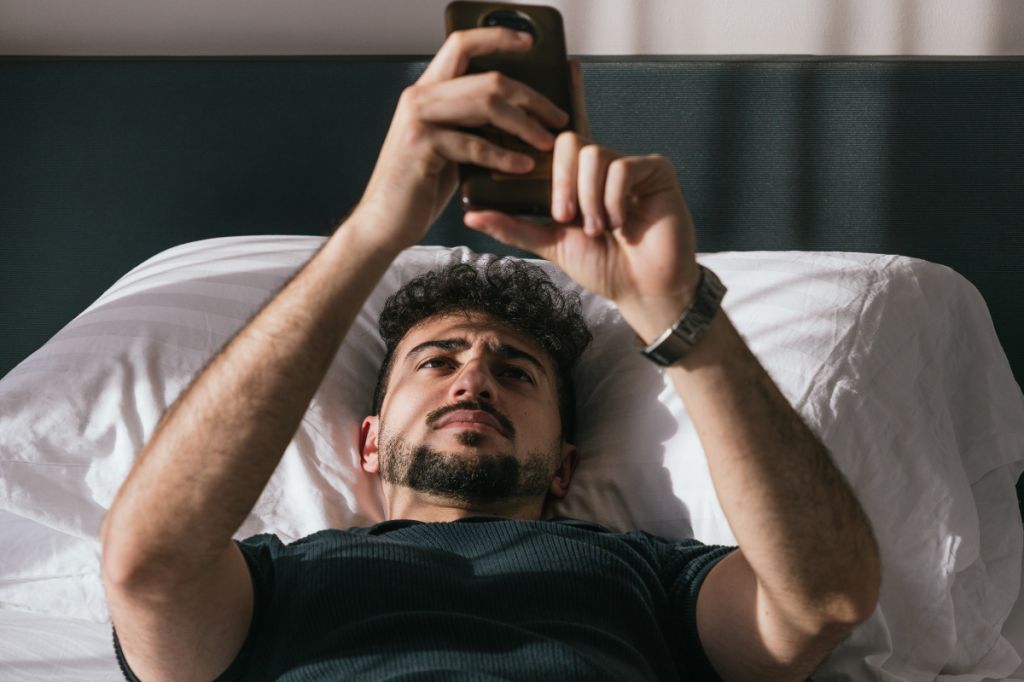
It’s the first thing you do when you wake up in the morning, the last thing you do before you go to sleep — and a constant habit throughout the day. You tell yourself you’re just checking the time, but somehow end up opening Instagram, WhatsApp or TikTok. Even when there isn’t a notification, you find yourself refreshing your feeds or checking again a few minutes later.
Dr Tamsin Lewis, physician, founder of Wellgevity and former professional Ironman athlete, explains: “Your phone works the same way. The buzz is the cue, and the possibility is what grips us. Maybe it’s the message you were hoping for, maybe it’s nothing. Uncertainty makes the signal more powerful, which is why variable rewards are so effective at shaping behaviour.”
2. You get more excited about receiving likes than enjoying what you’ve posted
You post a photograph, update or story and repeatedly check how many people have liked or commented on it. The anticipation of approval can become more exciting than the content itself.
Natalie Mackenzie, from The Cognitive Strategist, says: “The dopamine spike happens not when we receive the reward but in the seconds before, when we think we might. This is sometimes called reward prediction error: the brain fires up in response to the possibility of something good, and when the thing actually arrives it can feel almost flat.”
3. You struggle to enjoy moments without your phone
Whether you’re having dinner, watching television or going for a walk, you feel compelled to fill every quiet moment with scrolling.
Dr Lewis says: “What I see clinically is that people living with chronic stress find slow pleasures hardest of all. When the body is in a vigilant, scanning state, quick novelty feels like relief and stillness can feel uncomfortable. So the question has less to do with willpower and more to do with capacity.”
4. You use social media to manage uncomfortable emotions
Feeling lonely, anxious, stressed or bored? Your immediate response is to reach for your phone. If scrolling becomes your main way of managing difficult feelings, it may be worth exploring what you’re really seeking.
Dr Aditi Bhalla, psychotherapist and mental wellbeing mentor, explains: “A notification is a tiny promise that something might be waiting, so the Drive system lights up with ‘go and get it’. The Threat system can join in with ‘what if I miss something?’ or ‘what if someone needs me?’ That’s why checking isn’t always about wanting the message. Sometimes it’s a way of the body trying to settle itself.”
5. Everyday life feels increasingly boring without constant stimulation
Reading a book, having a conversation or concentrating on a task without checking your phone feels harder than it used to. You become restless whenever there’s nothing immediately entertaining to occupy your attention.
Mackenzie explains: “When a stimulus is repeated, the response to it diminishes. What felt exciting becomes ordinary, and the threshold for what registers as interesting quietly rises.”

6. Your social-media habits are interfering with the things that matter
Perhaps you’re checking work notifications long after you’ve finished for the day, becoming distracted during conversations or repeatedly putting off important tasks.
Corinna Nicol, business coach, social media strategist and founder of Connect Women in Biz, who was diagnosed with ADHD in her forties, understands how easily checking can become habitual: “As a business owner, checking messages and engagement has a legitimate purpose. That can make it harder to recognise when useful checking has become repetitive checking. There’s always a plausible reason to look again. Being busy responding to things can feel productive, even when it’s taking attention away from work that matters more.”
How to regain control of your social-media habits
You don’t necessarily need to delete every app, but becoming more intentional about how you use your phone can help.
Dr Lewis recommends turning off non-essential notifications, keeping your phone out of the bedroom and making room for slower, more meaningful rewards. “Start with one slow pleasure this week and protect it as carefully as you’d protect a meeting,” she advises.
Ultimately, it’s not simply how many hours you spend online that matters, but whether you’re still choosing how to spend your time and attention – or whether your phone is increasingly making that decision for you.
Words: Sally Saunders, Images: Shutterstock