Love someone with ADHD? 5 ways to strengthen your relationship without taking their behaviour personally
Being with a partner who has ADHD present unique challenges, but they can be worked through with understanding, compassion, and effort
By 

From forgotten messages to emotionally charged arguments, ADHD can create misunderstandings between partners. Therapists explain how better communication, realistic expectations and shared routines can help you build a stronger relationship
PICS: GETTY IMAGES
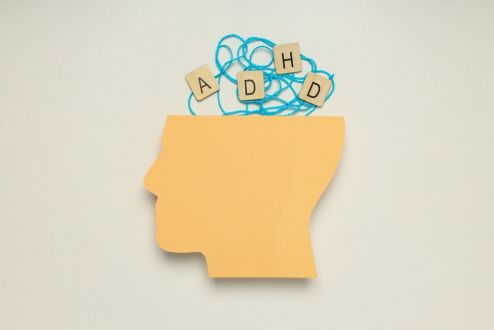
We are in a world where we are seeing unprecedented numbers of, or more likely, much more accurate, diagnoses of people with neurodevelopmental disorders such as ADHD. This is generally a good thing; people being able to have a stronger sense of how they work (though we are all different even within a diagnosis) is useful information.
Being a partner to someone with ADHD can be challenging at times, as can any relationship, but understanding this neurodevelopmental disorder properly can be instrumental for having a compassionate, understanding, and ultimately better relationship.
A forgotten reply is not necessarily a lack of interest
Gareth Strangemore-Jones, Clinical Psychotherapist at The Brain Gym & Mental Health Matrix says that while it can be frustrating, “somebody with ADHD may read a message, plan to answer properly later, become distracted, and then lose track of how much time has passed.”
This is entirely innocently done, but can of course be hurtful when it is happening to you from a person you love. There are strategies that can be attempted to help manage this between both people. Along with aiming to have understanding that this is not something that comes naturally to some people with ADHD, Strangemore-Jones says that “a brief message to acknowledge that you have seen a message and will reply later, and then setting a reminder to reply,” can help to show intent.
Try not to take their general behaviour personally
Reuven Rosen, Couples Therapist, ConnectWell Therapy says that in a similar vein to what may be considered as distraction or forgetfulness, some of the commonly seen ADHD behaviours such as “forgetting timings or getting distracted during conversations can feel personal to the other partner.”
This can create a difficult cycle over time where “one person starts feeling ignored or taken for granted, while the person with ADHD starts feeling criticised for things they may already be struggling to manage.” Rosen adds.
It’s important to do your best to be supportive with this, not critical. Separating the practical problem from the emotional meaning is very helpful for not letting this behaviour build into resentment. When it comes to remembering dates, accepting that it’s difficult can be useful. In this instance, shared calendars and reminders can help both people to find mutual ways of working and having accountability.
In these instances, both can also look to build small and consistent forms of communication that provide enough reassurance to each person, but do not overstep boundaries and demand too much of either person. Strangemore-Jones explains how small signals that do not depend upon spontaneous remembering, such as “a message at lunchtime, a goodbye kiss, a weekly walk, or ten undistracted minutes before bed consistently, can communicate affection when attention itself fluctuates.”
People with ADHD are not unable to have routine, commitment, or mutual intention – and a relationship should exist on an even dynamic, not become a case of one person managing or even parenting the other.
Emotions can have different intensities for people who do not have ADHD
Often, issues with ADHD in a relationship only really come up when there is conflict. ADHD does not define a person, and there can be many endearing quirks to people whether they have ADHD, a neurodivergence, or not.
Therefore, it becomes especially important to have an understanding of your partner during intense moments or situations. “If you can recognise the point where a conversation has become too emotionally charged to stay productive, this can be an integral tool in your relationship.” Rosen says.
Some people with ADHD can experience emotions very quickly and intensely, “so once frustration or rejection kicks in, it can become much harder to listen carefully or respond in proportion to what’s actually happening.” Rosen explains.
While a short pause to the conversation can help, couples need to agree in advance what that pause means and its duration. As well as ensuring that neither person feels abandoned, “this gives both people space to calm down without leaving the issue unresolved.”
Keep conflict to one subject
Similarly, Strangemore-Jones says that “ADHD-related working-memory difficulties can make a complicated argument very hard to track. Both people may introduce old examples, interrupt to avoid forgetting a point, and end up debating six problems at once.”
This does little for the conversation you’re trying to have, and can lead to an argument that spirals instead of resolves. Ideally, Strangemore-Jones says to “agree upon one subject, write down anything that needs discussing later, and summarise what has been agreed.” While this might sound incredibly formulaic, it can provide a specific focus to try and steer the conversation back to.
The aim is a mutually designed relationship
Ultimately, you are with your partner for a reason, and you should be looking to do what you can to be there for them as the person they are, provided this also allows you to live a happy and authentic life yourself.
Strangemore-Jones says that the healthiest approach “is neither ‘the person with ADHD must become neurotypical’ nor ‘the partner must accept every difficulty without complaint’”. Rather, both people need to develop “language for what is happening, systems that reduce predictable friction, room for individual needs, and responsibility for repair.”
The relationship should be designed around the two people actually in it, rather than around assumptions about how an organised, romantic, or emotionally mature couple is supposed to behave – and even the idea that because someone has ADHD they must be a certain way, and that their partner is more functioning just because they are neurotypical. We are all human, we all have the capacity to live good and happy lives.