Menopause rage and anxiety can affect your mood and relationships. Discover how HRT helped one woman feel like herself again, with expert advice
Mood swings and irrational thoughts turned my normal happy self into someone my husband didn’t recognise. Going on HRT saved not only my sanity, but my marriage too. Below, I reflect on how it helped me and menopause experts explain why mood shifts, anxiety, and increased irritability during this stage of our lives are very real physiological and psychological experiences.
By 
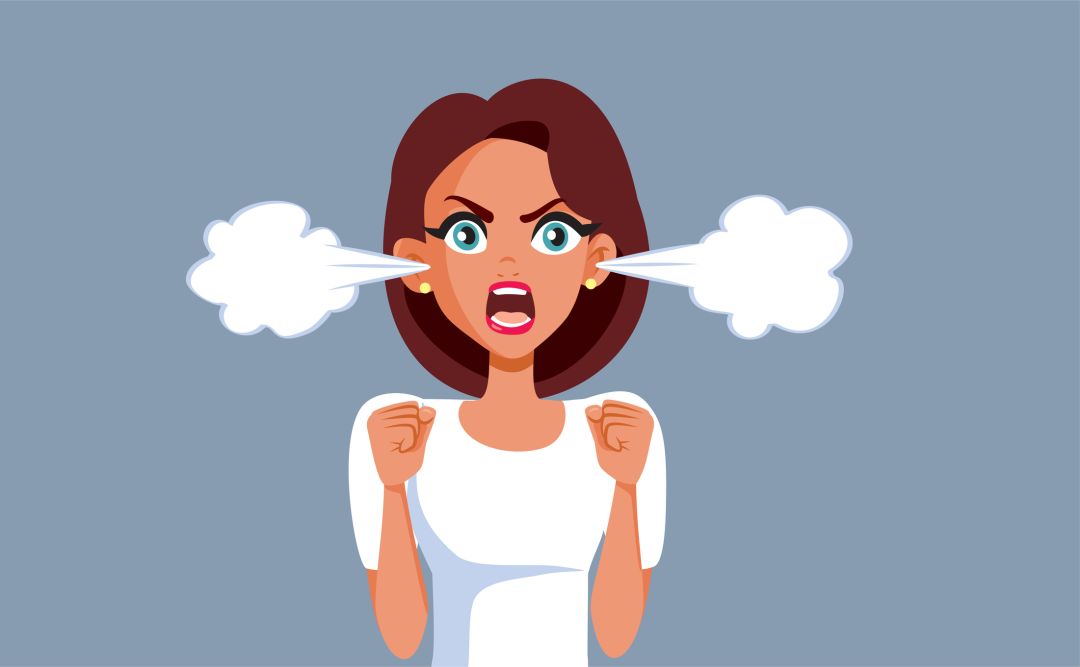
Mood swings and irrational thoughts turned my normal happy self into someone my husband didn’t recognise. Going on HRT for menopause rage saved not only my sanity, but my marriage too. Below, I reflect on how it helped me and menopause experts explain why mood shifts, anxiety, and increased irritability during this stage of our lives are very real physiological and psychological experiences.
It’s fair to say HRT is a lifesaver for some women, particularly if they have severe menopause symptoms. And I can vouch for that.

Whilst I was fortunate not to have night sweats and hot flushes, nor other symptoms often associated with the menopause like a dry vagina and achy bones, my unusual bouts of anger and sudden fear of everything from driving on the motorway to not locking the house up at night properly, had transformed my personality. In fact, at times, even my three sons tiptoed around me, fearful that I was going to explode in anger for no reason. And, as for my husband who I have been happily married to for 27 years, he knew better than to tiptoe around me – should he dare to breathe I’d be down his throat!
I was, to put it simply, totally erratic.
How our hormones are to blame
Fortunately, having a sister who is a menopause specialist and a father who is a doctor, (plus a very supportive husband thankfully!), I didn’t need much persuasion to go on HRT. I was in my fifties, all my friends swore by it for managing their symptoms and my lovely private GP reassured me it could make a dramatic difference to calming my anxiety and mood swings. And that is because during menopause our oestrogen fluctuates and eventually falls and these hormonal changes can affect our brain systems involved in mood regulation.
Add to that the fact that my oncologist father advises many of his patients to go on HRT for their bones (because oestrogen helps keep bone tissue strong) and I was sold. I knew I couldn’t go on raging at my husband as much as I was doing for no reason as my mood swings were really starting to affect him and cause the first major problem in our otherwise happy marriage.
Menopause rage is real – how HRT can help
Whilst HRT can work quickly for some women, in my case it took a good two months before calm was restored – both in my mind and at home. I actually started feeling more like my old self, less anxious and moody; as though a load had been lifted off my shoulders. And, for other women like me who rage over things that previously wouldn’t have bothered them, it’s reassuring to know it’s a common menopause symptom.
“Anger (what I call the zero to 90 miles an hour mood swing) and anxiety are both common symptoms and often show up early on in perimenopause,” explained executive Emma Thomas.
“This is because oestrogen influences serotonin, dopamine and cortisol (which regulate mood, stress, and impulse control) and progesterone is the precursor to GABA, our calming hormone – and both impact sleep (lack of which can further exacerbate things). I think unfortunately many don’t actually realise that HRT might help with those – hence the number still being prescribed anti-depressants.”
How oestrogen can affect our mood
With so many women experiencing changes in their mood once menopause hits, it has even been dubbed ‘menorage’. According to women’s health GP Dr Nikki Ramskill many of her patients suddenly becoming furious about things they have tolerated for years.
“We sometimes jokingly call it ‘menopause rage’ or ‘menorage’. That doesn’t mean hormones have created the underlying problem, but hormonal changes may alter how a woman responds to it, or how willing she feels to continue tolerating it.
“I sometimes say to patients that one of the effects of perimenopause can be a reduced tolerance for things they might previously have put up with and there is actually some biology behind why women can feel that way.
“Oestrogen has effects throughout the brain, including systems involved in serotonin, dopamine and emotional regulation. During perimenopause, oestrogen levels can fluctuate significantly and some women notice much more anxiety, irritability, anger or emotional reactivity. Add poor sleep, hot flushes and the pressures of midlife, and your capacity to tolerate everyday stresses can feel very different.”
Like with my own experience of being angry at my husband for no reason, Dr Ramskill says that whilst we cannot absolutely say that menopause rage causes divorce, it can make relationships hard for both parties.
Why menopause anger can cause problems in a relationship
“Relationships can be complicated for many reasons but if a woman is experiencing anxiety, insomnia, changes in libido, irritability, anger and feeling completely unlike herself, while both partners may also be experiencing changes in their sense of identity, it isn’t difficult to understand why midlife can be a significant period of change within a relationship.
“We have to keep in mind that some male partners are ageing too. Erectile difficulties become increasingly common with age, so occasionally we see a mismatch where a woman is coming into her stride sexually at exactly the point her partner is beginning to experience changes in his sexual function. That can affect intimacy and relationship dynamics, but it is rarely talked about.”
She adds that for some women like myself, HRT where suitable can make an enormous difference to how they feel and respond. “HRT cannot fix an unhappy marriage, but treating the woman’s symptoms may help her feel more like herself while she works out what she actually wants.”
For many of us, our bouts of anger can be left making us feel guilty, something I felt during my unpredictable rages. So it’s good to have some sort of validation that ‘menorage’ can’t actually be helped.
“Mood shifts, anxiety, and increased irritability during perimenopause and menopause are very real physiological and psychological experiences,” explained psychologist Dr. Janine O’Brien.
What’s happening in the brain?
“What’s happening to your brain systems involved in mood, stress and emotional regulation is no fault of your own. As a result, many women find that their emotional threshold becomes lower during perimenopause and menopause. Everyday frustrations and moments may feel more intense, anxiety may appear suddenly or become more difficult to manage, and their reactions may feel stronger or less predictable than they did in the past.”
She adds that these changes can be particularly noticeable in close relationships.
“Partners are often the people we spend the most time with and feel safest expressing emotion around, so they may find themselves receiving the brunt of that increased reactivity. She might become disproportionately angry with her partner and later wonder, “Why did I react like that? That doesn’t feel like me.” Oh, how I can relate to this!
“Recognizing the role of hormonal changes can be incredibly validating for many. It does not mean that every emotional response is solely caused by hormones, but it can help women understand that there can be a genuine physiological component to what they are experiencing. And it’s not just that they have suddenly become angry, irrational, or unreasonable.
“This understanding may also encourage women to seek treatment that accounts for hormonal factors and to connect with providers who understand and are trained to work at the intersection of physiological and psychological symptoms of perimenopause and menopause.
How HRT can help
“For some women, appropriately prescribed HRT can significantly reduce anxiety, irritability, and mood changes by addressing the hormonal changes contributing to these symptoms. By providing more consistent hormonal support, HRT may help the brain systems involved in mood, emotional regulation, and the stress response function more steadily. This can reduce the feeling of being constantly on edge, emotionally overwhelmed, or unlike oneself.”
Fortunately for me, my husband was very supportive during my angry phase and even when my anxiety was totally irrational, he tried his best not to rise to it – even following my ask to check the house for burglars on more than one occasion during the night!
The importance of educating our partners on menopause
However, for those less fortunate to have the support or whose partners are finding them difficult to live with, psychiatrist Dr. Andrea Raby, medical advisor for Prickly Pear Health, advises the following:
“With mood swings as well as anxiety being very common during menopause – some studies demonstrate that up to seventy percent of woman experience a fluctuation of their mood and an exacerbation or worsening of anxiety – it is important for partners to understand the process of menopause and to realize that this is not just a physical process but very much an emotional process.
“Therefore, educating one’s self on the potential impact this can have will allow for more patience, and potentially ‘open up’ lines of communication. For example, asking your partner how she is feeling and perhaps what her partner can do to increase support, are keys in communicating, understanding and fostering connectivity.
“Ultimately, menopause is an expected phase of a woman’s life, but one that can be appropriately addressed to allow for ongoing emotional and physical balance.”