ADHD and tapping: How this simple technique might help calm a busy mind
Could tapping help ease ADHD overwhelm? Discover how this simple technique may help calm a busy mind, manage emotional overload and bring a greater sense of control, with expert advice.
By 

If you’ve ever felt as though your brain has 20 tabs open at once, you’ll know how difficult it can be to switch off. For people with ADHD, managing overwhelming emotions and finding a moment of calm can be particularly challenging. But could something as simple as tapping help?
We speak to award-winning ADHD wellbeing coach, EFT practitioner, podcaster and author Kate Moryoussef – who was diagnosed at the age of 40 – about how the technique works and why it may help.
What exactly is tapping and how does it work?
Below, Kate explains what tapping is.
Tapping, also known as Emotional Freedom Technique (EFT), is a mind-body technique where you gently tap with your fingertips on a sequence of points on the face, upper body and hands while focusing on what you’re feeling or thinking.
It combines talking and psychological techniques with stimulation of points that come from traditional acupressure. I tend to describe it very simply as “tap and talk”. You can acknowledge what is going on for you while physically doing something at the same time, rather than trying to push the feeling away.
I often use phrases such as, “Even though I’m feeling really overwhelmed right now…” and then allow whatever needs to come up to come up.
Why might tapping appeal to people with ADHD?
One reason I think it can appeal to people with ADHD is that it’s active and physical. You’re not being asked to sit perfectly still, empty your mind or stop thinking.
For those of us with busy brains, sometimes being told to “just meditate” or “clear your mind” can feel like another thing we’re failing at. With tapping, you can move, speak and acknowledge all the thoughts that are there.
Personally, I find that combination of physical movement and talking can help me feel calmer and create some distance from whatever is overwhelming me. Rather than trying to think my way out of an emotion, I can work with what I’m actually feeling.
Which tapping points should you use?
There are a number of points commonly used in EFT. These include the side of the hand, around the eyebrow and eye area, underneath the nose, the chin and collarbone area, as well as points on the upper body and fingers.
You don’t have to remember everything perfectly when you first start. Following a practitioner or a simple guided tapping video can make it much easier.
How long should a beginner spend tapping?
You can start with just a few minutes. It doesn’t have to become another lengthy wellbeing practice that you have to fit into your day.
You can tap silently and breathe. You can follow a guided sequence. Or you can simply tap and talk about whatever is going on.
For everyday use, that’s often what I encourage people to try: tap while honestly saying how you feel, without trying to make it sound positive or suppress what is there.
Working with a trained practitioner can go much deeper, particularly when dealing with difficult experiences or trauma, but tapping can also be used as a simple everyday self-regulation practice.
How can beginners try tapping at home?

Start tapping gently and ask yourself: “What am I actually feeling right now?”
Then say it.
“I’m overwhelmed.”
“I’ve got too much to do.”
“I’m worried I’ve upset somebody.”
“I can’t stop thinking about this.”
“I don’t know what decision to make.”
Keep tapping and talking for a few minutes while noticing what happens in your thoughts and body.
You don’t necessarily need to solve anything. Sometimes the aim is simply to create enough space that the situation feels a little less intense.
Can tapping help with negative thoughts and emotional overwhelm?
This is one of the situations where I personally find tapping particularly useful.
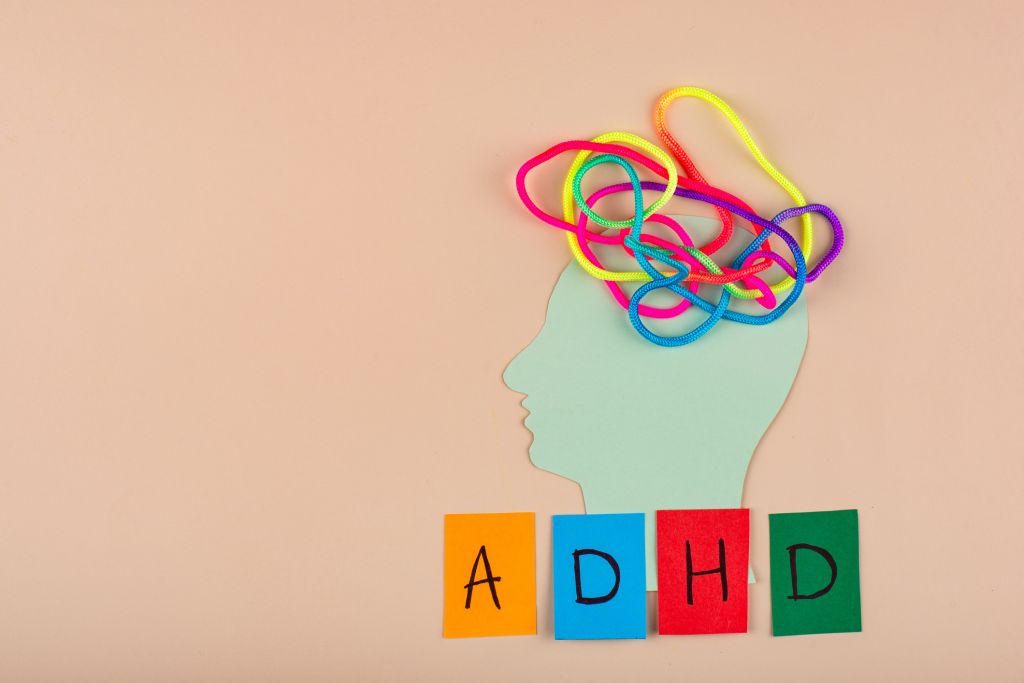
With ADHD, our thoughts can sometimes become very busy and repetitive. We may be ruminating, catastrophizing, feeling rejected or trying to make a decision when we’re already emotionally activated.
Rather than trying to force those thoughts away, tapping gives me somewhere to put them. I can say everything that is going through my head while tapping and gradually ask: what is actually underneath this?
Am I angry? Hurt? Frightened? Overwhelmed? Feeling rejected? Am I simply exhausted?
For me, it can create enough calm and perspective to move away from an immediate reactive response and towards, “Okay, what do I actually need here?”
How quickly might you notice the effects of tapping?
Some people report noticing a shift within a few minutes; for others it may take longer, and some people may not notice much at all.
For me, yawning is often a sign that something is shifting. I might become emotional, notice my shoulders relaxing, or realise that a tight or “stuck” feeling in my throat or chest has changed.
I think it’s helpful not to go into tapping expecting a dramatic transformation. Sometimes the change is simply that something that felt like a 9/10 now feels like a 7/10, or you can see the situation a little more clearly.
Is there scientific evidence that supports tapping for ADHD?
This is where I think we need to be careful not to overstate the research.
There is research into Clinical EFT more broadly, particularly around psychological stress and anxiety, and some studies have looked at physiological measures of stress such as cortisol. However, I’m not aware of robust evidence showing that EFT specifically treats the core symptoms of ADHD.
Professor Peta Stapleton at Bond University is one of the researchers who has published extensively on Clinical EFT. Her research has looked at both the psychological and physiological effects of tapping, including a study examining changes in cortisol following an EFT intervention.
I’ve followed her work and find the growing research around EFT fascinating, particularly because it helps us begin to understand why something that can feel quite simple may be useful as a complementary wellbeing practice.
For ADHD, though, I think it’s important to make the distinction: I talk about tapping as a complementary self-regulation tool that some people with ADHD may find helpful, rather than as a treatment for ADHD itself.
I’ve written and spoken about EFT extensively because of my own experience of using it and what I’ve observed through my work with ADHD women, but lived experience and clinical research are two different things. I think we need more ADHD-specific research before making stronger claims.
Who might not find tapping helpful, and what could they try instead?

It won’t be for everyone.
Some people simply don’t enjoy the sensation of tapping themselves or don’t connect with the technique. Other people may prefer walking, breathing exercises, movement, exercise, journaling, talking to somebody or sitting quietly.
I think one reason some neurodivergent people enjoy tapping is because it gives their body something to do. There can be an element of movement and repetition that feels much more accessible than being asked to sit completely still.
But if you’ve tried it and dislike it, you don’t need to force yourself to make it work. There are lots of ways to regulate.
Can you tap discreetly in public?

Possibly! But you also don’t have to do the full tapping sequence in public.
You can tap discreetly on the side of your hand or on your fingers, where nobody is particularly likely to notice.
I’ve used it while travelling, including on a plane during turbulence. You can use a very subtle version when you’re on public transport, before a meeting or whenever you need a moment to settle yourself.
And perhaps there’s something quite liberating about becoming less concerned with whether somebody thinks your perfectly harmless regulation technique looks a little unusual!
What if you’ve tried tapping and felt no different?
Firstly, that’s completely okay. No wellbeing technique works for everybody.
I might suggest trying it once with good guidance – perhaps following an experienced practitioner or a reputable guided session – because there can be more to EFT than simply tapping the points.
But if you’ve given it a fair try and don’t feel any benefit, it may simply not be your thing. I don’t believe we should turn wellbeing practices into another list of things we’re supposed to be doing correctly.
Can tapping replace ADHD medication?
I wouldn’t advise somebody to replace prescribed ADHD medication with tapping.
I’m not a doctor, and decisions about medication need to be made individually with an appropriately qualified healthcare professional.
I see tapping as something quite different: a complementary tool that some people may choose to use alongside whatever ADHD treatment and support is appropriate for them.
For some people, a few minutes in the morning or evening becomes a really useful part of looking after their emotional wellbeing. But that is very different from saying it treats ADHD or replaces medication.
What is your own experience of tapping?
Whenever I use tapping myself, I find it enormously helpful.
I’ve also loved introducing it in workshops and showing people that emotional regulation doesn’t always have to mean sitting still and trying desperately to make your mind quiet.
One of my favourite ways to use it is when I’ve got far too much going on in my head. I literally tap and talk, tap and talk.
I might start with a huge tangle of thoughts, ideas or emotions and gradually find that I can see what is really bothering me. Sometimes I find a solution; sometimes an idea appears; and sometimes I don’t need to solve everything at all – I can simply identify the next step.
I also use tapping when something feels as though I’m physically holding onto it – that clenched feeling you can sometimes get when you’re stressed or emotional.
That’s why it has become one of the tools I return to. I’m not using it to “fix” my ADHD. I’m using it to give my busy brain and body somewhere to put everything for a moment.
5 things to know about tapping and ADHD

1. Tapping is also known as EFT: It combines gentle tapping on specific points of the body with talking about your thoughts and feelings.
2. It may help with emotional overwhelm: Some people find it useful when they’re stressed, anxious or struggling with repetitive thoughts.
3. You can start with a few minutes: You don’t need to follow a lengthy routine or get every tapping point right.
4. The research is still developing: There is research into EFT and stress, but more ADHD-specific studies are needed.
5. It’s not a replacement for medication: Tapping may be used as a complementary wellbeing tool alongside appropriate ADHD treatment and support.