Stuck in fight-or-flight? 12 science-backed ways to switch your nervous system to rest-and-digest state
Here's how to help your nervous system feel safe enough to switch off - according to a psychotherapist.
By 

Stuck in an endless stress loop? If you’re rushing through life and feeling constantly on edge, your nervous system might be stuck in fight-or-flight. Here’s how to spot the signs and switch your nervous system back into recovery mode.
Racing thoughts, a racing heart and racing through each day as if you’re being chased down. Sound familiar? Your nervous system might be stuck in fight-or-flight mode. ‘The fight or flight response has an important purpose – to protect us and prepare us to act quickly when we sense or are faced with real danger or threat,’ explains Dr Joy Conlon, a psychotherapist at Coyne Medical.
‘Fight or flight is controlled by our autonomic nervous system, the body’s automatic control system,’ she continues. ‘Like an app, our nervous system is always running in the background and managing essential functions. The sympathetic nervous system (fight-or-flight) is activated us when we need to respond to danger, while the parasympathetic nervous system (rest-and-digest) helps the body settle and recover once the danger has passed.’
‘In a healthy stress response, these two systems work together,’ she adds. ‘However, when threats are repeatedly perceived, or the nervous system does not receive a clear message that the danger is over, the sympathetic nervous system stays in control. Over time, being tense, alert and prepared for the next problem can begin to feel familiar for us, even when there is no immediate danger. Thus, this emotional state becomes normalised and we find ourselves having difficulty shifting out of it.’
How to tell if you’re stuck in fight-or-flight
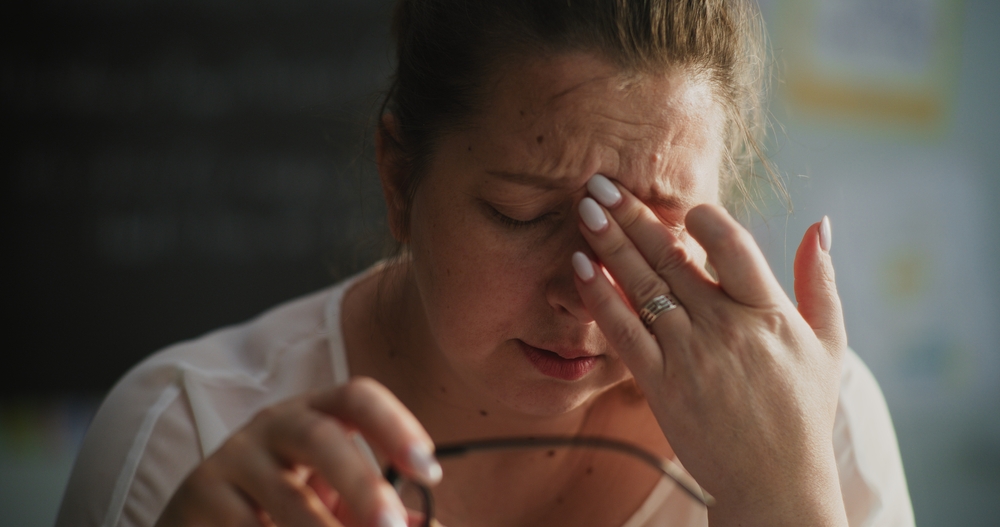
‘Fight or flight does not always look like panic,’ Dr Joy tells us. ‘In everyday life, the response can present as changes in your body, how you feel, your thinking patterns and your actions, or lack of action.’
‘When you are in fight mode, the nervous system prepares you to confront or overcome whatever it perceives as a threat,’ she continues. ‘You may become irritable, impatient or be quick to anger. You might become defensive, feel an urgent need to prove your point or interpret a simple question as criticism.’
‘Fight mode can also appear as controlling behaviour,’ says Dr Joy. ‘When something feels uncertain, we may try to manage every detail, tell other people what to do or become frustrated when things do not go according to plan. We might criticise, argue or speak more sharply than we intend. Underneath that behaviour is often a nervous system attempting to regain a sense of safety and control.’
The problem with overworking and overachieving
Another key sign your nervous system is stuck in fight-or-flight mode is if you constantly feel the need to overwork, overachieve or always say yes. ‘Importantly, fight or flight can sometimes look like high performance,’ Dr Joy explains. ‘Incessant overworking is often validated and praised as ambition. Hypervigilance may be understood as just being organised or prepared. Perfectionism may be mistaken for having high standards, while constantly accommodating other people (people pleasing) may be seen as kindness.’
‘Because these behaviours are often socially rewarded, many people are not aware of the physical and emotional cost behind them,’ she adds. ‘Someone can therefore appear calm, organised, capable and highly productive on the outside while their nervous system is working overtime underneath. They may meet every deadline, anticipate everyone’s needs and remain constantly available, but feel exhausted, tense and unable to switch off when the day ends.’

12 ways to switch your nervous system to rest-and-digest
This isn’t about forcing your body to calm down. It’s about helping yourself to feel safe enough so you can gradually shift out of fight-or-flight mode. ‘If staying in the sympathetic nervous system survival mode has become a state that you believe keeps you safe, you need to allow yourself to believe you can still be safe if you turn the sensitivity of your alarm system down gradually,’ Dr Joy explains.
Here are 12 methods to signal safety to your nervous system and help your body settle into a restful state.
1. Lengthen your exhales
‘Breathe gently and allow your outward breath to become slightly longer than your inward breath,’ Dr Joy explains. ‘Slow, comfortable breathing can help reduce feelings of anxiety and support the shift towards the body’s calming system. Do not force a very deep breath, particularly if it makes you dizzy or more anxious. Research generally supports slow breathing and breathwork for reducing stress and anxiety.’
2. Orient yourself to the present
‘Slowly look around your environment and notice 10 things that you can see, hear and physically feel,’ Dr Joy suggests. ‘Remind yourself where you are in the present time. This helps the brain to focus on the present moment and the present environment and to distinguish between something happening in the present and something that has reminded the nervous system of the past.’
3. Use steady movement
‘Walking, stretching or gently shaking out tension can help the body use some of the energy it created in preparation to fight or flee,’ says Dr Joy. ‘Physical activity has a well-established association with reduced anxiety and psychological distress.’
4. Reduce incoming stimulation
‘Create a calm environment to work and live in,’ Dr Joy recommends. ‘Put down your phone, lower the lights, reduce background noise and/or move to a quieter space if you can. When the nervous system is already overloaded, additional information can feel like another demand. Research links sensory sensitivity with greater stress and poorer sleep.’
5. Regulate through connection
‘Speak to or spend time with someone whose presence leaves you feeling calmer, safer and more like yourself,’ explains Dr Joy. ‘A warm non-judgemental voice, a reassuring conversation or simply sitting beside someone you trust can help you feel less alone with the perceived threat. Research consistently links supportive relationships with better psychological and physical health.’

6. Support the biological basics
‘Eat regularly and healthily, stay hydrated and protect your sleep,’ recommends Dr Joy. ‘When we are hungry, exhausted or physically depleted, our capacity to manage emotional demands is reduced. Research has found that sleep loss increases negative mood and anxiety while weakening emotional functioning. It can also be helpful to notice whether caffeine intensifies a racing heart, shakiness or anxiety.’
7. Identify what triggered the response
‘Ask yourself: what happened immediately before I felt triggered? What did my nervous system interpret as threatening? Is the danger happening now, or has something in the present reminded me of the past?’ Dr Joy recommends. ‘Research suggests that putting feelings into words helps us to stay in our rational brain mode, thus reducing the intensity of the emotional response. However, endlessly analysing the trigger can become rumination, so the aim is awareness and noticing rather than interrogation.’
8. Create a boundary
‘Consider whether something needs to be changed, addressed or stopped, not simply endured,’ says Dr Joy. ‘Regulation is not about becoming better at compensating for what is missing or tolerating circumstances that continually harm or deplete you. Sometimes the nervous system needs soothing, sometimes it needs evidence that you are willing and able to protect yourself.’
9. Consider a sound bath
‘Sound baths use instruments such as singing bowls, gongs or chimes to create an immersive and calming listening experience,’ Dr Joy shares. ‘Some people find that the repetitive sounds give the mind something steady to focus on and make it easier to slow down.’
‘Sound baths should be viewed as a supportive somatic relaxation practice rather than a proven treatment,’ she adds. ‘They may not suit people who are sensitive to sound, experience migraines or find certain frequencies uncomfortable.’
10. Try a guided breathwork workshop
‘Learning gentle breathwork exercises with a suitably trained practitioner can help you become more aware of your breathing and practise slowing it without forcing it,’ says Dr Joy.
11. Use repetition
‘Regulation is rarely achieved through one dramatic intervention,’ says Dr Joy. ‘It is usually built through many small, repeated micro regulation behaviours and experiences of safety. The nervous system learned to remain alert through repetition, thus it can also learn, gradually, that it is safe to settle. Research into breathing practices similarly suggests that repeated sessions and longer-term practice are more consistently helpful than isolated attempts.’
12. Seek professional support
‘If panic, trauma responses or physical symptoms are persistent, worsening or significantly disrupting everyday life, speak to a GP or appropriately qualified mental-health professional,’ Dr Joy recommends.
‘These practices can support regulation, but none should be presented as a cure or a substitute for addressing an ongoing source of danger, distress or depletion,’ Dr Joy explains. ‘Fight or flight is not a flaw in your personality. It is a protective state designed to help you survive. The difficulty arises when the alarm continues ringing after the immediate danger has passed.’
‘The aim is not to become calm all the time,’ she adds. ‘It is to develop a nervous system that can respond when necessary and then recalibrate and return to safety when the threat is over. Perhaps the most compassionate question is not, “why can’t I cope?” but, “what has my nervous system been trying so hard to protect me from – and what might help it feel safer now?”.’
Dr Joy Conlon is a psychotherapist at Coyne Medical whose work is grounded in neuroscience, psychological research and evidence-based therapeutic practice.