
How to hack your mental health: The tiny mindset shifts therapists swear by to feel better fast
 Sally Saunders
From five phrases that can “change your life” to the daily habits quietly rewiring your brain, experts reveal the surprisingly simple ways to improve your mental health — without toxic positivity or expensive wellness trends.
We tend to think of mental health as something complicated — requiring huge life overhauls, expensive retreats or endless self-analysis. But according to therapist Marisa Peer, some of the most powerful changes happen through tiny shifts in the way we think, speak and respond to everyday life.

“Your brain should be your best friend,” she says. “But we are really our harshest critics.”
And increasingly, experts believe modern life is making that inner critic louder. Chartered psychologist Dr Ravi Gill says our brains are now conditioned to crave constant stimulation. “There’s always something to be done,” she explains. “We’re always searching for something.”
That endless need for productivity, dopamine and validation can leave us emotionally exhausted — but the good news, experts say, is that the brain is surprisingly adaptable. So what actually works when it comes to “hacking” your mental health? According to the experts, it starts with retraining your internal dialogue.
Use the five phrases that can rewire your mindset
Peer believes many adult emotional struggles stem from what she calls “unmet childhood needs” — specifically the need to feel safe, loved, connected, significant and worthy.
And while many people spend their lives trying to get those feelings from relationships, jobs or social media validation, she says the healthiest approach is learning to create them internally.
Her advice is deceptively simple: repeat five affirmations every day. Peer says these statements work because of something psychologists call confirmation bias.
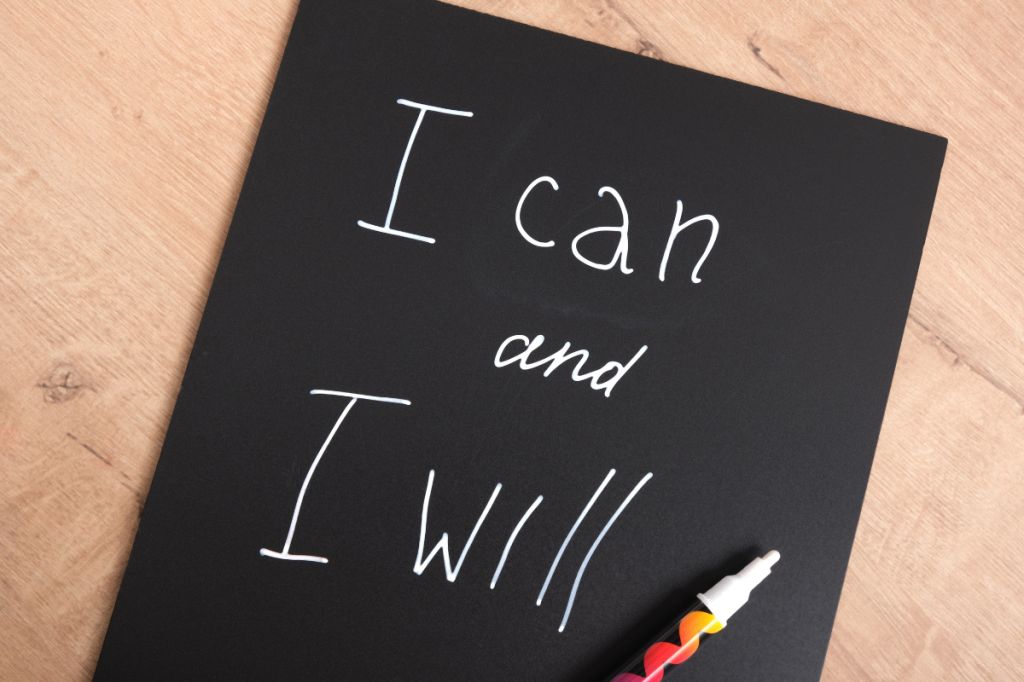
“We make our beliefs, and then our beliefs turn right around and make us,” she explains.
In other words, the brain looks for evidence to support whatever story we repeatedly tell ourselves.
“If you believe people are kind and nice, you tend to generate that out,” she says. “But if you believe everyone’s against you, you’ll always find proof of it.”
And what are the five phrases? They’re simple enough.
“I’m enough. I’m significant. I’m lovable. I matter. I’m safe to be myself.”
The key is repetition. Peer recommends saying the phrases while showering, driving or waiting for the kettle to boil — moments when the brain is particularly receptive to internal chatter.

Stop outsourcing your self-worth
One of Peer’s strongest themes is the idea that many people unknowingly hand responsibility for their emotional needs to other people.
“A lot of people go out trying to find someone who will meet all their needs,” she says. “But it’s actually your job to feel connected, safe, significant and lovable.”
That shift in responsibility can be transformative. Instead of waiting for a partner, boss or friend to make you feel valued, the focus becomes: what can you do to create those feelings yourself?
“If I want to feel connected, that’s a choice,” she says. “I’ve got to start talking to people.”
It’s a subtle but powerful change — moving from emotional dependency to emotional agency.

Learn the “accept or change” rule
According to Peer, one of the biggest emotional traps people fall into is resisting reality while feeling powerless to alter it.
“What makes people stuck is saying: ‘I can’t accept it and I can’t change it.’”
Her solution is a simple mental framework: Can I accept this? Or can I change it?
If the answer is yes to either, energy can move forward. If not, people often remain trapped in frustration, resentment and emotional paralysis.
The hack here isn’t pretending disappointment doesn’t hurt. It’s recognising that resilience comes from flexibility rather than control.
“Everyone gets disappointed,” Peer says. “It’s not what happens, it’s how you deal with it.”
Rebuild your attention span
While mindset matters, our environment matters too. Gill believes our relationship with technology is fundamentally reshaping the way we think and connect. Our constant search for stimulation doesn’t just affect concentration — it changes how emotionally present we are with ourselves and others. “We’re losing those deeper social connections,” she says.
One of her biggest recommendations is creating intentional device-free time. Gill started leaving her own phone upstairs in the evening and quickly realised she didn’t miss it. “I allowed myself to be present in a more meaningful way.”
Her advice isn’t necessarily to abandon technology altogether, but to stop using devices as a reflex every time there’s a quiet moment.

Find “flow” activities that calm the brain
Dr Kasim Usmani believes many people underestimate the emotional power of creative hobbies and sensory experiences.
For him, music has become a form of therapy. “When my fingers hit the piano keys, there’s always a sense of relief,” he says.
Usmani describes music as both a distraction from stress and a release for emotion. “It’s a very cathartic process.”
Research increasingly supports this idea. Activities that fully absorb attention — sometimes called “flow states” — can reduce stress hormones, interrupt anxious thought loops and improve mood.
And it doesn’t have to be music. Nature can have a similar effect.
“The physical benefits of casting your eye over the world, not staying in the same place, can be really powerful.”
Talk to yourself differently
Perhaps the strongest thread running through all three experts’ advice is this: your internal voice matters. Peer says many people unknowingly rehearse damaging beliefs every day: “I can’t cope.” “I’m not good enough.” “Everyone rejects me.”
Over time, those thoughts stop feeling like opinions and start feeling like facts. But she insists the reverse is also true.
“When you start to question a belief, you actually don’t believe it anymore.”
That doesn’t mean forced positivity or pretending life is perfect. It means recognising that the brain is constantly listening to the language we use about ourselves. And here is your cue to change that language right now.
Words: Sally Saunders, Images: Shutterstock