Have adults forgotten how to have fun? Experts say reclaiming play could boost wellbeing in unexpected ways
 Sally Saunders
Writer Kellie Gillespie-Wright discovers how adding some play into your life can stimulate the mind, stave off stress, and safeguard your mental health.
Words: Kellie Gillespie-Wright. Images: Shutterstock.
When was the last time you rolled down a hill, swung on a swing, or spent the afternoon colouring in? Chances are you haven’t done any such thing since childhood.
But I bet you miss that delicious joy and freedom you felt as a ten-year-old, playing your favourite game. Reaching adulthood means many of us consciously disconnect from the ability to play freely just for the sake of it. That’s something children do – something we, as working adults with obligations, often feel we don’t have time for, can’t justify, or see no point in.
‘As we get older, life becomes more serious and structured, as we take on increasing responsibilities. And, often, people’s lives are so busy, moving from one commitment or task to the next, that they have lost touch with more playful parts of themselves,’ says therapeutic counsellor Roberta King.
But maybe it’s time to reconsider the benefits of play before you write it off and consign it to the memory vaults. ‘Play is more than just fun,’ says psychologist and founder of the National Institute for Play, Dr Stuart Brown.
‘Play has the power to deeply enrich your adult life, if you pay attention to it,’ he continues. ‘And without it, we run the risk of becoming cranky, rigid, and stuck in a rut.’ We all know play is crucial to a child’s development, but it’s not just children that can benefit from a little play time.
Play for your health
Over the past 30 years, science has shown that play is vital at any age, because, amongst other things, it relieves stress, stimulates the mind, boosts creativity, and improves our connections to others. It can even help us keep physically healthy.
Regular play also wards off depression, sustains optimism, and keeps our brains flexible. ‘When we engage in free play that makes us feel happy, the brain produces endorphins and serotonin,’ says King, ‘and these feel-good chemicals can contribute to tackling all kinds of mental health conditions.’
Play can even help to keep us young. George Bernard Shaw once said, ‘We don’t stop playing because we grow old; we grow old because we stop playing’ – and it looks like recent studies back that up.
They show that play stimulates the growth of the cerebral cortex by triggering the secretion of the protein BDNF, which is essential for learning, memory, and staving off cognitive decline. Play also positively impacts our anxiety levels; playful adults feel the same stressors as anyone else, but they appear to experience and react to them differently, allowing worries to wash over them more easily than those who are less playful.
How to play
But what, exactly, is play? And what does it look like from the lofty, sensible heights of adulthood? ‘Generally speaking, play is when the activity is done purely for the enjoyment it brings,’ says King. ‘And more often than not, play as an adult is less about the activity you’re doing and more about the state of mind you’re in while doing it.’
Psychologist Dr Peter Gray boils it down to five elements that combine to create an act of play. First and foremost, it has to be self-chosen and self-directed, and that means doing it for you. If you’re doing it to please someone else, it’s not play.
It also has to be intrinsically motivated and done for its own sake, rather than for some reward outside of the activity itself – that means taking a bike ride because it’s fun, not because you’re trying to lose five pounds.
There also needs to be some structure guided by mental rules, it needs to have a creative aspect, and, finally, the participant needs a playful state of mind without stress or fear of judgment. So that means letting go of your ego and kicking your inner critic to the curb. Play often leads to flow, that state when you’re completely focused and in the zone, and flow has been shown to silence your inner critic, which can help you make positive changes in your approach towards life.
And, if you’re able to get into a flow state, you’re more likely to be happier and feel more satisfied with your life, so your mental health and wellbeing will in turn benefit. Luckily, it turns out that the instinct to play is hard-wired into our brains.
What’s your ‘play nature’?
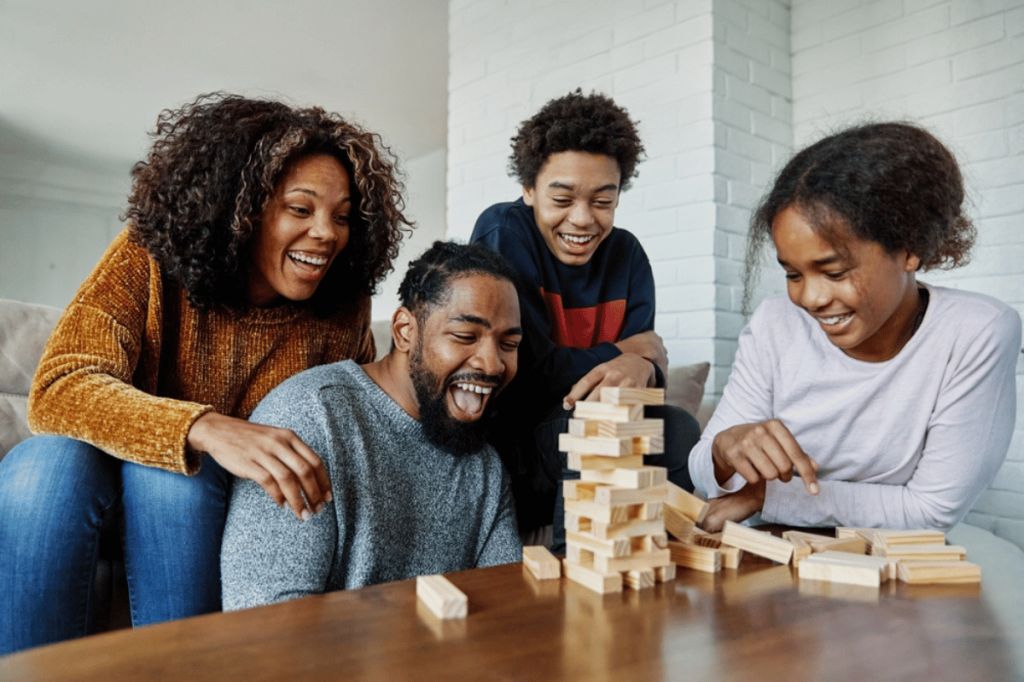
‘Play is a basic biological drive, as integral to our health as sleep or nutrition,’ says Dr Brown. And here’s an interesting thing: each of us has an inherent ‘play nature’ that is as unique to us as our fingerprints.
This is made up of a combination of the wiring you were born with and the neural pathways that developed in your brain during your childhood. As we grow, those preferences expand, interact, and, if not suppressed, lead to our play personality, which includes the preferences we have for particular types of play, such as movement play, object play, or social play.
However, despite this inbuilt primal urge to play, many of us still find it surprisingly hard to know how to have more fun. Partly because as adults we worry about how we will look to others, and partly because it’s been so long since we played – properly played – that we’ve forgotten how to. But play doesn’t have to be complicated – it’s just doing something for the sake of it that brings you joy.
Identifying your play personality can help you get started. For instance, are you an explorer or a storyteller? A competitor or a creator? These are just four of the eight play personalities identified by Dr Brown that can help you find out what kinds of play work best for you.
The others are the kinesthete who loves to move their body, the director whose joy comes from planning and putting on events, followed by the joker and the collector. Most of us are a blend of several, but one is usually dominant, and knowing your style can help you figure out which activities you like. It can also help you eliminate activities that you don’t enjoy.
Back to childhood
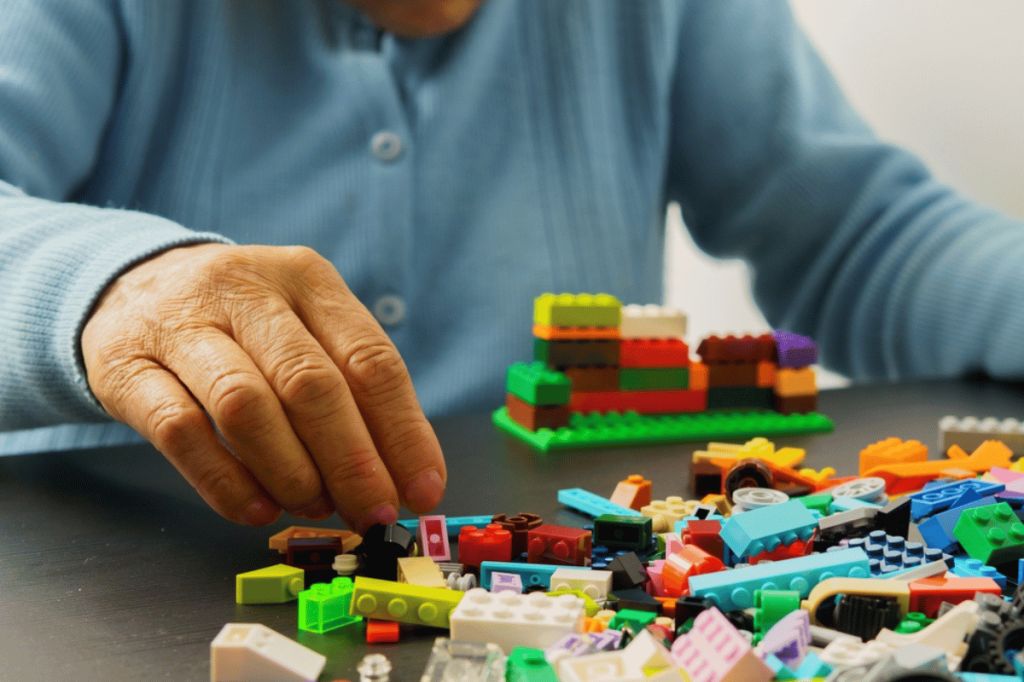
If you’re still stumped, try thinking back to the things you enjoyed most as a child. What made you feel free? What did you become so absorbed in that you lost track of time?
Those activities are a good clue to the kinds of activities that will be playful for you today. Put them into a list, then brainstorm the grown-up versions. If you liked climbing trees, maybe you can try indoor rock climbing.
Or if you loved Play-Doh, maybe you could take a pottery class. ‘Starting with something familiar may help it to feel less daunting,’ says King, ‘and that can often reignite a passion or be a pathway to trying something related but new to you.’
Creating a special play space such as a reading nook or a games corner, or setting aside some time – even if it’s only for an hour a week – can also help you get into the playing frame of mind. ‘Taking specific time out for play is another way to encourage ourselves to prioritise our needs and make time for self-care,’ says King, ‘which in turn helps us foster self-worth.’
And don’t forget to always embrace a playful mindset. Approach the idea of play with curiosity, and don’t be afraid to try new activities or hobbies. You might discover a surprising new passion or interest, such as rollerblading, playing the guitar, or even woodcarving that puts you right in the middle of the zone.
‘Be open-minded and choose things that bring a sense of excitement when you think about doing them,’ says King. ‘And don’t feel you have to get it right straightaway; it might take some time to find what activities work best for you, but that’s all part of the fun.’ And, finally – but perhaps most importantly – remember, this is about being playful, and if you’re not having fun, just try something else!
Next steps
Read Play: How It Shapes The Brain, Opens The Imagination, And Invigorates The Soul (Penguin Putnam, £17) by Dr Stuart Brown.
Watch Gary Ware: How Play Saved My Life at ted.com.
Listen to the People Who Play podcast.
Roberta King is a therapeutic counsellor. She works with a range of clients but has a special interest in addiction, self-esteem and creative therapy. robertaking counselling.co.uk
Dr Stuart Brown is a psychologist and founder of the National Institute for Play. He is the author of Play: How It Shapes The Brain, Opens The Imagination, And Invigorates The Soul (Penguin Putnam, £17). nifplay.org