Moving to the city changed how I see beauty — and helped me feel more visible in unexpected ways
After moving from the always Insta-worthy Northumberland landscape, Caro Giles discovers there’s still beauty in the city if you take the time to seek it out.
 Sally Saunders
Words: Caro Giles. Images: Shutterstock.
I’ve spent the last few weeks, since moving to the city, familiarising myself with the streets around our basement flat. Autumn has now fully chased summer away for another year, and I’m enjoying wallowing in the nostalgia of crisp early mornings.
When I walk up the steps onto our street, chasing two daughters towards the car, the smell in the air and the slight chill on my skin takes me back to the endless school runs I did when we lived in Northumberland.
Although school has always been problematic for some of my children, I did find something reassuring in the drives back and forth from the house towards the sea. Heading out of the town each autumn, the road was lined with trees that burned brightly, leaves like flames that would soon fall to the ground.
I watched the sea slowly appear beyond the fields where curlews and oystercatchers pecked at the scrub. Sometimes I would even run down to the beach once my daughters were safely inside the classroom, peel off my clothes and hurl myself into the waves. It’s still too early for the wintery sunrises that split the sky open, but I know I will soon feel nostalgic for them too.
The trees in my new city are varied and beautiful. There is an ash tree across the park, standing alone next to a tenement block on a road that is one of the main arteries into the city centre. Its trunk is many metres tall, long and smooth, with branches that explode into a shower of leaves. This ash tree has been nominated for the Woodland Trust ‘Tree of the Year’ award, and my daughters and I have all voted for it.
It is not the prettiest tree in the world, but it is very precious because of its solitary status in the middle of one of the busiest streets in the city. It would be easy to dismiss it, but sometimes the best things in life are not the most obvious, they are the ones that take a little more effort to find.
When I lived in Northumberland, it was easy to be wowed by the landscape. Northumberland is one of the most stunning parts of the UK, with its wild empty beaches and shadowy hills. It was impossible for me to ever take a bad photo — everything is Instagram-perfect along that glorious stretch of coastline.
I’ve had messages from people who are shocked I moved away from the picturesque rock pools and sand dunes where my babies grew into children, but the truth is that my family needed something different. It’s less obviously scenic in the city, especially this one, which has struggled from a lack of investment and the collapse of its industries.
But I love our new school run as much as the old one. The buildings along the way are majestic and bursting with stories. As I weave around the streets in my car, daughters chattering, I allow my head to roam around and imagine more books I will write, inspired by these new surroundings.
Each day we drive across a mighty river that is sometimes cloud-drenched and dull, and other times shining brightly as it captures the sun in its ripples. The area where I rent our flat is fairly gentrified — students live happily alongside creatives, families and all sorts of professionals. There are lots of kids too, kicking a ball in the communal garden or scooting along the pavements.
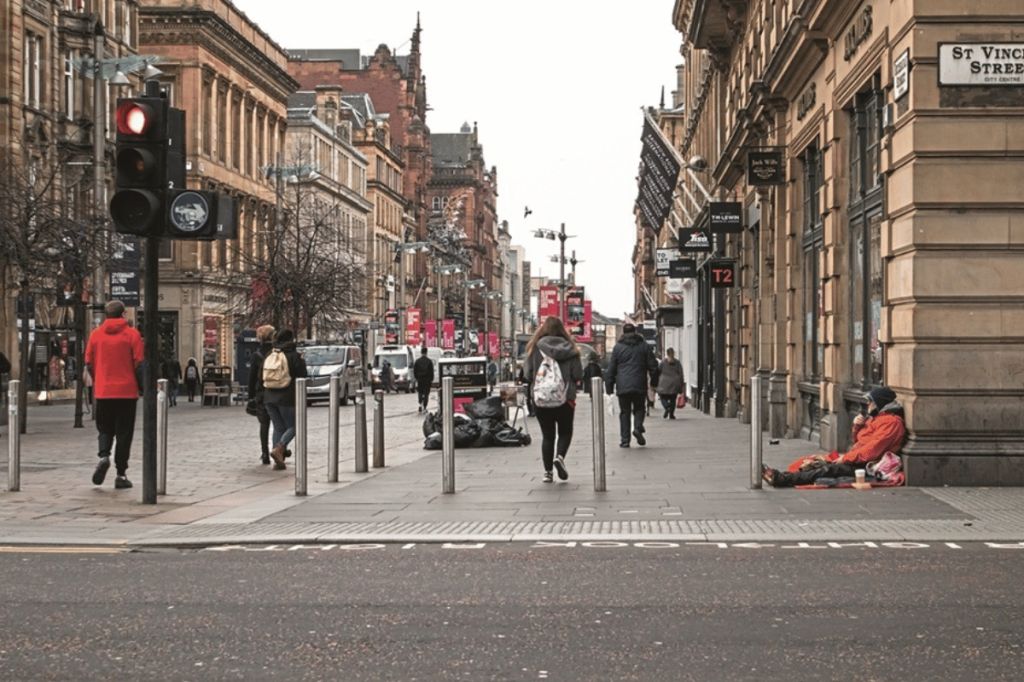
The Botanical Gardens are a five-minute walk away and many of the blocks of flats are grand, with turrets and sash windows. But the bins at the end of our road frequently spill over with rubbish, and a homeless guy sits on the pavement with his back to the Tesla parked outside Waitrose. It’s not that poverty didn’t exist in the countryside, just that it was hidden away.
The divide between rich and poor is plain to see in our new home. I’ve been thinking a bit about what it means to be seen. Really seen. And maybe it is amongst millions of people, where I am mostly anonymous, that I now feel most visible. I still pinch myself when I walk home from the supermarket very slowly, to eke out the minutes when I can pretend I am not needed by anyone.
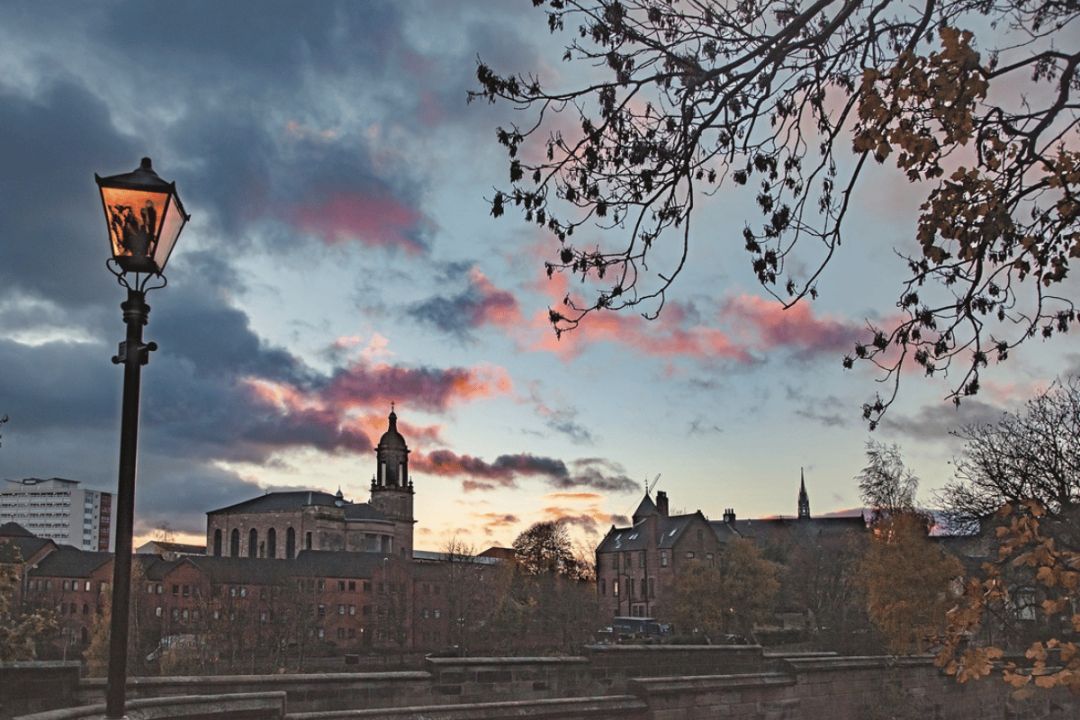
Often it is in the evening, when wisps of smoky cloud are floating across an apricot sky and a gull is pecking at a discarded sandwich wrapper on the pavement. Students lean out of windows above me and call down to friends. My elderly neighbour upstairs walks into her flat clutching a bouquet of flowers and I imagine they are for the man she married over fifty years ago. Everywhere I look, stories are unfolding.
Caro Giles is an author. She writes about life on the edge, particularly exploring themes around her life as a single parent and carer. In 2021 she won the inaugural BBC Countryfile New Writer Award. Her book, Unschooled (Little Toller, £20), is a searing memoir about raising her children outside the traditional education system.