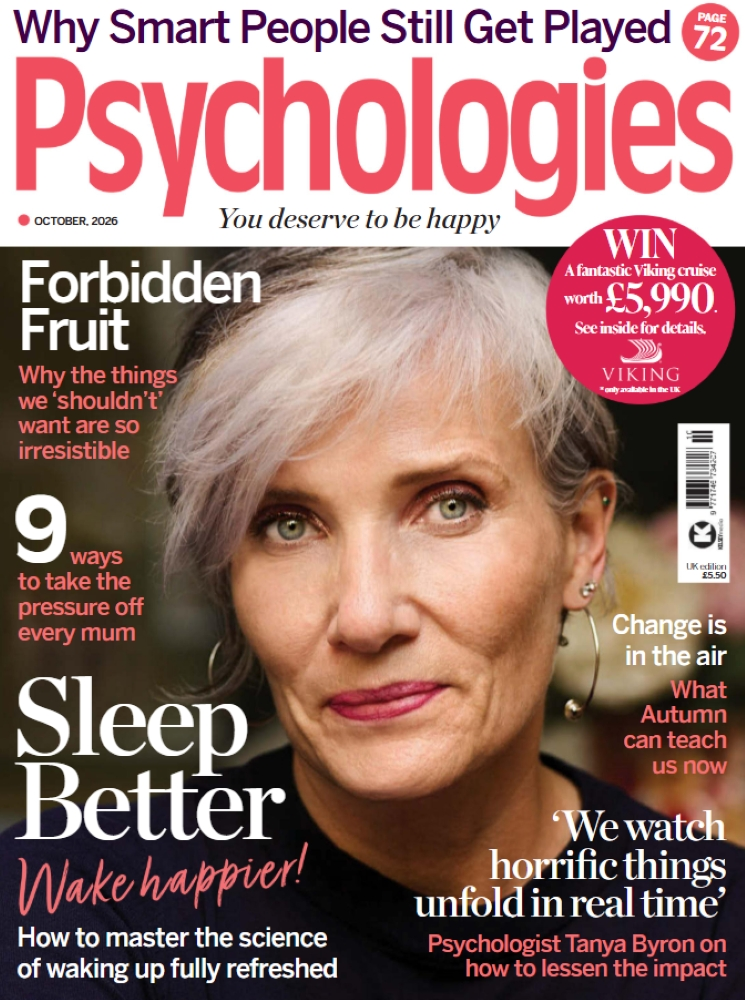
Why being the Golden Child can be just as bad as being the Scapegoat: The hidden impact of narcissistic family roles
 Sally Saunders
Being treated as the family favourite might seem like a blessing, while becoming the family scapegoat can feel like a curse. But psychologists say both experiences can leave lasting emotional wounds, shaping self-worth, relationships and identity well into adulthood.
Many adults spend years wondering why they struggle to trust themselves. Why criticism feels devastating, they constantly seek approval, and never quite feel good enough, no matter how much they achieve.
Psychologists say the answer may lie in a surprising childhood paradox. Research into narcissistic family dynamics suggests that children who are either heavily criticised or excessively praised can grow up facing remarkably similar struggles with self-worth, perfectionism and identity.
“There are two parenting approaches that we know reliably produce narcissistic traits – and they look nothing alike,” says Dr Jemma Anderson, specialist educational and child psychologist. “One is coldness; and the other is overvaluation. The child told they are extraordinary, and the child told they are worthless, can end up in surprisingly similar psychological places.”
On the surface, these approaches seem opposite. One child grows up criticised and emotionally neglected. Another is constantly told they are special, exceptional, or superior. Yet both can emerge with fragile self-worth because neither has been accepted simply for who they are. Instead, their value becomes tied to a role, an image, or a set of expectations.
Even well-meaning praise can teach children that their worth depends on performance rather than simply being. “Children become valued for a role they perform rather than for who they are,” Anderson notes.

The hidden dynamics of narcissistic family systems
This dynamic often defines narcissistic family systems, where love and acceptance are conditional, contingent on fulfilling another person’s emotional needs.
“A narcissistic parent doesn’t create one kind of child,” Anderson explains. “They create a family system – with roles, rules and a hierarchy of worthiness that every child in that house must navigate. In a family built around a narcissistic parent, love isn’t something you receive. It’s something you perform – and every child must learn their part to survive.”
The clearest example of this is the creation of family roles: the “golden child” who is idealised and praised, and the “scapegoat” who absorbs blame, criticism and disappointment.
Despite appearing to occupy opposite ends of the spectrum, both roles arise from the same dysfunction.
“The golden child and the scapegoat are not opposites,” Anderson says. “They are two sides of the same wound – both shaped by a parent who needed children to be something, rather than someone.”

How survival strategies become personality traits
Children in these environments often develop survival strategies that extend far into adulthood.
Taz Thornton, a TEDx speaker, bestselling author and empowerment coach specialising in confidence, self-worth and personal transformation, speaks both from professional experience and lived experience. She explains: “Children raised in those environments learn very early to read the room, because emotional safety depended on anticipating moods, managing reactions, staying one step ahead. Many grow into adults who are extraordinarily perceptive and empathic – genuinely gifted at sensing what others need – but the shadow side of that same skill set tends to be an almost complete inability to attend to our own needs without guilt.”
These adaptive strategies can take many forms. Some adults learned to stay small and quiet to avoid volatility. Others became perfectionists because love felt conditional on performance. Some became caretakers because that was the only role that felt safe – often it’s all three at once.
“What makes this particularly complex is that these patterns feel completely normal to the person living them,” Thornton notes. “They’re not experienced as coping strategies, they’re just ‘how I am.’ It can take significant work to recognise that what feels like personality was actually an adaptation, and considerably more to begin separating the two.”

Why the golden child and scapegoat often share the same struggles
The paradox is striking: both extremes of parenting – cold neglect and excessive praise – can leave children struggling with the same core issues: fragile self-worth, perfectionism and an unstable sense of identity.
The golden child may tie their identity to achievement and external validation. The scapegoat may internalise criticism, struggling with boundaries and self-worth. In both cases, children are valued for what they do rather than who they are.
“Healing often begins with recognising that the family narrative was never the whole truth,” Anderson says. “Narcissistic parents don’t assign the roles of the golden child and the scapegoat consciously. But they assign them nonetheless. One child becomes the mirror that reflects back everything the parent wants to see. Another child becomes the container for everything they don’t. Neither child is truly known.”

Reclaiming your identity beyond childhood roles
Recovery involves separating identity from the role assigned in childhood. It means discovering that worth is not something to be earned through perfection, compliance or performance.
Thornton emphasises that this process often requires relearning how to prioritise yourself: “Adults who grew up in these systems need to practise attending to their own needs without guilt. It’s about separating what you learned to do to survive from who you truly are.”
Ultimately, whether a child was treated as extraordinary or worthless, the underlying lesson is the same: children grow up learning to perform for love rather than being loved simply for who they are.
The golden child and scapegoat labels are not life sentences. With awareness, support and sometimes professional guidance, adults can reclaim their identity, unlearn harmful patterns and build a sense of self that is authentic and unconditioned.
The parenting paradox is subtle but profound: extremes that appear diametrically opposed can create the same lifelong struggle. The difference lies not in the child, but in how the child’s value was defined. Healing begins when that narrative is questioned, rewritten and ultimately released.
Words: Sally Saunders, Images: Shutterstock