
Could memories lost to Alzheimer’s still be hiding in the brain? A leading neuroscientist explains why it could be possible
Could memories thought lost to Alzheimer’s still be hidden in the brain? Neuroscientist Steve Ramirez explains how groundbreaking research in mice could offer new hope for unlocking memories – and what it could mean for future treatments
By 
Pics: Getty images
With more than 55 million people worldwide living with dementia – and Alzheimer’s responsible for most of those cases – one man who has made remarkable advances in brain science has given a glimmer of hope into how it may be possible in the future to bring lost memories, a prominent symptom of the disease, back to them.
Although Steve Ramirez Steve Ramirez, associate professor of psychological and brain sciences at Boston University, is optimistic about the findings scientists reported, he remains cautious, citing the research – that was done in mice – may not necessarily work the same with human brains.
“The possibility that something we thought was lost, memories, might instead still be present and potentially recoverable is incredibly exciting and currently a powerful line of research,” he explained.
What was involved in the study?
Steve Ramirez was part of a research programme that pioneered the technology for manipulating memory. This enabled the team behind the study to work with mice genetically engineered to develop Alzheimer’s-like memory problems and through various scientific steps, they found that in those mice models, memories could still exist in the brain but were difficult to retrieve.
Below, we asked Professor Ramirez about what the research in mice could mean for people living with Alzheimer’s.
How has research proven that some memories may be lost, but not completely erased?
“Research in mouse models raises the tantalising possibility that some memories that appear to have been lost could still be stored in the brain but become inaccessible.
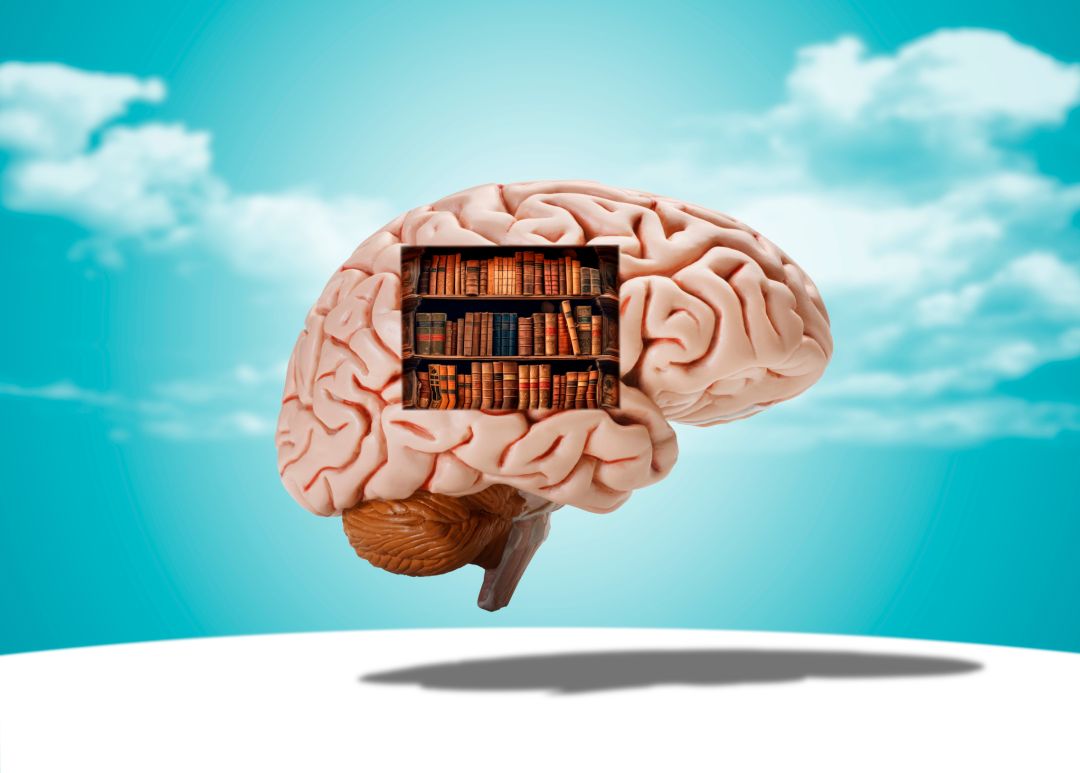
“One of the most exciting findings from memory research is that a memory can become inaccessible without being completely erased. In animal models of Alzheimer’s disease, infantile amnesia, addiction, traumatic brain injury, and even sleep deprivation, researchers have been able to artificially reactivate memory-related brain cells and recover memories that otherwise appeared to be lost. That tells us that, in at least some cases, the information may still exist in the brain, and that the problem may be accessing it rather than storing it in the first place. In other words, it may be the case that the library of books (memories) remains intact but that we have to restore the librarian’s access to each.”
What does it mean scientifically to say a memory is hidden in the brain?
“I like to think about a memory almost like a symphony. The individual notes may still be there, but unless the orchestra plays the right pattern at the right time, we may never hear Beethoven. Scientifically, a “hidden” memory could mean that the cells and patterns of activity that once represented an experience are still present but have become dormant or difficult for the brain to reactivate through natural means.”

Could certain smells, songs and other things help unlock memories that have potentially disappeared?
“Absolutely. Sensory cues can be extraordinarily powerful triggers for memory because they can reactivate parts of the networks associated with the original experience. Music is a beautiful example: we sometimes see people with a neurodegenerative disorder respond to familiar songs even when many other memories are difficult to access. These patterns of acoustic stimuli (e.g. music) therefore may have privileged access to corresponding parts of our past. Smell is another particularly powerful cue; olfaction is evolutionarily ancient and has unusually direct relationships with brain regions involved in emotion and memory. Sometimes a familiar smell, melody, or place can act like a key that helps the brain reconstruct an experience and bring it back to life.”
Are you hopeful from this mouse-model research that treatments could be developed to restore lost memories?
“I’m very hopeful, while also being appropriately cautious. A mouse brain is of course not a human brain, but we are both mammals and many of the fundamental biological rules (and brain areas) governing memory appear to be conserved. If we can understand why a memory becomes inaccessible and what allows us to recover it in mice, then we can begin asking whether some of those same principles might eventually be harnessed safely in people.”
What type of treatments could be looked at?
“Some of the most promising approaches may actually build on tools we already have. Cognitive behavioral therapies and other memory-based interventions, for instance, might be refined to more effectively engage particular memories or the emotional states associated with them.
“Farther into the future, I can imagine therapies that act more selectively on the biological machinery of memory itself, perhaps even drugs capable of targeting the cells or molecular pathways that help particular memories become accessible again. We are not there yet, but understanding the biology of memory gives us a powerful roadmap.”
For people with Alzheimer’s, could this give a glimmer of hope to their loved ones?
“I think it can provide genuine hope, as long as we are careful not to overpromise. What these experiments suggest is that apparent forgetting does not necessarily mean that every component of a memory has been erased or lost forever. In some circumstances, the memory may still exist but be difficult to retrieve naturally. For families affected by Alzheimer’s disease and related dementias, that possibility is scientifically profound because it implies that a person’s access to the past may one day be restored with the proper treatments. The challenge now is determining when and how this may work in people and whether we can safely restore access to those memories in an enduring manner.”
Could sleep play a role in deciding which memories remain accessible?
“Very much so. While it may not sound like it on the surface, sleep is an active biological state during which memories are reorganized and integrated with existing memories of the past as well. When sleep is disrupted, those processes can also be disrupted, which may make memories harder to retrieve even when aspects of the original memory trace remain — a lack of sleep, in other words, can immediately begin to impair our ability to retrieve the past. Understanding how sleep changes the accessibility of memories is therefore an important part of understanding memory loss more broadly.”
In your work, how does this research make you feel?
“It makes me enormously optimistic. Some of the most rewarding moments in science come when biology and people turns out to be more resilient than we expected. What gives me the most hope, though, is the collective effort of scientists, clinicians, patients, families, and the public to understand and prioritize our own brain health and the brain health of our loved ones.”
What needs to be done in your opinion in terms of future treatments?
“In my opinion, we need to understand the basic biology first: what changes in a memory when it becomes inaccessible, which parts of the memory trace survive, and what allows the brain to successfully retrieve it again.
“From there, we need rigorous translational work to determine which principles actually carry over from animal models to humans, followed by treatments that are safe and ethically responsible. And this simply cannot happen only inside laboratories because brain health has to become a broader societal priority, from prevention and clinical care all the way through public education and policymaking. My hope is that, collectively, we can take what we learn about how memories are stored and recovered and eventually use that knowledge to restore health and well-being to people whose memories and livelihood have been disrupted.”
Steve Ramirez book ‘How to Change a Memory: One Neuroscientist’s Quest to Alter the Past’, was shortlisted for this year’s Royal Society Trivedi science book prize