The rise of ‘menorexia’: Why hitting menopause might make you vulnerable to eating disorders
As priorities shift in midlife, menopause can prompt women to rethink confidence, intimacy and relationships — and become clearer about the person they want beside them.
 Sally Saunders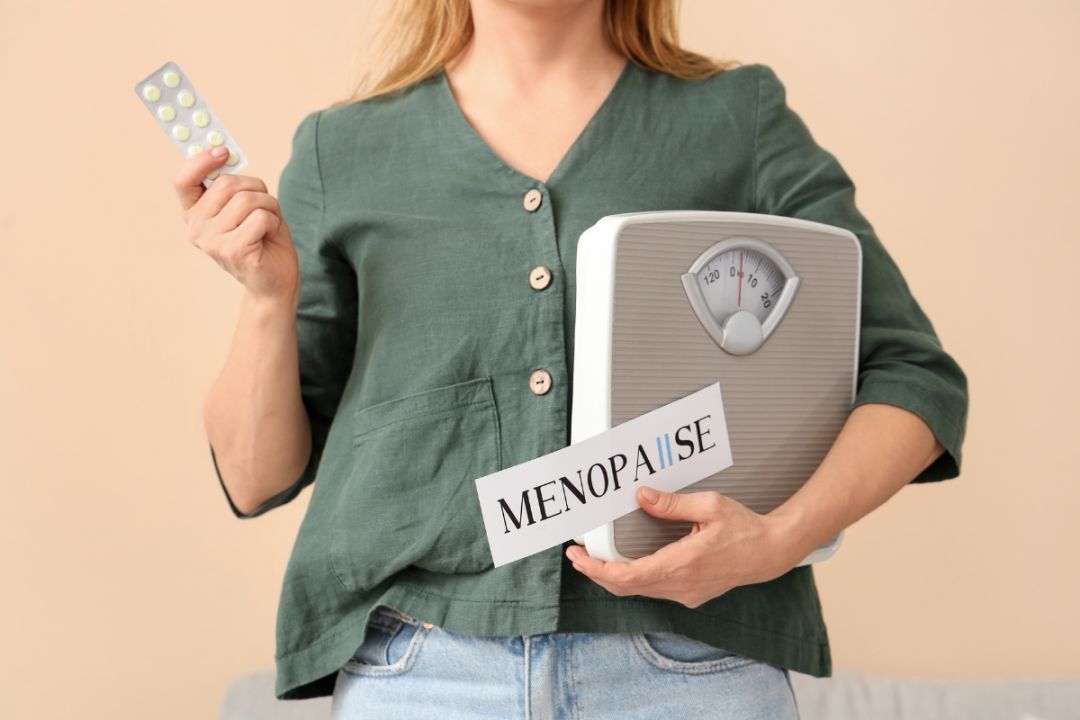
We tend to think of eating disorders as belonging to adolescence. But what happens when a woman who has spent decades navigating diet culture reaches her forties or fifties and suddenly finds that her body is changing in ways she can’t control?
Her waist changes — almost invariably growing outwards. Her weight shifts, again, upwards. Sleep becomes harder. Hormones fluctuate. And after years of being told that thinness is something to strive for, the temptation to start restricting again can be powerful.
Online, some people have begun calling this “menorexia” – a blend of menopause and anorexia. The term isn’t a recognised medical diagnosis, and it shouldn’t be confused with anorexia nervosa itself. But it has emerged as a shorthand for a growing conversation about eating disorders and disordered eating in midlife.
When the body changes at menopause
Nutritionist Karen Newby , author of The Post Menopause Method (Pavillion Books, £22) has seen how complicated this period can become for women. “Sudden weight gain, metabolic changes – these changes in hormones do mean that we can put on weight,” she says. “And especially around the middle.”
For someone with a history of dieting, that can be enough to reignite old anxieties. “We’ve grown up with a lot of those 90s-era restricted-calorie diets, or the idea of ‘heroin chic’, and thin is best,” says Newby. “A lot of us have a very complicated relationship with food still.”
And that history matters. A woman doesn’t necessarily have to develop an eating disorder from scratch in midlife. Old patterns can resurface after years of relative stability, particularly when a major life transition brings renewed dissatisfaction with the body. Eating disorders can also develop for the first time in adulthood, although midlife remains under-recognised and under-researched.
Menopause itself doesn’t cause an eating disorder. Rather, it can become one factor in a complicated mix of hormonal change, body dissatisfaction, ageing, stress, past dieting and the relentless cultural pressure to remain thin.
And that pressure is getting harder to escape. Women are now surrounded by messages about “menopause weight”, metabolic health, biological age and reversing the effects of ageing. Weight-loss injections have added another layer, offering an increasingly normalised route to becoming smaller just as many women are experiencing profound physical change.
The impact of weight-loss medication on attitudes
Newby isn’t opposed to medication. She points out that GLP-1 drugs can be valuable for people who have struggled with their weight. But she is concerned about what rapid weight loss can mean for women at midlife. “The jabs make you starve, basically, and make you lose weight very quickly,” she says. “But this can have a massive impact on our bones, especially at midlife, and our muscles.”
For Newby, the answer is to change the definition of what it means to be healthy at this stage of life. “The way that I see menopause – menopause beauty – is in strength and looking strong and having muscles,” she says. “Strength training is incredibly important as we age, so that we don’t become frail.”
That is a very different message from the one many women have absorbed throughout their lives. Instead of asking how little we can eat or how much weight we can lose, it asks what our bodies need in order to remain strong, energetic and well nourished.
What’s underneath our changed attitude?
Because the warning signs of an eating disorder can be surprisingly easy to disguise as “wellness”. Skipping meals can look like intermittent fasting. Exercising compulsively can look like dedication. Obsessing over ingredients can look like healthy eating. Constantly weighing yourself can look like taking responsibility for your health.
The question is what happens underneath those behaviours. Are you eating differently because it makes you feel well, or because you are frightened of gaining weight? Are you exercising because you enjoy being strong, or because resting makes you feel guilty? Is food becoming something you think about constantly? Those distinctions matter.
Newby believes that we need to stop treating ageing as something women should fear. “There is massive pressure because women aren’t allowed to age,” she says.
Her own philosophy is deliberately optimistic. “I don’t want to look 40 or less. I want to look my age. But I want to age brilliantly.”