Understanding the stress-relief tool everyone is talking about (and it doesn’t cost a penny!)
 Sally Saunders
As anxiety, burnout and poor sleep continue to rise, breathwork techniques are moving from wellness trend to mainstream mental-health tool.
Stress rarely arrives in one dramatic moment. More often, it accumulates slowly — work pressure, financial worries, relationship strain, poor sleep and the constant noise of modern life gradually pushing the nervous system into overdrive. Eventually, the body starts responding before the mind fully catches up.
Breathing becomes shallow. Thoughts race. Sleep suffers. Small problems suddenly feel overwhelming.
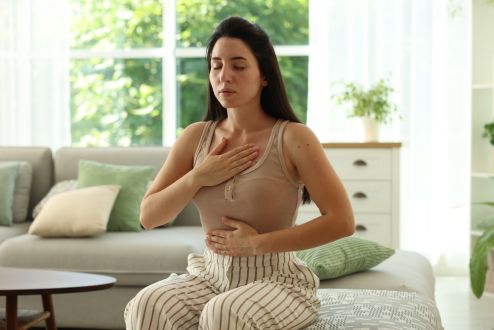
That growing sense of overload is one reason breathwork — the practice of consciously controlling breathing patterns — is rapidly entering the mainstream. Once associated mainly with meditation and alternative wellness culture, breathing techniques are now being used everywhere from therapy rooms and mindfulness classes to elite sport, military training and workplace wellbeing programmes.
The appeal of simplicity
Part of the interest lies in the fact that it requires no equipment, no experience and no complicated language. It just comes down to pausing, slowing down, and breathing with intention.
For many people struggling with stress, anxiety and emotional exhaustion, that small pause can make a noticeable difference.
For clinical hypnotherapist and breathwork coach Simon Verhage, breathwork became one of the tools that helped him through periods of depression, anxiety and suicidal thoughts following relationship breakdowns.
“I’ve been through depression myself, anxiety and feeling on the verge of suicide,” he says. “Looking back at all of it, it was mainly down to relationship breakdowns that I have actually felt like this.”
Today, through his support community Men’s Mind Cave, Verhage begins group sessions with guided breathing exercises designed to calm the nervous system before conversation even starts.
“It’s a simple technique to bring you back to the present moment,” he says. “To self-regulate and bring the nervous system under control.”
Why breathing changes how we feel
Stress has a direct physiological impact on breathing patterns. When people feel anxious or overwhelmed, breathing often becomes quicker and shallower, reinforcing feelings of panic and tension.
Slower, controlled breathing can help interrupt that cycle by activating the body’s calming response.
According to Dr William Van Gordon, who spent a decade as a Buddhist monk before moving into academia, the breath acts as what contemplative traditions describe as an “anchor” — something that keeps attention grounded in the present rather than spiralling into worries about the future.
“The breath is a really useful and meditative anchor,” he says. “It’s a way of anchoring the mind in the present moment.”
Dr Van Gordon, a chartered psychologist and associate professor of contemplative psychology, believes modern life leaves many people profoundly disconnected from themselves.
“So many people end up feeling exhausted and having mental health problems because they’re distracted from themselves all the time,” he says.
His recommendation is deceptively simple. “Just stop, breathe and actually be with yourself,” he says. “Take some time out of this life to experience your existence even for a short moment.”
Why breathwork resonates with so many people
Across the UK, wellbeing groups focused on mindfulness, emotional resilience and mental health are growing rapidly. For many people, breathwork provides a more accessible entry point than traditional therapy because it starts with the body rather than requiring immediate emotional disclosure.
Instead of beginning with difficult conversations, participants first focus on physically slowing themselves down.
“Just being able to talk can shift emotions already,” Verhage says. “But the breathing helps people settle first.”
One technique he regularly teaches is box breathing, commonly used by athletes, first responders and military personnel to manage stress and improve focus.
The method is simple:
- Inhale for four seconds
- Hold for four seconds
- Exhale for four seconds
- Hold for four seconds
Why not try it now? Simply take a deep breath in for four counts, hold for four counts, breathe out for four counts, and hold for four before beginning again. Repeat a few times: in for four, hold for four, out for four, hold for four.
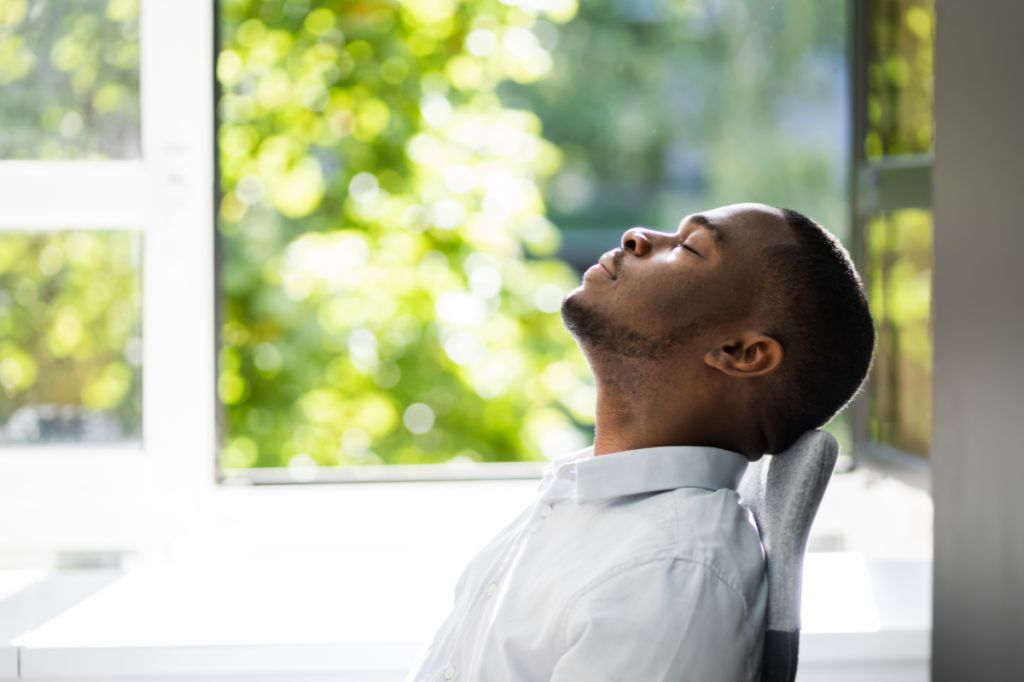
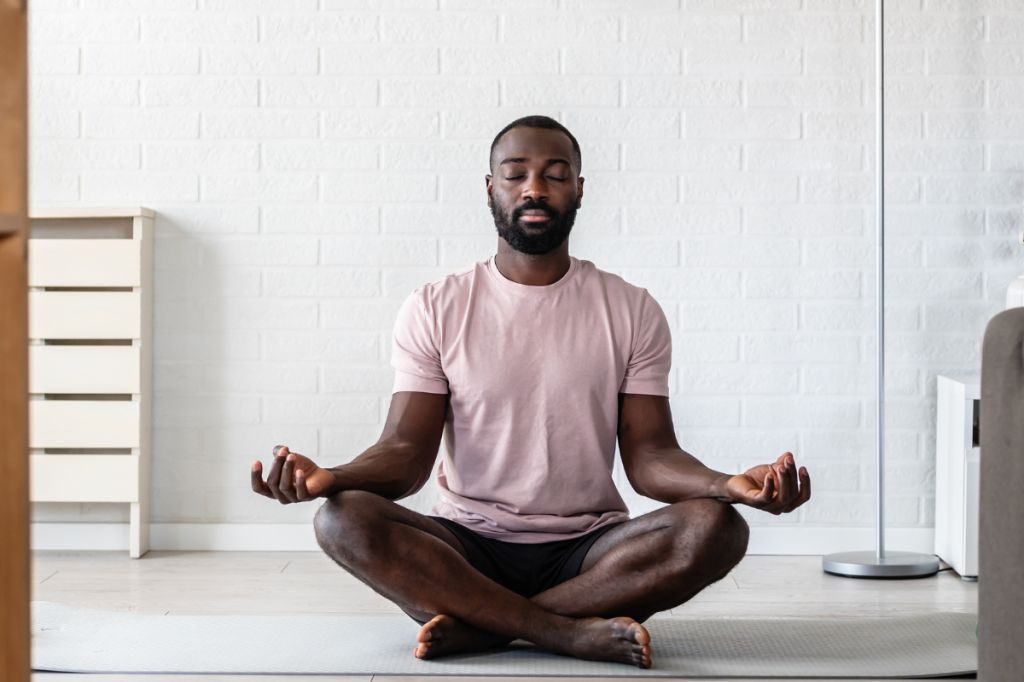
Stay here, letting your eyes rest on the calming image below, and repeat the box breathing until you feel calmer and more centred.

And if you need even more instant support, or to wind down at bedtime, Verhage recommends the 6-7-8 breathing method for anxiety and poor sleep.
“That’s breathing in for six seconds, holding for seven seconds and breathing out for eight seconds,” he says. “The out breath is a lot longer than the in breath, so essentially you’re calming down the nervous system.”
Longer exhales are believed to help activate the parasympathetic nervous system — the body’s “rest and digest” state — slowing heart rate and encouraging relaxation.
More than just relaxation
For both men, breathwork is about more than simply calming down. Van Gordon sees it as part of a broader practice of self-awareness and emotional regulation. “If we just sit and observe the breath and don’t disturb it, it will naturally settle and become clear,” he says. “A bit like a muddy pond.”
The aim, he explains, is not to suppress emotions but to create enough distance to observe them without becoming overwhelmed. “We can actually have some perceptual distance,” he says. “That’s very important — to have that centre within ourselves, that place of calm and stability.”
Verhage says longer guided breathing sessions can sometimes unlock emotions people did not realise they were carrying. “I’ve done breathwork journeys for people where it released so much that they burst into tears suddenly,” he says. “They were saying, ‘I never realised that was there.’”
For people used to suppressing vulnerability or emotional stress, those moments can feel confronting — but also relieving. “A lot of us do close ourselves down,” he says.
A quiet pause in a noisy world
Breathwork is not a replacement for therapy, medication or professional mental health care where needed. If you are struggling, always see help from a medical professional.
But psychologists increasingly recognise slow breathing practices as useful tools for stress reduction, mindfulness and emotional regulation.
Part of the appeal may be that breathing offers action before explanation. There is no pressure to immediately articulate emotions you may not fully understand yet.
You begin with something smaller.
A pause.
An inhale.
An exhale.
And in a world that rarely stops moving, that brief moment of stillness may be exactly what we have been missing.
Words: Lucy Rawlinson, Images: Shutterstock