‘I couldn’t move or call for help’: why some people experience terrifying visions at night, and how to prevent them
From shadowy figures and ghostly presences to the sensation of something sitting on your chest, sleep paralysis can be terrifying. We asked a sleep expert why it happens and what you can do about it.
 Amy Mica Marsden
Images: Shutterstock.
It’s 2 am. You just woke up, which isn’t that unusual, except you realise you’re unable to move anything but your eyes. And what’s worse – you have the sinking feeling you can see a ghost in your room, or even something sitting on your chest.
When we go to bed, we hope for nothing but sweet dreams – or no dreams at all. But for as far back as we know, some of us have been unlucky enough to experience terrifying visions and sensations in the dead of night.
Around 8% of the general population will experience at least one episode of sleep paralysis in their lives, along with 28% of students and 32% of psychiatric patients, according to clinical psychologist, author, and expert in sleep disorders, Dr. Brian Sharpless.
But what causes this phenomenon, and is there anything we can do to stop it?
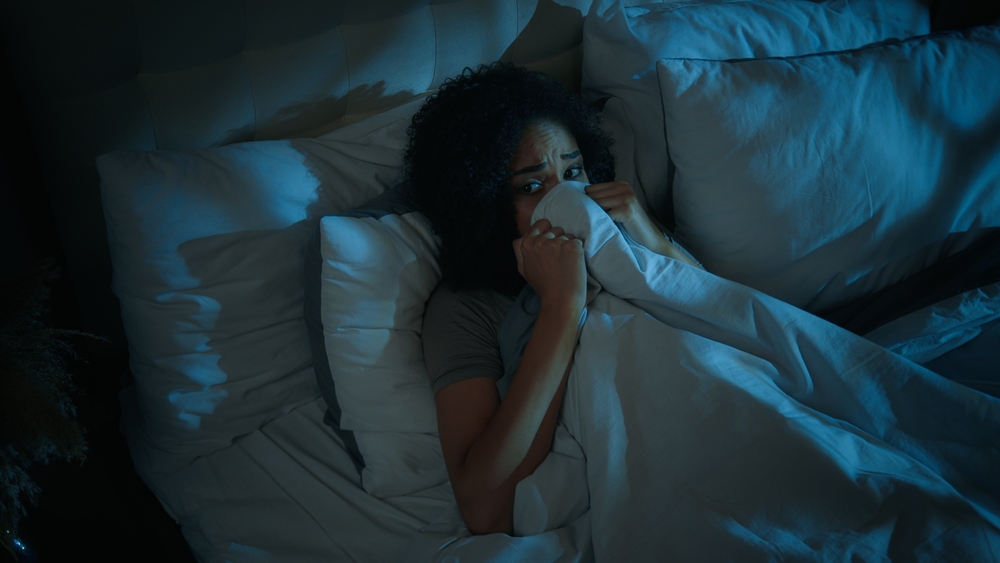
Sleep paralysis triggers
‘Basically, aspects of REM sleep are still running while the rest of you has woken up,’ explains Sharpless. ‘During REM sleep your brain paralyzes your body so you don’t act out your dreams. In sleep paralysis, that inability to move, and often the vivid dreaming that goes on during REM sleep, carries over into waking life.’
This means that your dreams instead manifest as vivid hallucinations – often sinister in nature. Episodes tend to last anywhere from a few seconds to several minutes, but can feel much longer, especially when you’re powerless to do anything about them.
But why does it happen? ‘The biggest driver is disrupted sleep,’ explains Sharpless. ‘Researchers can actually trigger episodes in the lab just by waking people at particular moments. Anything that disturbs your sleep makes sleep paralysis more likely: [for example] jet lag, doing shift work, pulling all-night study sessions, and irregular schedules.’
According to Sharpless, drinking alcohol before bed (leading to REM ‘rebound’ effects in the second half of the night), stress and anxiety, and even sleeping on your back are also all known possible triggers for a sleep paralysis episode.
‘Stress matters a great deal,’ he adds. ‘People with high anxiety, panic disorder, PTSD, or a history of trauma report it more frequently. It can become a vicious circle, because a terrifying night causes more stress, and more stress makes subsequent episodes more likely. Genes play a part as well.’
Why is sleep paralysis often so scary?
Sharpless tells us that only around 30% of regular dreams are nightmares, but sleep paralysis hallucinations are ‘almost always threatening’.
‘Here’s the typical sequence: first, you wake up unable to move and sense that something is in the room with you,’ he says. ‘More than half of sufferers report this. Your brain’s threat-detection system then switches on and looks for the source, and because it can’t find one, it creates one. So now you’re not just sensing a presence in the room with you, but are hearing and/or seeing something.’
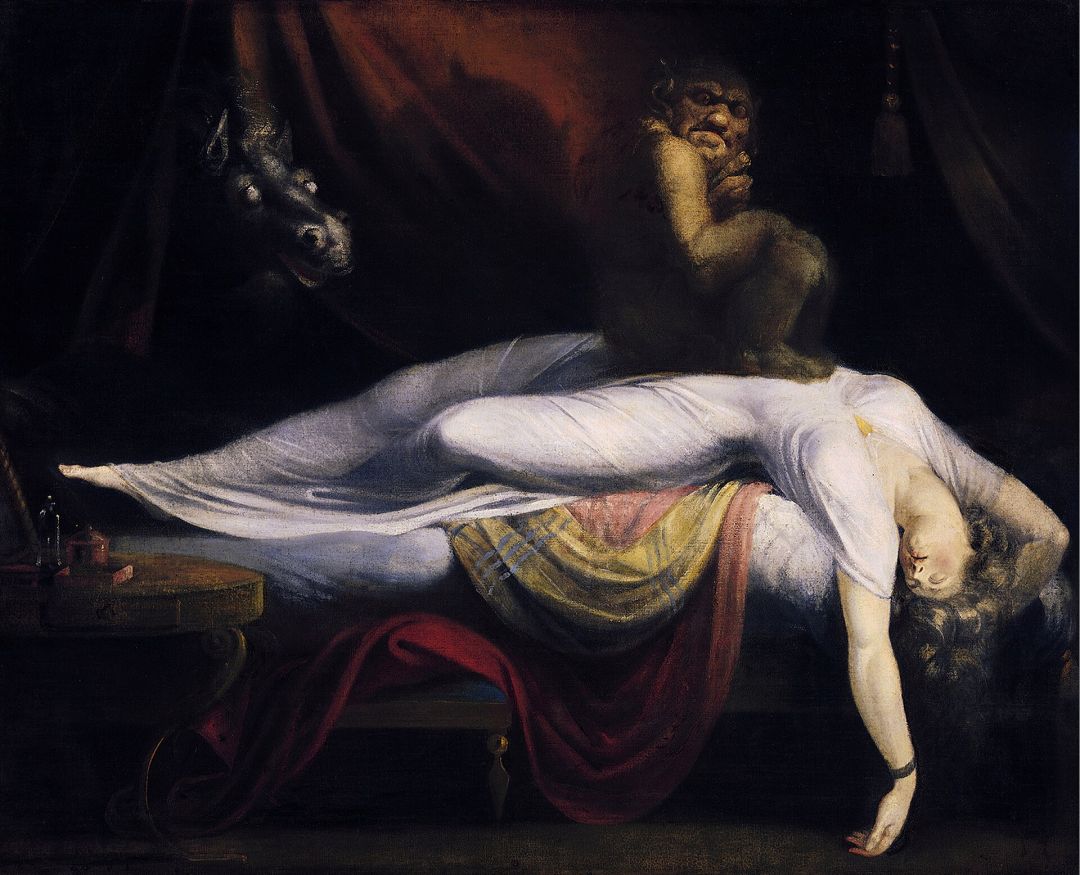
Sharpless explains that because your breathing tends to become shallow during REM sleep, sleep paralysis can sometimes feel like something is sitting on your chest – a phenomenon thought to be shown in the painting The Nightmare by Henry Fuseli (above).
What you see while you experience the paralysis is largely cultural, Sharpless says. The hallucinations can vary from witches, demons, incubi, and succubi in historical times, with things like alien abductions becoming increasingly common in the 20th century.
‘In a recent study of American college students I conducted with a Czech researcher (Dr. Monika Kliková), “shadow people” were by far the most common non-human beings seen, with ghosts in second place,’ he adds.
‘Other frequent experiences include pressure on the chest (about half of sufferers), choking or smothering, odd sounds or voices, and feeling like you’re floating or leaving your body.’
How to prevent or reduce the likelihood of sleep paralysis
Sleep paralysis is relatively harmless to your health, and you shouldn’t have any lasting damage from it – however, for some sufferers, the fear of experiencing sleep paralysis can lead to forms of long-term sleeplessness and insomnia.
If you’re nervous about experiencing sleep paralysis, there is some good news: there are some simple things you can try to prevent it, or at least make it less likely to happen.
Some tactics Sharpless recommends include:
– Keeping a regular sleep schedule and getting enough sleep (though the amount varies from person to person)
– Avoid sleeping on your back or your stomach – you are least likely to experience sleep paralysis while sleeping on your side
– Avoid alcohol or other sleep-impacting substances before bed
– Manage stress with relaxation techniques throughout the day
Sharpless emphasizes that, if episodes happen often or cause real distress, it could be a good idea to consult a psychologist, psychiatrist, or neurologist who knows about sleep disorders. This is especially true if episodes are accompanied by excessive daytime sleepiness, sudden ‘sleep attacks’, or sudden muscle weakness when you feel strong emotions, as these could be signs of narcolepsy.
And what should you do if you wake up and find yourself experiencing sleep paralysis?
Well, it’s often possible to wake yourself up, as long as you know what’s going on. ‘In our research, the strategy sufferers found most effective was to focus on moving something small, like a finger or a toe, rather than trying to sit up all at once,’ he advises.
‘The other is to deliberately try to relax and calm down in the moment. This can be very hard, as the hallucinations can be very scary. Remind yourself, “This is sleep paralysis, it’s harmless, and it will pass.” That isn’t just a nice thought. Fear feeds the hallucinations, and staying calm can shorten episodes.’
Dr Brian A. Sharpless is a clinical psychologist specializing in personality disorders, sleep disorders, and more. He is the author of several books, including Monsters on the Couch: The real psychological disorders behind your favorite horror movies.