Could houseplants make you happier and healthier? The surprising well-being benefits of an indoor jungle
Houseplants can brighten a room, but could they also help you feel calmer, sleep better and think more creatively? Kellie Gillespie-Wright discovers why surrounding yourself with greenery could be good for your mind and body.
 Sally Saunders
Words: Kellie Gillespie-Wright. Images: Shutterstock.
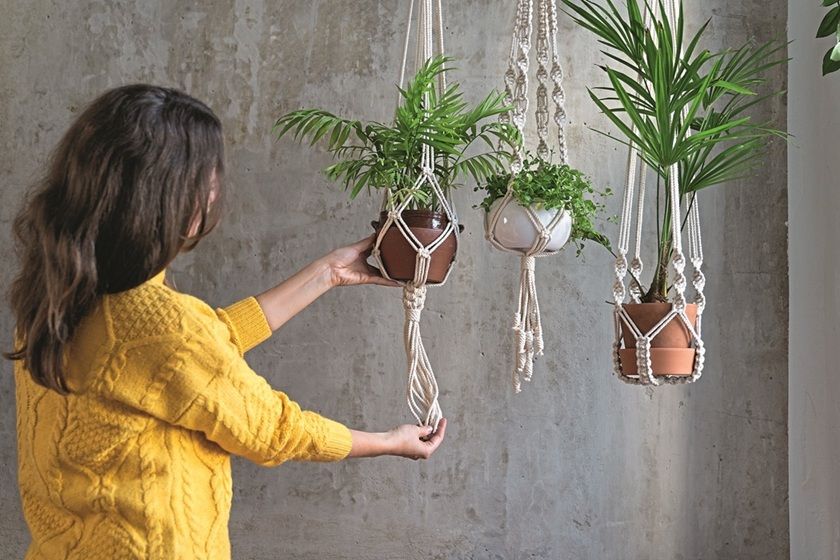
While kicking through the leaves on a crisp autumn day is an undoubted joy, when it’s cold and dark, getting out to breathe in nature’s goodness can seem a bit more of an effort. So how do we bring that magical feeling into our lives each and every day, whatever the weather? Houseplants could be the answer!
Spending time tending plants in the home has enjoyed a huge resurgence lately, to the extent that now the internet is awash with t-shirts and mugs proudly proclaiming ‘plant mum’. As we all seek to lower stress levels in our lives, it’s not hard to see why they’re becoming so popular: as well as being a great interior design statement, they also have a huge range of physical and psychological health benefits, including reducing stress, boosting mood, lowering blood pressure, improving air quality, and enhancing productivity and creativity.
In evolutionary terms, biophilia (the love of plants) is deeply ingrained in our psyche, and our attachment to plants is primal. A lush, green landscape told our ancestors that they were in a place that could sustain life and healthy green life signalled to their brain that they were somewhere they could live and thrive.
But we’ve come a long way since then and city living has led to a disconnect with nature. Nowadays, people spend considerably more time indoors than out, in fact a recent study found that we spend 90% of our time inside and one in eight UK households don’t have access to any kind of garden.
We all know the health benefits of spending time in nature and not having access to the great outdoors can have a number of effects on our wellbeing. It’s been linked to symptoms of depression and anxiety, as well as other health conditions, such as asthma, cardiovascular disease, and poor immune function.
So what can you do to reap the restorative benefits of being in nature, even when you can’t be outside? How about curating your very own indoor jungle with a selection of particularly beneficial houseplants and some expert advice from Henry Davenport at Hortology.
“All plants will have an effect on uplifting the spirits,” says Henry. “But the plants that are most effective are often very personal. Whether it’s something like a retro Spider or Swiss-Cheese Plant that makes you feel nostalgic and invokes happy memories, a towering Fiddle Leaf Fig or Acer Palm that creates awe, or simply a colour, shape or style that you feel reflects your personality, there will be a houseplant out there that resonates with you and lifts your spirits every time you’re in its presence.”
Surrounding yourself with houseplants is one of the best ways to counteract the stress of spending so much time indoors, and for many of us houseplants are an essential way to reconnect with nature. They tap into the same primal reactions as greenery in the outdoors, and studies have found that our connection to plants is so strong that it takes only a few minutes of being in their presence to start feeling better.
“Houseplants have a remarkable ability to improve your mental wellbeing,” says Henry. “The act of nurturing and caring for plants can create a sense of purpose and accomplishment, but you don’t even have to interact with plants for them to have a positive impact, and studies have shown that the mere presence of plants can reduce feelings of anxiety and depression.”
And the benefits don’t stop there. Researchers have even identified microbes (M. vaccae, nicknamed “outdoorphins”) in the soil we use to pot up our plants that act as natural antidepressants. When they come in contact with the body, they help release cytokines, which are protein-based cell signalling molecules that aid cell-to-cell communication in immune responses. Cytokines improve mood and encourage the brain to produce more serotonin.
Not only do indoor plants help us feel relaxed, but they also alleviate the body’s response to stress because when we’re in the presence of greenery, our sympathetic nervous system is suppressed and our fight-or-flight urges decrease.
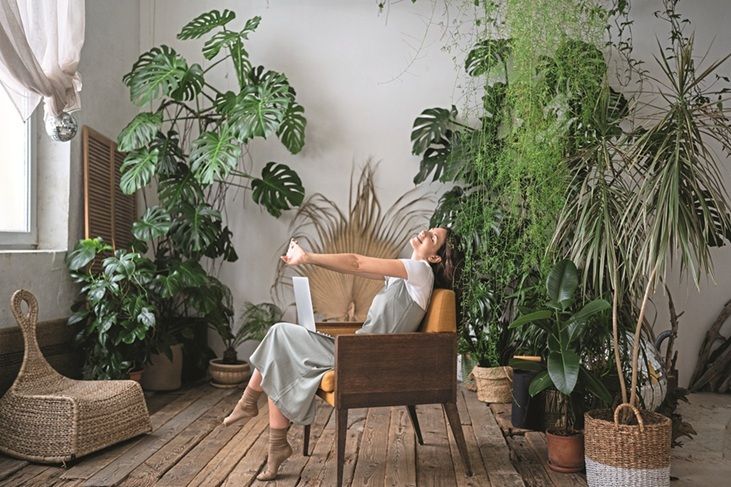
To maximise these benefits, Henry suggests “creating an indoor forest bathing experience with lush foliage, palms and indoor trees to put you amongst nature right in the comfort of your own home”.
In addition to boosting your mood, indoor plants have the potential to enhance air quality by elevating oxygen levels, thereby improving our ability to focus and react more quickly. A study conducted in 2013 by Neuroscientist David Strayer revealed that this can also foster greater creativity by calming the prefrontal cortex (the brain region responsible for multitasking, critical thinking, and problem-solving) and stimulating the imagination network within our brains.
“Studies have shown plants can make people think more creatively and inspire new ways of thinking to tackle difficult problems,” says Henry. “And variegated and colourful plants like Calathea, Maranta and Tradescantia seem to be particularly effective at stimulating the mind and boosting productivity.”
One frequently cited study from 1996 found that students in a campus computer lab worked 12% faster and were less stressed when plants were placed nearby, and a 2017 study showed that people who work in spaces with greenery had a 26% boost in cognition.
“Bringing plants into your workspace can have a significant impact on your productivity and focus. The presence of greenery can reduce mental fatigue and enhance creativity,” says Henry. He recommends “placing a small desk plant like a Pothos or a Peace Lily to reap the benefits of increased concentration.”
Houseplants also have a lot to offer our physical health too. Hospital patients with plants in their room have lower blood pressure, lower pain ratings, less anxiety, and less fatigue than patients without plants in their room and, in some cases, they actually recovered faster. But one of the most popular benefits of houseplants is their ability to purify the indoor air that we breathe.
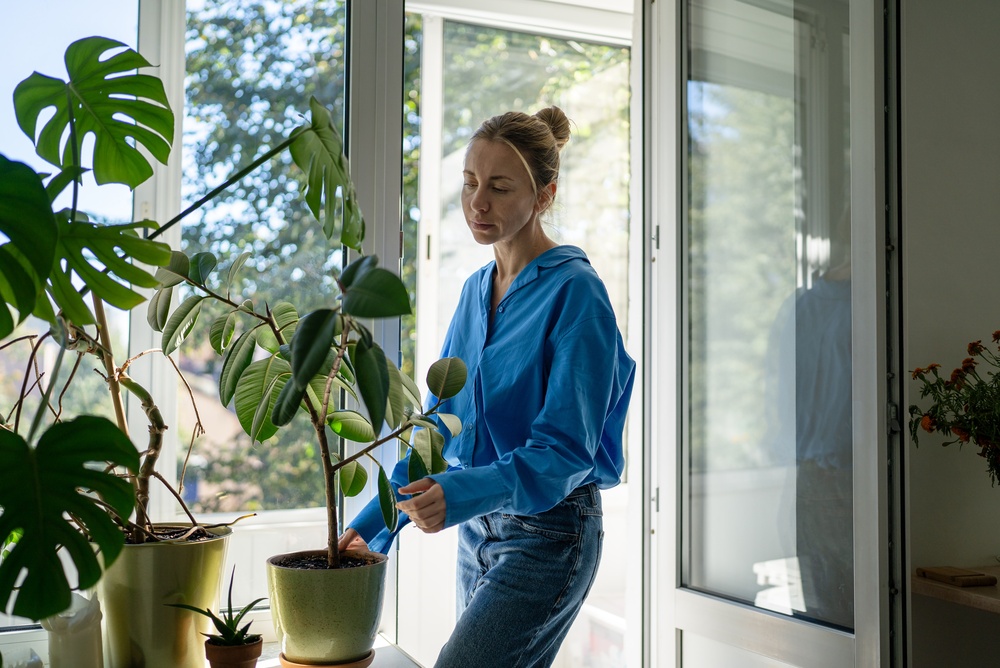
Unfortunately, our indoor environments can be higher in pollutants than our outside air, with things like plastics, fabrics, cleaners, and electronics creating VOCs (volatile organic compounds) and exposing us to fine particles, leading to dry eyes, headaches, or even more serious health conditions like asthma, respiratory illnesses, and even cancer. Thankfully, houseplants can help clean our indoor air too, and research indicates that rooms with houseplants contain up to 60% less airborne moulds and bacteria than those without any greenery.
For optimal air filtering, Henry recommends “plant species including Sansevieria (Snake Plants) and Dracaena (Dragon Trees). They are exceptional at filtering out formaldehyde, benzene, and other harmful chemicals from your air, and they also come in a huge range of varieties so you can pick some specimens that suit your style.”
“Air filtering houseplants also raise humidity levels, reducing respiratory irritations and airborne dust levels,” he continues. This can be especially beneficial in dry environments or during winter when indoor heating systems can lead to overly dry air. Adequate humidity levels can soothe dry skin, alleviate respiratory discomfort, and reduce the risk of infections.
Increased humidity can even reduce the transmission of airborne viruses and respiratory illnesses. When the air is appropriately humid, it can help trap and limit the movement of viral particles, contributing to a healthier indoor environment.
Some of the best plants for increasing humidity are English Ivy, Devil’s Ivy, and Peace Lily.
Sleep quality can also be improved with a scattering of houseplants. Certain plants, such as Lavender and Jasmine, emit calming fragrances that have been associated with improved sleep quality. The soothing scents of these plants have aromatherapeutic properties that can help relax the mind and body, making them ideal additions to bedrooms.
But Henry recommends keeping it simple if you’re hyper-sensitive: “Incorporating specific houseplants can contribute to a more conducive sleep environment. While heavily scented plants like lavender and hops are often associated with relaxation and tranquillity, it’s worth noting that during sleep, our olfactory perception is diminished, and potent fragrances might inadvertently heighten our senses, leading to difficulty in falling asleep. Opting for air-purifying plants with visually soothing qualities, such as Peace Lilies, is often a more effective approach to enhancing the quality of your sleep.”
And, because of their rise in popularity online, caring for houseplants introduces you to a huge community of plant lovers, where you can swap plant cuttings, knowledge, or just enjoy the company of other like-minded people, giving you a sense of social connectedness, another great mental health booster.
So what are you waiting for, the perfect Peace Lily is out there waiting to uplift you – and don’t forget to water!
Henry Davenport is an all-round plant and wellbeing expert at www.hortology.co.uk