‘Unmasking A Monster’ The chilling true story of Aileen Wuornos, the most notorious female serial killer in American history
Aileen Wuornos confessed to killing seven men in Florida, but her troubled childhood, claims of self-defence and controversial trial have left a complicated legacy. Two new documentaries revisit the life of the woman dubbed America’s first female serial killer – and examine the disturbing questions that remain about her crimes.
By 
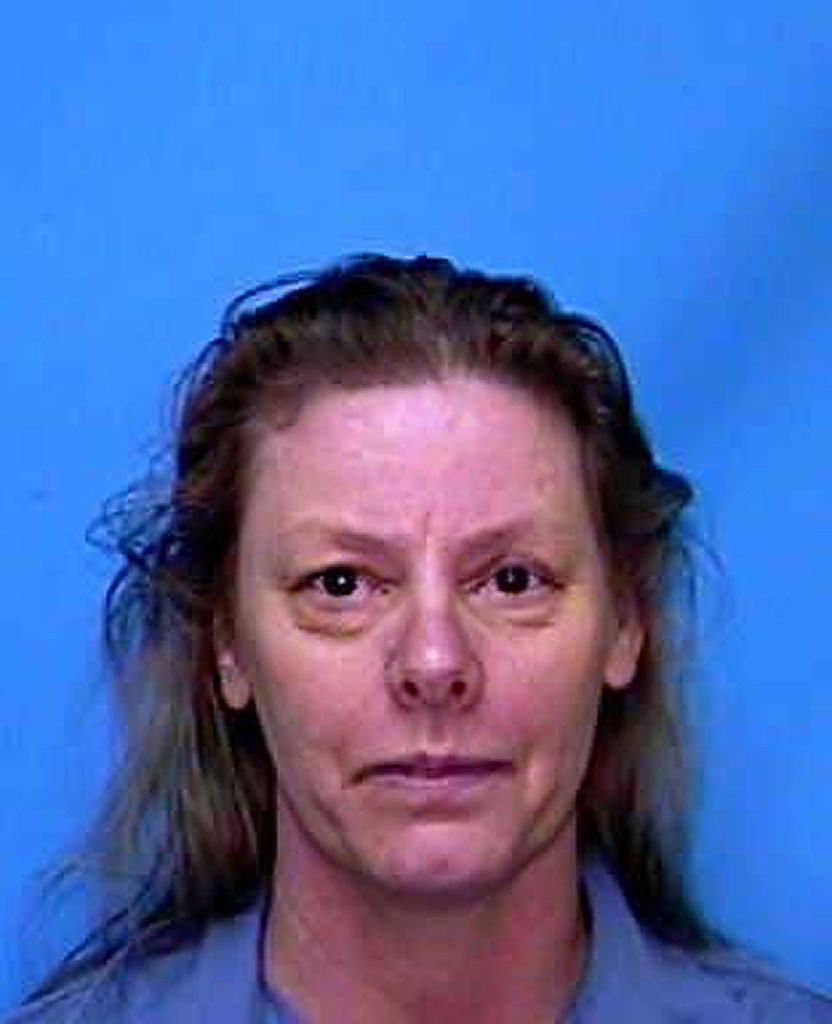
Pics: Getty Images
Aileen Wuornos remains one of the most notorious female serial killers in American history. Between 1989 and 1990, she killed seven men in Florida, was convicted of six murders and sentenced to death. She was executed by lethal injection in 2002, aged 46
Her story has inspired films, television dramas and documentaries, most famously Monster, the 2003 film in which Charlize Theron won an Academy Award for her portrayal of Wuornos.
Now, Netflix’s Aileen: Queen of the Serial Killers and Investigation Discovery’s Unmasking A Monster: Aileen Wuornos are revisiting the case, drawing on archival footage, interviews and Wuornos’s own words to explore the woman behind the headlines.
The documentaries arrive amid renewed interest in Wuornos, who has also been portrayed by Sarah Paulson in Ryan Murphy’s Monster: The Lizzie Borden Story.
But beyond the sensational headlines lies a deeply troubling story of childhood trauma, life on the margins of society, a series of brutal murders and a criminal investigation that continues to provoke debate.
Who was Aileen Wuornos?
Born in Rochester, Michigan, on February 29, 1956, Wuornos experienced an unstable childhood marked by abandonment, abuse and family difficulties.
Her mother was a teenager when she gave birth to her, and her father was absent from much of her early life. He was later convicted of serious crimes, including child sexual assault, and died by suicide in prison.
Wuornos and her brother, Keith, were raised for a period by their maternal grandparents. Accounts of her childhood describe physical abuse, alcoholism and homelessness, while Wuornos later spoke about sexual abuse and exploitation.
She began surviving through sex work while still very young and spent much of her life moving between places, struggling financially and becoming involved in petty crime.
In her early twenties, she travelled to Florida, where she continued working as a sex worker. She briefly married a much older yacht club president in 1976, but the marriage ended after just nine weeks.
Her background has since become central to discussions about her crimes. However, although her experiences provide important context, they cannot fully explain the violence that followed.
The seven murders that shocked America
Between November 1989 and November 1990, Wuornos shot and killed seven men along Florida highways.
The victims were Richard Mallory, David Spears, Charles Carskaddon, Peter Siems, Troy Burress, Charles Humphreys and Walter Antonio.
Wuornos maintained that the killings occurred while she was working as a sex worker and that she had acted in self-defence against men who threatened or assaulted her. She specifically claimed that Mallory had raped and beaten her.
Her account became a central part of the public debate surrounding the case. However, the circumstances differed between the killings, and her claims were not accepted as a justification for the murders.
Wuornos was convicted of six murders and received six death sentences. She was never tried for the killing of Siems, whose body was never recovered, although she confessed to his murder.
The case attracted enormous media attention, partly because female serial killers were considered unusual and partly because Wuornos’s background challenged conventional ideas about who commits such crimes.
She was labelled the “Damsel of Death” by sections of the press, a sensationalised portrayal that often overshadowed the victims and the complexities of the case.
How was Aileen Wuornos caught?
The investigation gathered momentum after police linked the killings through evidence and witness accounts.
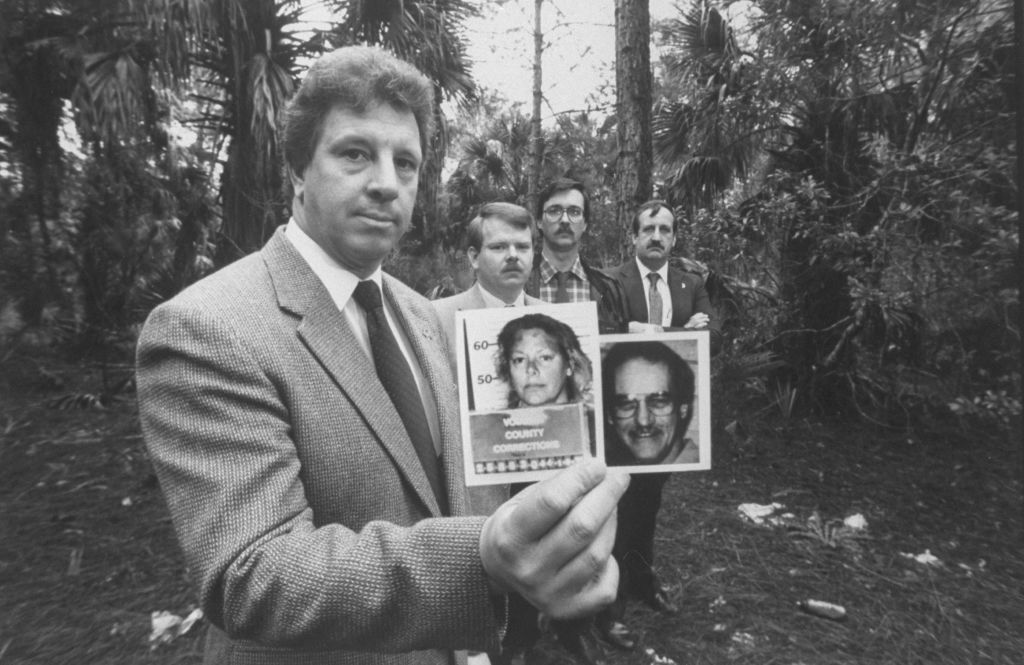
Wuornos was arrested in January 1991 at a biker bar in Florida. Investigators subsequently secured the cooperation of her girlfriend, Tyria Moore, who agreed to assist police in exchange for immunity from prosecution.
Moore helped investigators obtain a confession from Wuornos through telephone conversations. Her cooperation became a crucial part of the case against Wuornos.
In 1992, Wuornos was convicted of Mallory’s murder and sentenced to death. She later pleaded guilty to several of the other killings, receiving additional death sentences.
Did Aileen Wuornos receive a fair trial?
The question of whether Wuornos received a fair trial remains controversial.
Her defenders have argued that the court proceedings did not adequately account for her history of abuse, the dangers faced by sex workers or her claim that she had killed Mallory in self-defence.
Feminist advocates and legal commentators have also criticised the way the media and prosecution portrayed her, arguing that stereotypes about women, sexuality and sex work shaped public perceptions of the case.
Wuornos’s supporters have questioned whether the jury fully considered the context in which she lived and worked. Others point to the severity of the crimes and the evidence presented during the proceedings.
These debates do not change the fact that she was convicted of six murders, but they remain part of the wider discussion about the justice system’s treatment of vulnerable defendants and the use of the death penalty.
What does Netflix’s Aileen: Queen of the Serial Killers reveal?
Netflix’s Aileen: Queen of the Serial Killers, directed by Emily Turner, revisits Wuornos’s life and crimes through archival material, interviews and recordings of Wuornos herself.
Produced by the BBC Studios Documentary Unit in collaboration with NBC News Studios, the documentary includes prison interviews and footage connected to former Dateline correspondent Michele Gillen.
Rather than simply recounting the murders, the film examines Wuornos’s own explanations for her actions and the questions surrounding her motives.
Her statements are particularly significant because Wuornos repeatedly described herself as a victim of violence and insisted that she had killed in self-defence. At other points, she acknowledged aspects of her actions that complicated that account.
The documentary also explores the difficulties of interpreting her testimony. Wuornos was an unreliable narrator at times, and she admitted to fabricating certain details. Her shifting explanations make it difficult to establish a single, definitive account of her motivations.
Director Emily Turner has described the case as an opportunity to examine how a person can be both responsible for horrific crimes and shaped by profound trauma.
The documentary invites viewers to look beyond the familiar image of a cold-blooded killer, without overlooking the suffering of the men she murdered.
How Unmasking A Monster revisits the case
Investigation Discovery’s three-part documentary Unmasking A Monster: Aileen Wuornos takes a different approach, following the investigation, arrest, confession and court proceedings.
The series draws on interviews with people connected to the case, including friends and detectives, alongside archival recordings and footage from police interrogations and Wuornos’s trial.
It also uses digital replica technology to recreate Wuornos and other figures involved in the story. Actress Morag Peacock portrays Wuornos, with AI-assisted visual effects designed to reproduce her appearance during key scenes.
The series revisits the events surrounding the murders and the investigation that led police to Wuornos, while exploring how her life and crimes were presented to the public.
The use of AI recreations raises questions about how real events should be dramatised in true-crime documentaries. While the technology can help viewers visualise historical events, it also makes it important to distinguish reconstructed scenes from genuine archival footage.
Why Aileen Wuornos continues to fascinate audiences
Wuornos’s story has been revisited repeatedly, from the 1992 television film Overkill: The Aileen Wuornos Story to Monster, which earned Theron the Oscar for best actress.
Her appearance in Monster: The Lizzie Borden Story, played by Sarah Paulson, has brought renewed attention to her place in popular culture. The connection is thematic rather than historical: there is no evidence that Wuornos visited the Borden house or was inspired by Borden’s crimes.
The enduring interest in Wuornos reflects a broader fascination with female killers, particularly those whose lives challenge traditional expectations about women and violence.
Her history also raises uncomfortable questions about how childhood abuse, poverty, exploitation and social exclusion are discussed when someone commits a serious crime.
Yet it is important not to turn those circumstances into a simplistic explanation. Many people experience abuse and hardship without becoming violent, and the available evidence does not establish one definitive reason for Wuornos’s actions.
What happened to Aileen Wuornos?
Wuornos spent years on death row in Florida, continuing to make statements about her crimes and her experiences.
In the years before her execution, her accounts of the murders shifted, adding to the uncertainty surrounding her motives. She sometimes insisted that she had acted in self-defence, while at other times making statements that suggested more complicated reasons for the killings.
On October 9, 2002, Wuornos was executed by lethal injection at Florida State Prison. She was 46.
Her death ended the legal case but not the debate surrounding her life, crimes and treatment by the justice system.
The true story behind the serial killer
Aileen Wuornos’s story is both a record of devastating violence and a reminder of the difficulties involved in understanding a criminal whose life was marked by trauma and instability.
She confessed to killing seven men, was convicted of six murders and was executed in 2002. Those facts remain central to her story, alongside the suffering of her victims and their families.
The new documentaries revisit the case using interviews, archival evidence and Wuornos’s own words, offering fresh opportunities to examine the events without assuming that every question has a clear answer.
Ultimately, the story of Aileen Wuornos cannot be reduced to either a monster or a victim. Her background helps explain the circumstances of her life, but it does not erase her responsibility for the murders. The challenge for any retelling is to examine that complexity without losing sight of the people whose lives were taken.