
The true story of the Unabomber: How a Harvard genius became America’s most notorious domestic terrorist
Ted Kaczynski was a mathematical prodigy who entered Harvard at 16 before abandoning academic life to live in a remote Montana cabin. But behind his isolated existence was a 17-year bombing campaign that killed three people and injured 23. As Netflix revisits the chilling case, here’s what really happened – from controversial university experiments to the manifesto that helped the FBI catch him.
By 
Pics: Getty Images
Ted Kaczynski’s transformation from gifted academic to one of America’s most notorious domestic terrorists remains one of the country’s most disturbing criminal stories.
Known as the Unabomber, Kaczynski spent nearly two decades sending and planting homemade bombs across the United States. His targets included university academics, computer specialists and business executives – people he believed were contributing to the destruction of the environment through technological progress.
While investigators struggled to identify him, Kaczynski lived in a basic cabin in the Montana wilderness, far removed from the modern society he despised.
His story is now being revisited in Netflix’s Unabomber, which stars Jacob Tremblay as the younger Kaczynski, Russell Crowe as Harvard psychologist Henry A. Murray and Shailene Woodley as FBI agent Joanne Miller.
The film explores the events that preceded Kaczynski’s crimes, including his troubled relationships, his participation in controversial psychological experiments and the FBI investigation that ultimately led to his arrest.
But how much of the story is true? Here is what we know about the real Ted Kaczynski, the crimes he committed and the family intervention that finally brought his bombing campaign to an end.
Who was Ted Kaczynski? Inside the life of a child prodigy
Theodore John Kaczynski was born in Chicago on May 22, 1942. From an early age, he demonstrated exceptional mathematical ability, reportedly scoring 167 on an IQ test in fifth grade.
He was so academically advanced that he skipped two school grades, graduating from high school at just 15.
At 16, Kaczynski enrolled at Harvard University on a scholarship, graduating with a degree in mathematics in 1962. He subsequently earned a master’s degree and a doctorate from the University of Michigan.
In 1967, aged 25, he became an assistant professor of mathematics at the University of California, Berkeley, making him one of the youngest people to hold such a position at the university.
On paper, Kaczynski appeared destined for a successful academic career. Yet accounts from people who knew him suggest he struggled socially and increasingly withdrew from those around him.
His younger brother, David, later told PEOPLE that Ted had few friends during his school years and appeared particularly isolated at university. Other former Harvard students recalled him keeping to himself, although some remembered him as friendly when approached.
In 1969, Kaczynski abruptly resigned from his position at Berkeley. He returned to live with his parents in Illinois before eventually setting out to establish a life away from conventional society.
The controversial Harvard experiment that shaped the Netflix film
One of the most unsettling parts of Unabomber concerns the psychological experiments Kaczynski participated in while studying at Harvard.
These experiments were real. They were led by psychologist Henry A. Murray, who conducted research examining how people responded to stressful confrontations.
Kaczynski was one of 22 undergraduate participants. They were told they would take part in a debate, but the exercise involved being subjected to aggressive questioning about their personal beliefs and philosophies.
A lawyer challenged and mocked the participants while researchers observed their responses, including changes in heart and breathing rates. The aim was to study reactions to stress.
Murray had previously worked for the Office of Strategic Services, the American intelligence organisation that preceded the CIA. His later research has also been linked to MKUltra, the CIA’s controversial programme investigating methods of influencing human behaviour.
The experiments have since attracted considerable scrutiny, with some commentators suggesting they may have affected Kaczynski’s psychological development.
However, the crucial distinction is that there is no conclusive evidence the Harvard experiments caused Kaczynski to become violent or directly led to his later crimes.
The film takes a more dramatic approach, presenting the experience as a pivotal moment in his psychological deterioration. It also includes scenes that have not been substantiated by historical evidence, including a depiction of Kaczynski witnessing Murray and his colleague Christiana Morgan being intimate.
Although the pair were romantically involved, there is no evidence that the specific incident portrayed in the film occurred.
The real history is disturbing enough without treating speculation about its consequences as established fact.
Why Ted Kaczynski abandoned modern life
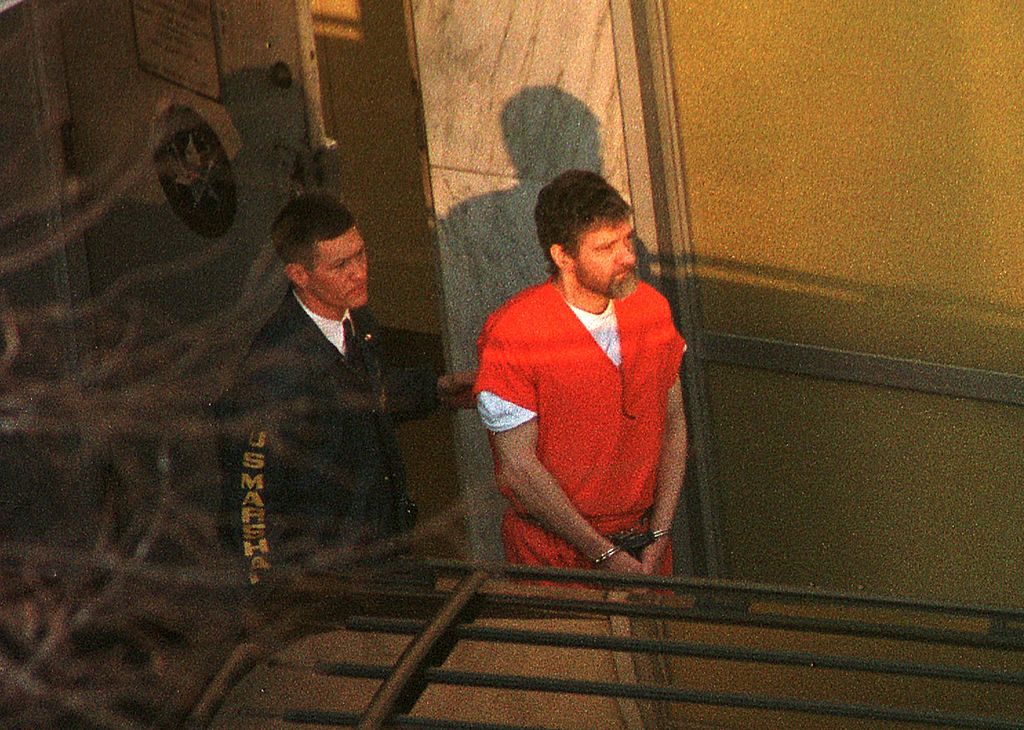
In 1971, he and David pooled their resources to buy 1.4 acres of land near Lincoln, Montana. Ted built a small cabin without electricity or running water and eventually lived there for more than two decades.
His isolated lifestyle reflected his growing opposition to industrialisation and technological progress.
Kaczynski believed modern technology had stripped people of their freedom and damaged the natural environment. These views would eventually form the basis of his manifesto and provide an ideological justification for his attacks.
His relationship with his family also deteriorated.
According to David, Ted believed their parents, Wanda and Theodore Richard Kaczynski, valued his intelligence and academic achievements more than his emotional wellbeing. He became estranged from them and rarely maintained close contact.
The family experienced further tragedy in 1990, when their father died by suicide after being diagnosed with terminal cancer. Ted did not attend the memorial, although he telephoned his mother that day.
These details offer a glimpse into Kaczynski’s personal history, but they do not establish a single explanation for his later violence.
The Unabomber’s 17-year campaign of terror
Kaczynski’s first known bombing occurred in May 1978, when a homemade explosive was sent to a professor at the University of Illinois at Chicago Circle. The package was returned to the university, where a campus security guard opened it and was injured.
Further attacks followed, targeting universities, airlines, computer businesses and individuals associated with scientific or technological progress.
In November 1979, a bomb exploded aboard an American Airlines flight travelling from Chicago to Washington, injuring 12 people. In 1985, computer store owner Hugh Scrutton was killed by one of Kaczynski’s devices.
After a period without attacks, the bombing campaign resumed in 1993. Advertising executive Thomas Mosser was killed in December 1994, followed by Gilbert Murray, president of the California Forestry Association, in April 1995.
Across 16 bombings between 1978 and 1995, Kaczynski killed three people and injured 23 others.
The FBI investigation became known as UNABOM, a code name derived from the university and airline targets. The term eventually gave rise to the name by which Kaczynski became infamous: the Unabomber.
Investigators faced a formidable challenge. Kaczynski took precautions to conceal his identity, used homemade explosives and left few obvious clues connecting the attacks.
The investigation grew into one of the longest and most expensive manhunts in FBI history.
The manifesto that changed everything
In 1995, Kaczynski sent a lengthy essay to The New York Times and The Washington Post, threatening further violence unless one of the newspapers published it in full.
The document, titled Industrial Society and Its Future, ran to approximately 35,000 words and became known as the Unabomber Manifesto.
It argued that industrialisation and technological advancement had undermined human freedom, causing widespread social and environmental harm.
After consulting the FBI and then-attorney general Janet Reno, The Washington Post published the manifesto on September 19, 1995.
The decision gave investigators something they had struggled to obtain for years: an extensive sample of the bomber’s writing.
FBI investigators, including criminal profiler James R. Fitzgerald, examined the language, vocabulary and distinctive phrasing used in the document. The analysis helped investigators reconsider their assumptions about the perpetrator’s age and background.
But the most significant breakthrough came from an unexpected source – Kaczynski’s own family.
How Ted Kaczynski’s brother helped the FBI catch him
After reading the published manifesto, David Kaczynski and his wife, Linda, recognised similarities between the text and letters Ted had written to David.
One phrase, “cool-headed logician”, particularly stood out. David remembered it as an expression his brother had used.
The couple sought advice from a private investigator, who arranged for a linguistic expert to compare the writings. The expert concluded that there was a strong likelihood the documents had been written by the same person.
David and Linda then contacted the FBI and provided information about Ted’s identity and whereabouts.
It was an agonising decision. David was effectively reporting his own brother to the authorities, with the knowledge that the consequences could be life-changing.
Nevertheless, the information helped investigators build their case.
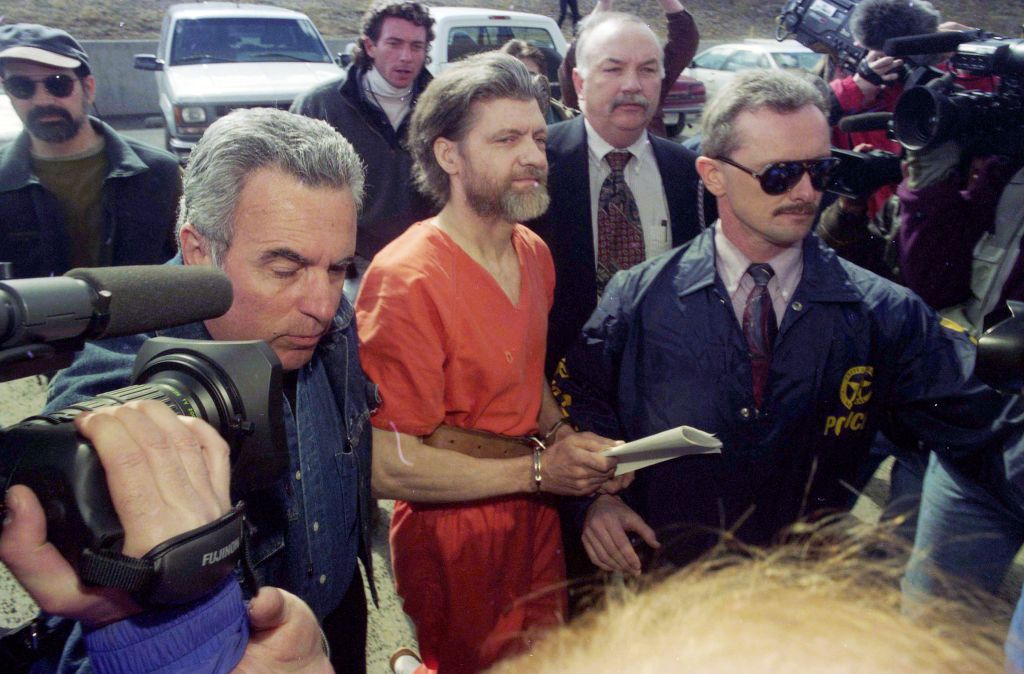
On April 3, 1996, federal agents arrested Kaczynski at his cabin near Lincoln, Montana.
A search of the property uncovered bomb-making materials, a live bomb, extensive handwritten journals and a draft of the manifesto. The evidence connected Kaczynski to the crimes and brought the prolonged investigation to a close.
David and Linda later received the $1 million reward offered for information leading to Kaczynski’s arrest and conviction.
Their role is central to the real story – and demonstrates why the investigation was not simply the work of one brilliant FBI agent.
What Netflix’s Unabomber gets wrong about the investigation
The film dramatises the FBI’s search for Kaczynski through the character of Joanne Miller, played by Woodley.
Miller is fictional. However, her focus on language reflects a genuine aspect of the investigation.
In reality, Fitzgerald and other investigators examined the manifesto’s wording, while information supplied by David and Linda helped identify the author. The case depended on multiple strands of evidence rather than one agent independently solving it.
The film also dramatises the events surrounding Kaczynski’s arrest, including a leak to CBS News.
There was a real dispute over the timing of the broadcast. CBS obtained information about the FBI’s leading suspect before the arrest, and David’s cooperation with investigators also became known to the media. The disclosure raised concerns about the timing of the operation.
However, the film simplifies the events by presenting a fictional agent negotiating a deal with the broadcaster. The real-life circumstances involved journalists, FBI officials and disagreements over whether the report forced agents to act sooner than planned.
The distinction between the film and the historical record is important. Although the central investigation and arrest are based on real events, the characters and some of the dramatic scenes have been invented or altered.
Was Ted Kaczynski diagnosed with schizophrenia?
Kaczynski’s mental health became a major issue during his prosecution.
A court-appointed psychiatrist diagnosed him with schizophrenia, and members of his family had long believed he was experiencing serious psychological difficulties.
However, the diagnosis was contested. Some experts questioned whether the available evidence supported it, while Kaczynski himself rejected the suggestion that mental illness should form the basis of his defence.
His legal team initially planned to pursue an insanity defence, but Kaczynski resisted the strategy and sought to dismiss his lawyers.
In January 1998, he pleaded guilty in an agreement that allowed him to avoid the death penalty. He received multiple life sentences without the possibility of parole.
His mental health history remains a complex and disputed part of the case. It cannot, on its own, explain the bombing campaign or establish why he chose to commit the crimes.
What happened to Ted Kaczynski after his arrest?
Kaczynski spent most of his remaining life in a high-security prison in Colorado. In 2021, after being diagnosed with rectal cancer, he was transferred to a federal medical facility in North Carolina.
He died by suicide on June 10, 2023, aged 81, while serving his life sentences.
His death closed the final chapter of a case that had haunted investigators, victims and their families for decades.
The real story behind Netflix’s Unabomber
Kaczynski’s story combines extraordinary intellectual ability, social isolation, a radical rejection of technological society and a devastating campaign of violence.
The Harvard experiments, his remote cabin and his troubled family relationships are all part of the documented history. But none can be conclusively identified as the cause of his crimes.
The most significant turning point came when his own words exposed him. The manifesto he demanded newspapers publish gave investigators a new avenue of inquiry, while his brother and sister-in-law recognised the writing and made the difficult decision to contact the FBI.
Netflix’s Unabomber offers a dramatised interpretation of those events, blending established facts with fictional characters and reconstructed scenes.
The real case is a reminder that even an extensive investigation can depend on an unexpected breakthrough – and that understanding a criminal’s background is not the same as excusing their actions or claiming to know precisely what drove them.