Can the pre-match rituals of elite athletes help make your workout better?
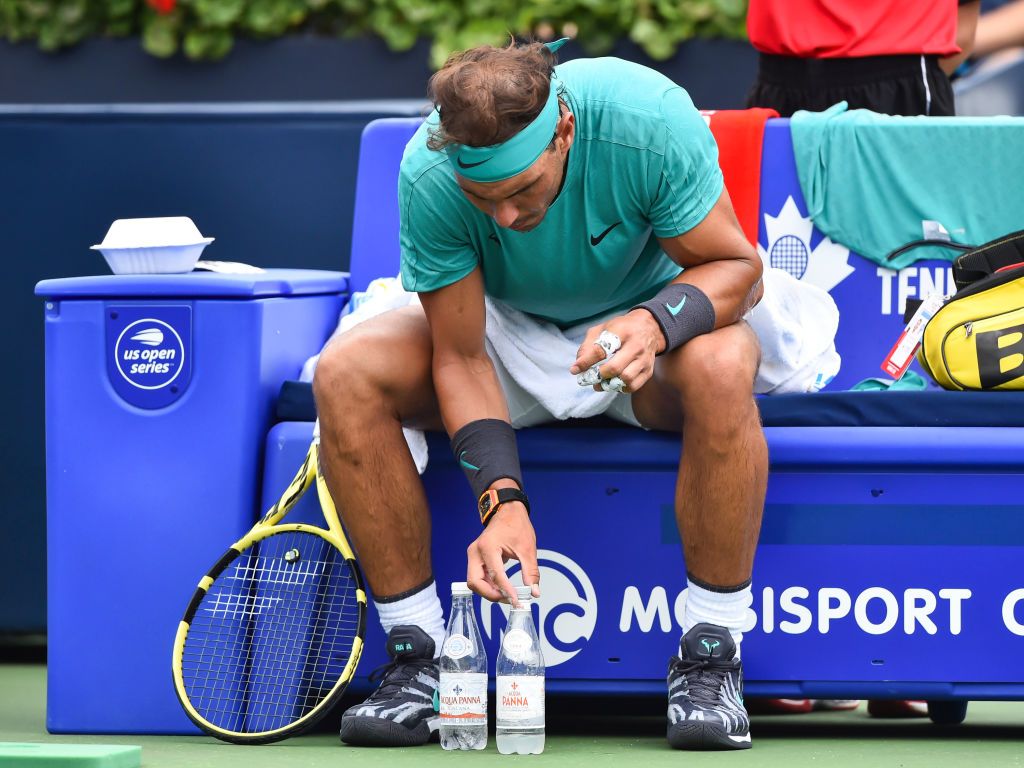
From Rafael Nadal’s meticulously arranged water bottles to Novak Djokovic’s ball-bouncing routine, elite athletes use rituals to get themselves into the right headspace. Here’s what the experts say about the psychology behind them – and which ones you could try yourself.
By 
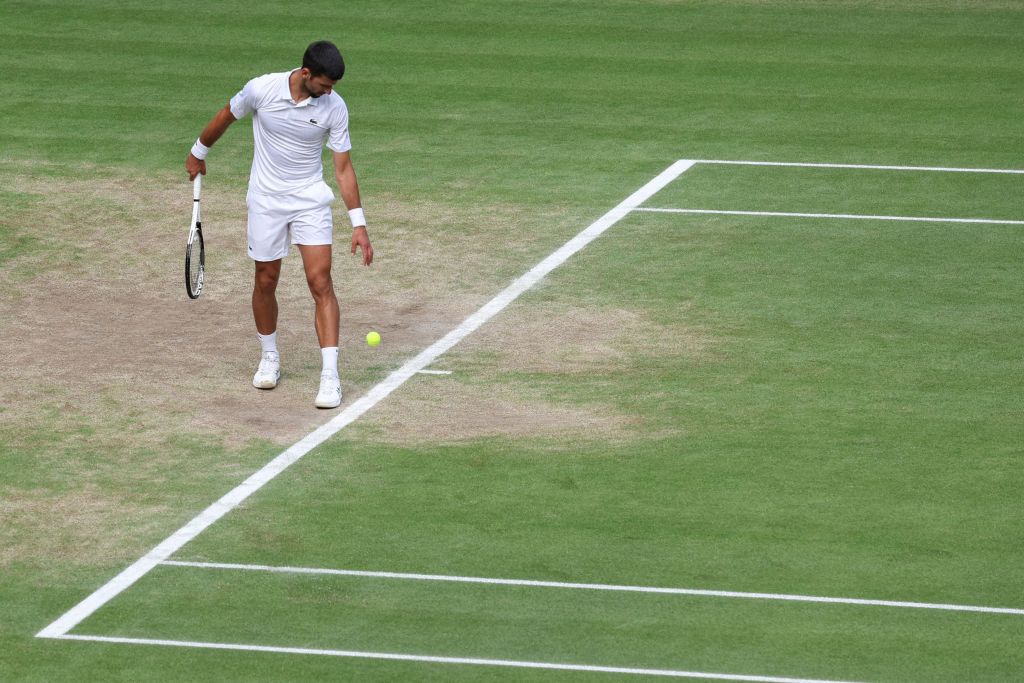
When Novak Djokovic told me a few years ago – when I had the opportunity to interview him – about one of his former pre-match drills, it wasn’t what I was expecting. There I was, thinking maybe it’s an arm workout or a dip in an ice bath that he does to prepare himself but, much to my surprise, it involved the number of times he bounced a ball before finally serving; depending on what score he was on – an even number of bounces on the deuce point and an odd number on advantage.
And it seems he’s not the only one who follows a ritual, superstitious action or routine ahead of a game or match. Famous athletes all over the world use all sorts of things to get them in the right headspace. If you’ve watched Nadal’s recent Netflix documentary Rafa, you would have seen his meticulous court rituals, which included carefully aligning his water bottles to face the court.
So why do athletes perform certain tasks ahead of competition, and are there any rituals worth us stealing? A sports psychologist, scientist, two doctors and an OCD therapist serve up their thoughts…
Why do athletes use rituals?
According to sports psychologist Edgar Chekera from www.psych-chek.co.uk, rituals can be one of the most effective performance enhancers for athletes.
“Throwing chalk in the air, visualising how you’ll execute a skill, taking deep breaths; whether you’re Cristiano Ronaldo, Steph Curry or Novak Djokovic, you’re not immune to the use of performance rituals. But there is a limit to how effective it can be and when it can have the opposite intended effect.”
Some rituals are self-soothing, he points out, and add an “element of familiarity alongside a sense of control in uncomfortable situations”.
“While others help athletes return to a state of control when their nervous system is entering fight-or-flight mode.”
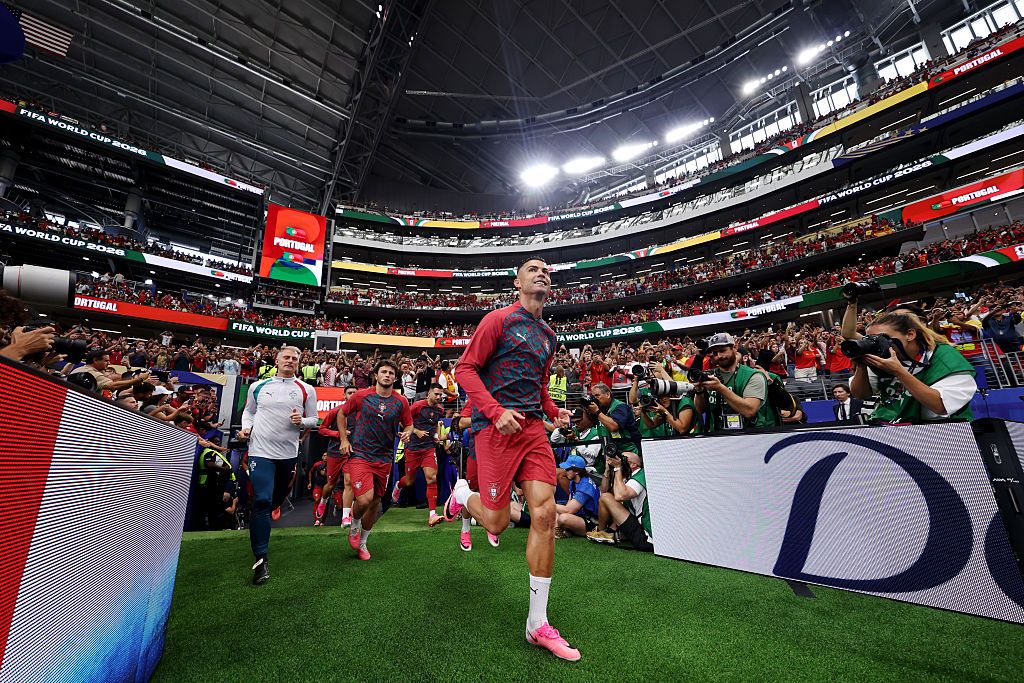
“One of the most well-known ones is breathing, used by Cristiano Ronaldo before taking a free kick and tennis legend Novak Djokovic using diaphragmatic breathing (focusing on deep breaths through the diaphragm) when playing in Wimbledon finals. Even world-class boxer Canelo Alvarez was seen using it in between rounds against Terence Crawford.
“If you’ve wanted to use breathing techniques, here is a simple tip for you. To increase energy, inhale longer than you exhale, and to decrease energy, do the reverse.”
“As you can imagine, rituals can do wonders for an athlete’s physical and mental state. Building and maintaining confidence, evoking a sense of control in an unfamiliar environment and manipulating energy levels so they are optimal before executing a task.”
When rituals become a problem
There can be a downside to following rituals, though, he warns.
“Performance rituals become dangerous when an athlete attributes it as necessary to their success rather than as a tool to enhance performance. For example, ‘I lost because I didn’t tie my shoelaces right’ (which is what Serena Williams attributed to her French Open performance in 2008).
“Attributing performance to the uncontrollable and externals brings with it a vulnerability to lose a sense of control when competing in the absence or wrongful execution of the activity. The narrative that can build in the performer’s head is that they are not able to play well UNLESS they engage in the routine, which is already a disempowering belief to have. Making them almost perfectionistic in how they execute behaviours leading up to or in between games.”
Rituals as psychological anchors
As a sports scientist and former professional tennis player who now coaches Frances Tiafoe, Dr Mark Kovacs’ perspective is very much on the ball, so to speak!
“Pre-match rituals are extremely common in elite sport because they can create familiarity, structure and a sense of control in an otherwise highly unpredictable environment. Repeating the same sequence of behaviours can help narrow attention, regulate arousal and shift the athlete from thinking about the outcome to focusing on the process,” he explained.
“From a performance perspective, these routines can act as psychological anchors. They signal to the brain that competition is about to begin and can help an athlete enter a more consistent mental and physical state.
“Importantly, having a ritual does not automatically mean an athlete has OCD. Many high performers use deliberate routines because they are calming, familiar and performance-enhancing. OCD is a clinical diagnosis involving intrusive thoughts and compulsive behaviours that cause distress or impairment, so that distinction should be made by a qualified psychologist or psychiatrist.”
As well as helping them feel anchored, rituals performed by athletes are also about creating a sense of familiarity and control ahead of doing something that may be out of their control, explains Dr Holly Ann Schiff of www.southcountypsychiatryri.com.
“A pre-performance routine can help an athlete be grounded and mentally ready. It gives the brain something predictable to rely on when there’s a lot of uncertainty and pressure. Over time, a particular behaviour can also become associated with feeling confident and prepared.
“When an athlete has a consistent routine before competing, such as touching the grass, counting backwards, bouncing a ball a certain number of times, listening to the same song, etc., it can act as a psychological cue that says, essentially, ‘I’m ready. This is what I do before I perform.’ Competition comes with a lot of uncertainty, and routines give the brain something predictable to focus on.
Rituals and OCD
“The important distinction is whether the athlete chooses to do the ritual because it helps them get into the right mindset, or whether they feel compelled to do it and believe something bad will happen if they don’t. The latter is more consistent with the type of compulsive behaviour seen in OCD.
“There’s also a learning component. If an athlete has repeatedly performed well after doing a particular routine, the routine can become associated with feeling confident and ready. Over time, simply doing the routine can become a cue for that psychological state.”
As an OCD therapist and someone who works with competitive athletes a lot, Joanna Hardis, of Home – Joanna Hardis, LISW-S, points out that ritual traits are different for every person but suggests some things to consider if you are worried that your own ones may be bordering on obsessive.
“What’s the function of the ritual? OCD is generally driven by doubt or uncertainty. If the person is engaging in the rituals to try to mitigate that feeling, it could be an OCD trait,” she explained. “If they’re doing it to block out the ‘outside noise’ of the crowd, it would not be. Novak was a master of keeping things small to stay in the ‘what is’ and out of the ‘what ifs’. Rituals, or habits, are great ways to focus attention. Someone with OCD does a ritual to try and alleviate discomfort and a feared outcome. Great athletes know discomfort is inevitable and learn how to function with it.
“How flexible is the ritual (and what’s the imagined consequence if it’s interrupted)? If it’s an OCD trait/ritual, there will likely be distress if the ritual is interrupted and the consequence may seem intense (e.g. ‘I’ll play horribly’). Magical thinking is a hallmark of those struggling with OCD. If it’s not an OCD ritual, the person probably won’t attach a dire consequence to the ritual being interrupted. Performance doesn’t depend on the ritual being performed a certain way.
“Does the ritual keep expanding (e.g. taking up more time)? Nadal kept adding rituals and I have no idea if he had OCD but it could mean that the person has to do more and more to mitigate the anxiety. Habits can focus the mind and improve performance. If the person is struggling with OCD, rituals are ways to mitigate the distress from the content of the obsession, which is intrusive and distressing. Because of how OCD works in the brain, rituals generally expand.”
As for why she believes a lot of the rituals performed by the athletes mentioned are not OCD behaviours, Dr Elizabeth Lombardo, of https://www.elizabethlombardo.com/, adds her viewpoint.
“In tennis, typical rituals include bouncing the ball a certain number of times, rotating your racket, taking a deep breath, closing your eyes and imagining a successful next point.
“It differs from OCD in that when someone has OCD, the obsessive thoughts can overtake their thinking and only be squelched by performing the ritual. OCD is much more rigid and ritualistic, with the goal to decrease distress.
“Basically, athletes perform rituals to get their mind and their body into game mode. Remember Pavlov and his dog? The bell signalled that food was about to arrive, so the dog’s body reacted accordingly. When athletes have a specific ritual before they perform, it allows them to go from ‘I’m getting ready to play’ to optimal game mode.
“When I work with athletes, these rituals can also be helpful during the game to allow them to reset, such as after missing a shot or double-faulting.”
How to use rituals in your own workouts
If you’re looking to improve your performance using rituals, here are a few things to consider:
“Understand that rituals are used to supplement the capability you have now. It does not dictate your performance but is a tool to enhance it,” suggested Edgar Chekera.
“Allow yourself to try different behaviours and actions when in practice and see what sits well with you. This includes visualising what can go well and how you’ll overcome obstacles, using self-talk to reaffirm your strengths, moving your body aggressively to increase your arousal level. Be curious and try it out.
“You can use the rituals to help change the state of mind you enter, even in situations that are unfamiliar and difficult for you.
“Look at your rituals as something to get you ready and focused for what is to come.”
And Dr Elizabeth Lombardo adds: “A great way to follow suit with mind techniques is to identify a ritual you could have, such as taking a deep breath, adjusting your hat, or holding on to your sports equipment.
“With that, pair it with a positive self-statement such as ‘trust the process,’ ‘have fun,’ or ‘give it your all.’ Pairing a behaviour with a thought and then experiencing the emotions associated with that thought, such as excitement, can help your mind and body be at their best to perform.”