Meet psychopath: narcissism’s more charming (but even nastier) big brother
 Sally Saunders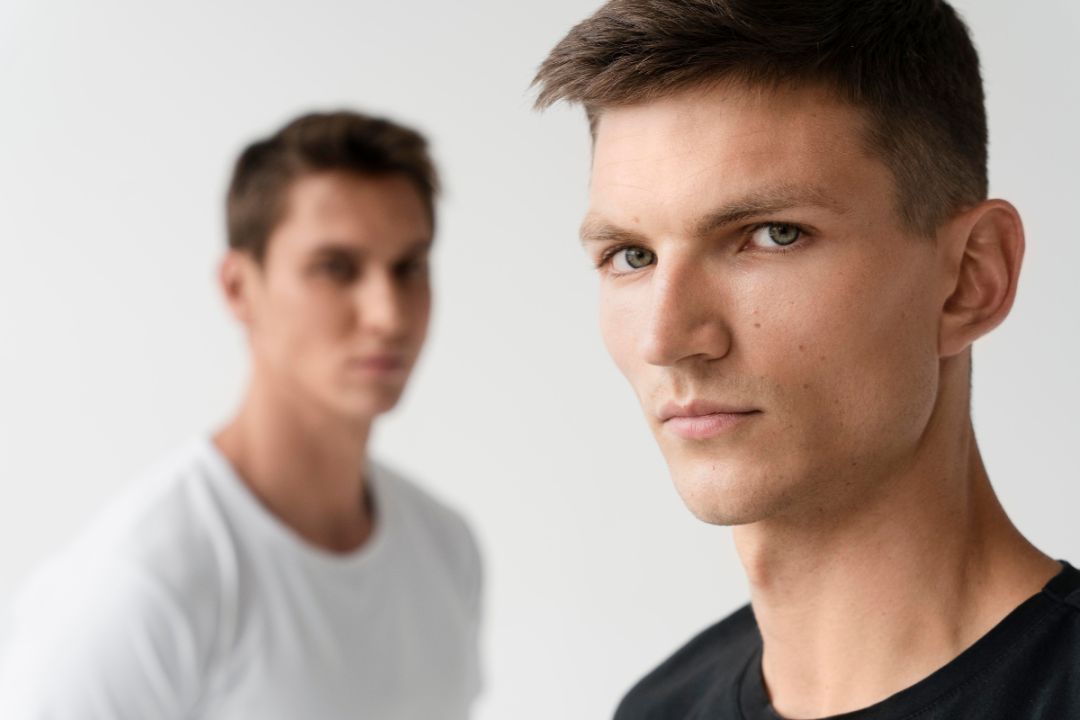
We picture psychopaths as violent outliers. But psychologist Dr Emma Kavanagh argues the reality is more unsettling: with a blend of charm, confidence and emotional clarity, they are often right at the heart of our society — sometimes even sitting on a pedestal on the top of it.
As Emma Kavanagh describes meeting a psychopath, it sounds a little like being caught in the hypnotic gaze of a cobra. This is how she remembers it: a man starts talking to her in the middle of a large professional event where she is due to teach a couple of hundred people. At first, nothing feels overtly wrong. She is nodding along, laughing, smiling — participating as she would in any other conversation. But beneath that surface, another register is already running.
“I can feel a voice in the back of my head going, ‘this is really weird, you need to back away,’” she recalls. The interaction has a strange pull to it, something smooth and effortless that is making her think less than she usually would, evaluate less. It keeps her locked in and engaged even as her instincts begin to resist. “I’m thinking, ‘you really need to start thinking soon, because this is going to go wrong.’”
Eventually, she detaches herself. She remembers physically walking away and physically shaking herself, to try to rid herself of the strange lingering feeling. It was only later, she says, that she understood what had happened: she had been caught in what she now recognises as “psychopathic charm”. Luckily for her, he had tried to talk to her about psychology, her own field, and “got it all wrong.”
Looking back, Kavanagh frames the moment not as an encounter with something monstrous at the margins, but as an early glimpse into a pattern she now explores in her work on psychopathy and social influence — a theme central to her new book, The Psychopath Effect: The Mind-Altering Power of the Psychopaths Among Us (Seven Dials, £22).
Updating the psychopath’s image
The word “psychopath” still does a very specific job in the imagination. It conjures up crime scenes, serial offenders, and figures so extreme they feel safely distant from ordinary life.
But Kavanagh is out to disabuse us of that idea. Her book is a tour through our experiences of psychopathy in the real world. And that real world, in her view, is far more nuanced — and far more common — than the stereotype suggests.
Historically psychopathy was studied in prisons, which is why we have our impression of all psychopaths being criminals. But modern psychology has begun moving away from treating it as a single fixed disorder. Instead, it is increasingly understood as a combination of traits that exist on a spectrum across the population.

A dangerous cocktail of boldness, meanness and disinhibition
One of the most widely discussed frameworks is the triarchic model, which breaks psychopathy into three traits: boldness, meanness and disinhibition.
Boldness, Kavanagh explains, is the socially appealing side of the psychopath. “It means that you’re low stress, you’re fearless… it’s associated with charm and charisma.” These are the people who can appear calm under pressure, socially confident, even magnetic. “Those are the kind of people that we tend to put on pedestals within society.”
Disinhibition is more about control. “How well can they control their urges?” she says. High levels are linked to impulsivity, emotional volatility and difficulty regulating behaviour under pressure. These are likely the ones who end up in the prison population. But lower levels of disinhibition — those who are able to control their urges most of the time — can be even more dangerous.
But the defining component, the tentpole, she argues, is meanness. “Meanness is kind of the central pillar of psychopathy,” Kavanagh says. “If you’re going to be psychopathic, you have to be mean.” This refers not to occasional irritability, but to low empathy, emotional coldness and a willingness to exploit others. “A psychopath is at their happiest when other people are unhappy.”

Why “psychopathic charm” is so hard to resist
Put together, these traits can form very different personality profiles. Some combinations are unstable and openly disruptive. But others are far harder to detect.
“The really interesting ones,” Kavanagh says, are those high in both meanness and boldness, but low in disinhibition. “That gives you somebody who has all the traits that society likes… and they also have low disinhibition, that means they’re very good at masking this high meanness.”
This is where the idea of “psychopathic charm” becomes central. Rather than obvious aggression, the more socially successful expression of psychopathic traits may look composed, engaging and persuasive.
In other words, the most challenging version is not the disruptive one — they are easy to spot and be wary of. It is the controlled, persuasive character who flies under the radar that poses more threat.

Charisma, trust and the brain’s shortcuts
A key reason these traits can be so compelling, Kavanagh argues, lies in how we process social information. “Charisma acts as kind of a social cue,” she says. Our brain naturally interprets highly charismatic people as competent, intelligent and trustworthy.
And once we’ve got that crucial first impression, the brain doesn’t like to shake it. “The part of your brain that’s saying, ‘this guy is absolutely full of nonsense’ is offline,” she explains.
Kavanagh says research suggests we become less accurate at recalling details and worse at detecting deception when interacting with highly charismatic individuals. This phenomenon is sometimes referred to as the “guru effect” — a shift in attention and judgement that leads to cognitive “outsourcing”.
“We perceive people who are high in charisma as being highly capable,” Kavanagh says. “So the brain goes, ‘they’ve got it sorted, I can step back.’” We go onto autopilot, or even worse, hand them the controls.

Not just dangerous loners — often successful leaders
One of the most uncomfortable parts of Kavanagh’s argument is that these traits don’t always hold people back. In fact, she suggests the opposite is often true. “Those who are high in meanness and boldness tend to rise,” she says, “and become CEOs, very rich people, and lead countries.”
In environments that reward confidence, decisiveness, and emotional distance, these traits can look a lot like leadership.
And because boldness is often mistaken for competence, people with these traits can be given authority before their impact on others is fully understood.

Psychopathy and narcissism: similar, but not the same
Psychopathy is often confused with narcissism, particularly in online discourse. Kavanagh draws a clear distinction. “All psychopaths are narcissistic,” she says, “not all narcissists are psychopaths.”
The crucial factor, she repeats, is the level of cruelty and meanness. Narcissism, she suggests, can involve self-focus and ego without necessarily involving cruelty or exploitation.
Psychopathy, by contrast, adds a darker behavioural layer — particularly emotional coldness and a willingness to prioritise personal gain over others.
“Psychopathy is all about dominance,” Kavanagh says. “If there’s a social ladder, they need to be at the top of it.”
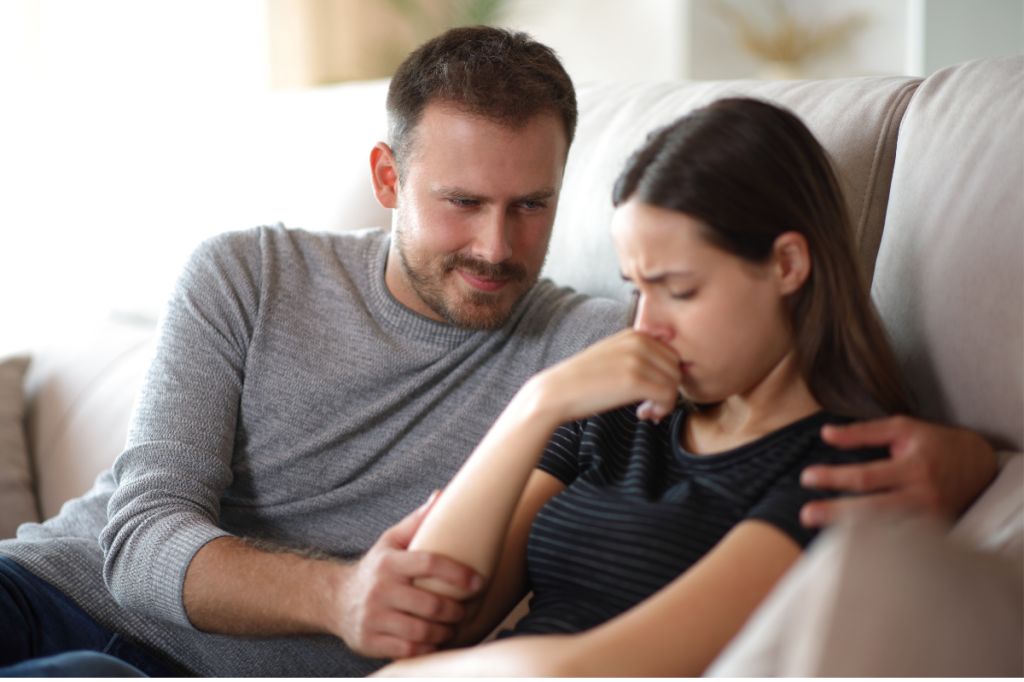
That drive can show up in subtle ways — humour that puts others down, conversations that quietly shift status, or charm that feels magnetic but also controlling.
“Psychopaths specialise in humour that belittles other people,” she says. “If you fight back, then you have no sense of humour.”
It’s a social trap: push back and you become the problem. “Psychopathy is narcissism’s meaner big brother.” But psychopaths are by no means only men.

The psychopathic spectrum
Kavanagh is careful not to suggest that psychopathy is rare or obvious. Instead, she describes it as a spectrum of traits that exist in all of us — but in different combinations and intensities.
Boldness can look like confidence. Disinhibition can look like impulsivity. But it is meanness — low empathy, emotional coldness — that changes everything.
And when that sits behind charm and control, it can be surprisingly hard to recognise in real time. So just try to stay well out of his hypnotic gaze.
Words: Sally Saunders, Images: Shutterstock, Shurkin_Son on Magnifik, wavebreakmedia_micro, rawpixel.com, Drazan Zigic, Freepik