Group meditation: the benefits of practicing together
Find your calm in good company and experience the group meditation approach of Pinealage
By 
In partnership with Pinealage
Meditating alone is easy to abandon. Here is why group meditation can make the habit feel steadier, and a gentler way to begin practicing with others.
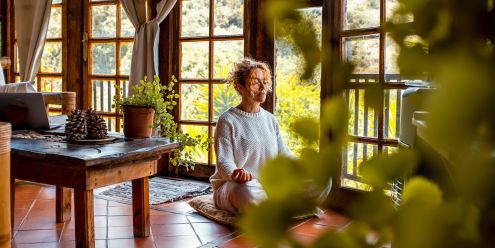
Something quiet has happened to the way we look after ourselves. A practice that once lived in shared halls and circles has become, for many of us, one of the most solitary things we do: a closed door, a pair of earbuds, a recorded voice for ten minutes before the day pulls us back in. It works, to a point. Yet a growing number of people are finding that the same practice feels steadier when it happens in a room with other human beings.
The simple act of sitting together
That shift is the idea behind Pinealage, an approach to group meditation built less around solo audio and more around in-person meditation, the simple act of sitting together. Its founder, Gonzalo Arce (CEO), describes a turn away from wellness that keeps us alone with a screen. “We have come to see that genuine, lasting wellbeing is cultivated and sustained through community, not through models that amplify isolation and digital fatigue,” he says.
His starting point is a frustration many beginners know well. The hardest part of meditation is rarely understanding it; the instructions are simple enough to fit on an index card. It is sustaining it, day after day, when nothing outside of us is asking us to. “We want to dismantle the idea that meditating has to be difficult, a solitary battle,” Arce explains. “When we sit together, the practice stops being a burden and becomes a ritual you look forward to.”
Gentle accountability and shared stillness
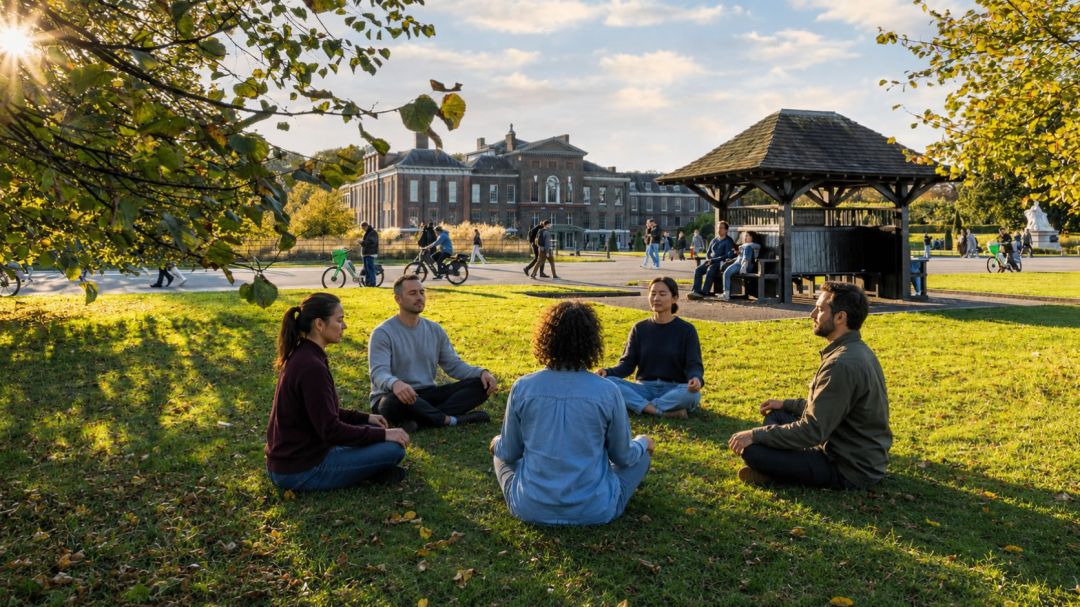
In practice, the experience is unhurried. People open the app for a moment to find others nearby who want to gather, then put their phones away and meditate together in everyday public spaces: a park at dusk, a quiet square, a community room that becomes a kind of refuge. There is no master class and no guru, only a handful of people sharing a few minutes of stillness.
What changes when you sit with others is hard to manufacture through a notification. There is a gentle accountability in keeping a small promise to people who will notice an empty cushion, and a sense of belonging that comes from being among others. The research on mindfulness is encouraging but measured: regular practice may help some people with stress and sleep, though effects vary from person to person. Many people find a habit easier to keep when it is woven into a relationship rather than a to-do list.
Using technology with intention
None of this means technology has no place. The real question is what we ask it to do. A phone can keep us scrolling alone, or it can help us close the laptop and find a few neighbors who want to sit together on a Thursday evening. Used with intention, it becomes a bridge back into real life rather than a reason to stay on the couch. For Pinealage, the screen is never the point; the gathering is. “We imagine a future where seeing communities meditating in parks and public squares is an everyday, natural scene,” Arce says.
There is something quietly hopeful in that. We spend so much of our wellness energy trying to fix ourselves in private. Perhaps part of what we are looking for is older and simpler than any app: a few familiar faces, a shared silence, and a reason to come back next week.
Find a group meditation near you
If meditating alone has never quite stuck, it may be worth trying the older, communal version of the practice. You can learn more about finding a small group near you through the Pinealage app.
Pinealage is an app that helps people find others nearby for small, in-person meditation groups. It is built on the idea that mindful technology should lead back to real human connection rather than more time alone with a screen. The aim is simple: to turn a solitary practice into a shared, sustainable habit.