‘I realised I’d grown apart from my husband – one conversation changed how I saw our future together forever.’
 Amy Mica Marsden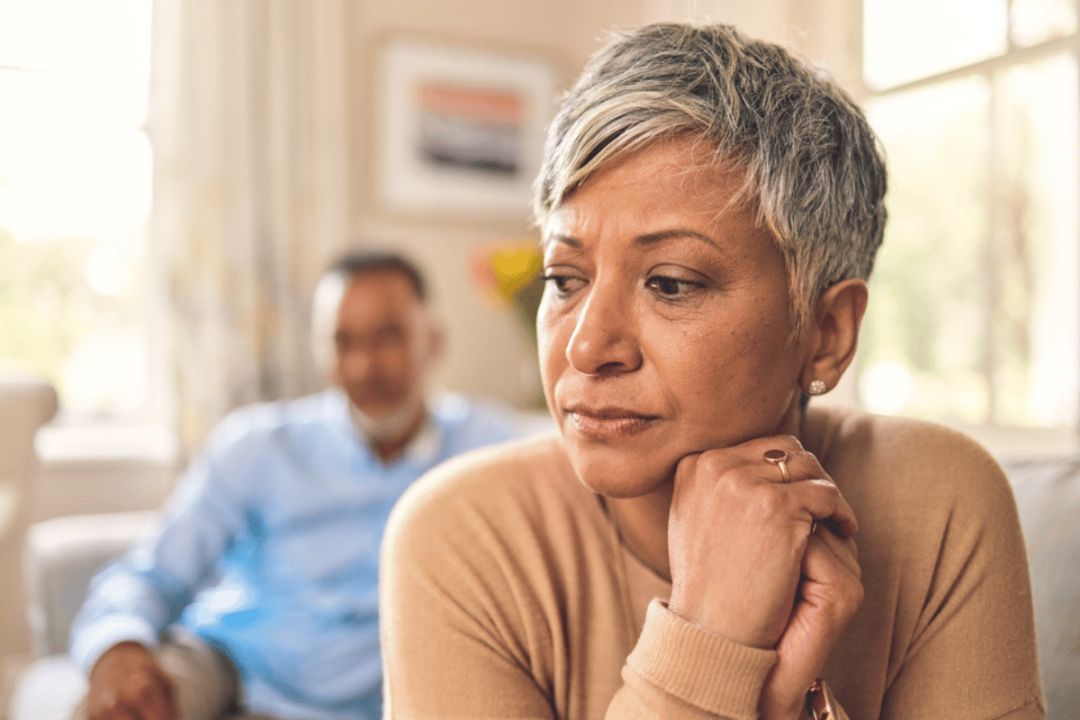
Yoga-mad Jill* feels like she’s pulling against bike-obsessed Kevin. Is it time to end the relationship? Coach Kim Morgan discusses their relationship troubles and offers her solutions if you’re in a similar situation.
Words: Kim Morgan. Images: Shutterstock. *Names have been changed
Jill was a warm, expressive and confident woman. She had a youthful, ‘boho’ style and I was surprised when she said she was in her late 50s. I told her so, and she looked pleased. In my work as a coach, I have learned that the first words people say are rarely without significance. So, I asked, ‘Is your age relevant to your being here?’
Jill nodded. ‘I guess so. I’m 57. I have been married to Kevin* for 30 years — mostly happily, but things have changed. ‘I’m feeling increasingly lonely in my marriage. We exist alongside one another, but the emotional connection seems to have faded away over time.
‘We have different interests and different friends. Our conversations are functional and superficial. With luck, I may have another 30 years of life left, and I don’t want to live it like this. I hoped you could help me think through my options.’
I thanked Jill for her honesty, and I asked whether she had talked to Kevin about how she was feeling. Jill threw her hands in the air and her silver bangles jangled in unison.
‘I have tried to! He won’t engage in the conversation. He says he is fine, and “we” are fine and there is nothing to discuss. That’s why I am here. I need someone to help me consider my options.’ I reassured Jill that this was a safe space for her to hear herself thinking out loud and to be heard, supported and gently challenged.
I reminded Jill that my role is to hold up a metaphorical mirror, so she can hear and see her own thoughts, words and feelings reflected. Jill added, ‘Hopefully, I won’t just see where I am but where I can go next — so here goes!’ I listened while Jill told me the story of their relationship. ‘I feel lonely, confused and frustrated. I don’t know if we have slowly drifted apart or whether there was ever any real connection between us.

‘I’m interested in art, yoga, gardening and environmental issues. Kevin is just obsessed with cycling. He spends hours with a group of friends on long bike rides. It’s all he talks about and thinks about, along with his latest time-trial results and what he eats and drinks to keep fit.
‘I’ve wondered if we drifted apart because of the menopause, being retired or the kids leaving home, but I think we have simply grown in different directions, and the relationship has now run its course.’ Jill stopped speaking and suddenly looked very thoughtful. I waited. ‘I just saw and heard myself in the mirror,’ she said. ‘I said the relationship has run its course.’
‘Did that surprise you?’ I asked. ‘It surprised me, made me sad, scared, and most of all — it excited me.’ Jill replied. ‘I haven’t really dared to say that before, not even to myself, but when I said the relationship had run its course, it felt true, and I experienced a sense of hope for the first time in a long while.’
I was wondering where to go next. As a coach, there’s always a part of me that wonders whether I’ve created the right conditions for my clients to have these kinds of realisations. I reminded myself that coaching is not about providing answers but about offering the space for clients to discover them for themselves.
Even so, it’s hard not to feel the weight of that responsibility in moments like these. I hadn’t expected Jill to vocalise that her relationship had run its course. So, bearing in mind a coaching mantra ‘the client has the answers, the coach has the questions’, I asked Jill, ‘What would you like to do now in this coaching session, with the insights and feelings you are experiencing?’
Jill looked a bit stunned. ‘If it’s okay with you, I would like to sit here with you while I write some thoughts and reflections about what just happened. Would you be okay simply sitting with me while I do that?’ I sat beside Jill while she wrote furiously in her big sketchbook until the end of our session. As she left, she thanked me again for being her mirror.
‘Thank you for just letting me sit with everything without trying to fix it. I look forward to our next session.’ Jill’s words reassured and reminded me that being present and allowing space for reflection is often one of the most powerful things a coach can do.
Relationship review
This exercise invites you to reflect on key aspects of your relationship, such as communication, values, growth, and emotional connection. It can help you understand what is working well, what might need attention, and what long-term hopes you have for your relationship.
- How often do I feel truly happy in this relationship compared with the times I feel unhappy?
- In what ways do I feel safe in this relationship?
- How comfortable do I feel being my authentic self with my partner, and what parts of myself do I not show in this relationship?
- How clearly do I communicate my needs and concerns to my partner, and how do they respond?
- How closely aligned are our core values and life goals, and in what ways do we differ?
- In what ways am I growing and evolving as an individual within my relationship?
- What do I think my close friends and family would say about my relationship?
- How do my partner and I deal with difficulties in our relationship?
- What one change could my partner and I each make to improve our relationship?
- What are my long-term hopes for our relationship?
The relationship decision
This is a simple exercise which can help you explore possible outcomes when you are facing or making a decision:
● What is the decision you are facing now? Write it down in a couple of sentences.
● What would be the possible outcomes (both positive and negative) if you chose option A?
● What would be the possible outcomes (both positive and negative) if you chose option B?
● What if you decide to wait or do nothing?
How would that be for you? What would that mean for you?
Reflect on your responses — How do each of these possible scenarios make you feel?
Use your intuition — After exploring the scenarios, which choice resonates with you the most, not just logically but emotionally?
Time to reflect — You don’t need to act on your responses. They are designed to give you insight into the different possibilities and how each decision aligns with your values and emotions. The goal is to help you feel more confident in your choices, knowing that you have considered both the potential rewards and the risks.