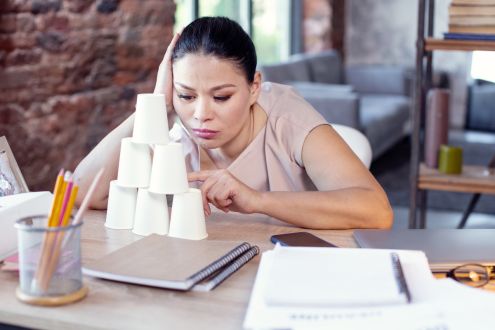
When you don’t fit the stereotype: why ADHD in women can look different
By  Psychologies

Often overlooked and misunderstood, ADHD in women can look very different from the stereotype. Many women with ADHD appear organised and socially capable while quietly struggling with focus, fatigue and internal overwhelm.
“I used to be so good at friendships. I had so many complex coping mechanisms that made me a good friend,” laughs Sam Brown, author of Focus: The ADHD Guide to Productivity (That Actually Works). “I’d keep lists: birthdays, gifts, details about people’s lives. But when perimenopause hit, my hormones just went wild, and I couldn’t keep up. Everything just fell away.”
More often than not, ADHD in women doesn’t fit the stereotype of hyperactivity and chaos. Instead, women often excel at social interactions and appearing organised, even as they quietly battle internal disorder.
The hidden struggles of women with ADHD
“Women with ADHD do not look like the general diagnostic criteria would have you believe,” says Dr Samantha Hiew, founder of ADHD Girls. “You can be highly socially skilled and still be neurodivergent.”
Masking often begins in childhood. “Many girls can mask in childhood, but puberty changes the landscape completely. Hormonal shifts can make coping strategies suddenly fall apart,” Hiew says. A child who appeared calm, attentive, and socially mature may suddenly struggle with focus, mood, and emotional regulation as hormonal changes and increasing social complexity challenge previously effective strategies. The discrepancy between how a girl appears and what she experiences internally can be confusing, frustrating, and isolating.
“Because women are socialised to be relational, their ADHD often shows up in emotional strain rather than behavioural disruption. Girls are often rewarded for being agreeable and helpful — which can make masking look like maturity,” Hiew notes. These praised traits — attentiveness, helpfulness, agreeableness — can obscure ADHD entirely. A child may be described as “mature for her age” while quietly grappling with distraction, internal chaos, or chronic fatigue. Over time, this creates a persistent undercurrent of stress that remains invisible to teachers, friends, and family.
As they grow up, like Brown, women often develop coping strategies — lists, mental notes, and social tuning — to navigate life. “If women are sitting quietly and doing okay academically, their ADHD can get lost,”says ADHD coach Pollyanna Downes. “They don’t fit the stereotype, so they don’t get noticed.” This can last well into adulthood, with women excelling at work or maintaining social circles despite the internal struggle.

A family of diagnoses: A mother’s journey with ADHD
Downes’s journey through ADHD discovery began when her son, diagnosed with ADHD himself, made her question her own behaviour. “I didn’t believe I had ADHD at first. But once I understood my son’s symptoms, I realised I was struggling with the same things,” she shares.
However, her ADHD diagnosis still surprised her. “My hyperactivity score was really high, but I’m not hyperactive. People see me as calm,” she reflects. ”However, in women ADHD often manifests as micro-movements, tiny fidgets, or mental sparring. The brain is always on.“
Because of this variance from the stereotype, isdiagnosis and misunderstanding are common. “A lot of women are misdiagnosed, missed or mistreated because their presentation doesn’t match the stereotype. When someone doesn’t fit the stereotype, clinicians can start looking for the wrong explanation,” Hiew explains. Many spend decades believing their struggles are personal failings rather than signs of a neurodivergent brain. They may blame themselves for fatigue, forgetfulness, or difficulty coping with complex demands, unaware that their challenges are neurological rather than moral or character flaws.
Hormones and life transitions in women with ADHD
The emotional cost is real. Constant masking and over-functioning often manifest as fatigue, anxiety, or difficulty prioritising one’s own needs. Even a highly functional woman may experience emotional swings, burnout, or the sensation of always running on empty. Attention, focus, and energy may fluctuate unpredictably, creating the sense of being “different” or “misaligned” despite her outward competence.
For many women, eventually the mask slips. “Transitions are often crisis points — university, new motherhood, menopause,” explains Downes. “Lower oestrogen worsens ADHD symptoms, so menopause sees a real increase.” Many women start noticing ADHD more clearly as hormones fluctuate, disrupting coping strategies they once relied on.
This hormonal shift, combined with the increasing complexity of life, can make ADHD feel impossible to manage. “Lots of us have really low self-esteem,” shares Brown. “Anything that challenges my core belief that I’m completely ‘useless’ shakes me to the core.”
Receiving a diagnosis often brings a sense of relief. “Knowing it was ADHD meant the shame and self-blame could finally start to lift,” says Downes. When women realise their struggles are linked to ADHD, they begin to understand that they weren’t failing, just coping with a neurodivergent brain in a world that doesn’t accommodate it.

Reframing expectations: living authentically
An ADHD diagnosis is not about fixing oneself; it’s about understanding oneself. “It gave me a language to explain myself,” says Downes. This language empowers women to advocate for themselves, set boundaries, and honour their unique needs.
When women embrace their neurodivergence, they can navigate life with greater self-awareness. The ADHD label, while often late, can be liberating, offering a framework for understanding how they interact with the world. “Diagnosis doesn’t change the past, but it completely changes the story you tell about it,” says Downes. Women can let go of self-blame and start living in alignment with their authentic selves.
Meet the Experts
Dr Samantha Hiew is a specialist in neurodiversity and the founder of ADHD Girls
Leadership coach Pollyanna Downes specialises in ADHD coaching
Sam Brown is the author of Focus: The ADHD Guide to Productivity (That Actually Works). and co-host of ADHD Adults Podcast
Images: Shutterstock