The digital dilemma: Parenting in an online world without losing connection
By  Psychologies

From newborn cuddles to school-age curiosity, parenting today means balancing the timeless needs of children with the new realities of a digital landscape. One parent reflects on nurturing humanity first while guiding a child through the online world.
Having a child, for all of its challenges, is life-affirming in the most literal of ways. Particularly in the early days with a newborn, life is distilled into its most fundamental elements — food, warmth, comfort. And while this period can be intense and exhausting, there is a simplicity to it: fulfilling the tiny mammal requirements of your tiny mammal.
There’s a sort of primal echo involved too. Even though we might have the options of formula and white noise and monitors now, we’re still doing the same things for our newborns that humans have always done. It’s rooted in physical necessity and tangible, sensory need.
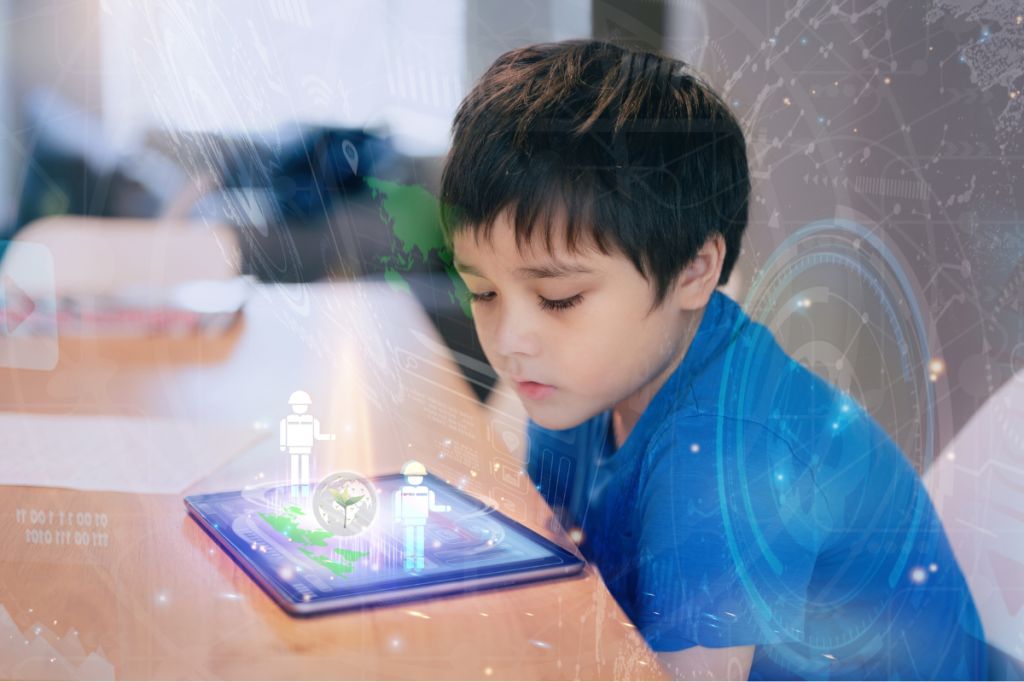
Maybe I’m even a little nostalgic for this clarity, because things get swiftly more complex from this point on. School looms on the horizon, and I am increasingly aware that the world in which he is growing up has a double — the online, digital, endlessly exciting, endlessly terrifying twin of ‘real’ life.

Real experiences over digital
Up until now, we’ve largely coped with this by keeping him away from it as much as possible. First and foremost, I want real experiences for him — fresh air, sunshine, and human connections.
“There’s plenty of societal talk about the pressure and judgement parents can feel when they use the TV from time to time,” Emma Bradley, a parenting coach and author of Parenting Teens Successfully: Thriving in a Changing World, points out. “I think we’ve learnt that we don’t need to use screens at an early age. Whilst we might argue that there are some educational games, it doesn’t beat playing those same games face to face with a parent or carer. Children need the eye contact, the body language and touch of real interaction.”
I appreciate this simplicity, and the idea that the ‘human’ needs come first, however digital the world may now be, feels intuitively true. But I also know that longer term, I’m going to have to grapple with the nuance. With debates in the news around social media bans and phone-free childhoods, how do I preserve my little boy’s innocence without cutting him off from the things he’ll need to navigate modern life?
Walking in the dark
There’s genuine fear in this question, because the online world can be a truly dark place — one where children often end up treading alone. I don’t want to realise, too late, that my child has disappeared along paths I can’t follow.
Fortunately, other parents and experts are thinking through these issues too. There are key maxims I’m hanging onto when it comes to prioritising the human without dismissing the digital.
Not all technology experiences are created equal, particularly for young children. A barrage of short, bright, loud videos or dopamine-distributing games will clearly pull them away from the real world — and from us.
But Laura Moore-Williams, an early childhood specialist and consultant, says it doesn’t have to be this way. “Watching a familiar programme to decompress after a long nursery day, listening to music and dancing — especially after time spent in the car or sitting — or having supervised video calls with family members who don’t live nearby, help technology become a tool for connection, regulation, and communication, not a default activity or digital babysitter.”
I feel more confident allowing my son to understand some of what technology has to offer when he and I are navigating it together. He’s an animal enthusiast, and we’ve had lovely moments snuggled up watching gentle nature documentaries, chatting about tigers and whales.
“For most families, the answer isn’t no technology, it’s intentional, guided use,” says Moore-Williams. “Children don’t need everything the digital world offers. They need what supports their development.”

Modelling mindful digital use
Curating my son’s access is one thing, but Moore-Williams emphasises another factor — my own attitude and use. I’m guilty of doomscrolling from time to time. Is ‘do as I say, not as I do’ enough to protect him from pitfalls? Probably not.
“Children learn by watching, listening and observing. In a world where adults are constantly interacting with phones, laptops and tablets, children are already learning how technology works simply by being around it,” she says.
Managing how my boy navigates the digital world means reflecting on how his dad and I deal with it ourselves. “At home, I strongly encourage creating daily device-free time, ideally before bedtime,” Moore-Williams explains. “This isn’t about perfection. It’s about presence. When adults genuinely join in, children’s behaviour and energy often shift noticeably. Over time, they begin to look forward to this connection rather than constantly thinking about their next ‘hit’ from a device. The whole family can benefit from this.”
The message is hopeful, but it asks for self-reflection. If I want to prioritise humanity for my little one, I need to prioritise it for myself too. “When children feel grounded in the physical world, they’re better able to use the digital one with confidence rather than dependence,” Bradley says. “Balance matters because shielding children completely doesn’t equip them for the reality they’re growing up in.”

Physical closeness matters more than digital advantages
Bradley also advocates for active conversations about technology — “teaching young people how to think critically and look after their wellbeing.” I want my child to know he can talk to me about anything. Technology is not so different from other complex parts of life he’ll face.
Ultimately, staying close is the key factor in letting him explore the good things technology offers without losing him inside it. But what that closeness looks like — the shifting sands between boundaries and trust, participating and stepping back — will ebb and flow.
“My one piece of advice to parents would be this,” Bradley muses. “Prioritise connection over control. When children know they can talk to you without fear of judgement or overreaction, they’re far more likely to come to you when something online feels confusing, uncomfortable or overwhelming. That ongoing, trusting relationship is the most important tool parents have.”
The truth is, it’s that trusting relationship I’m going to have to put my faith in. Inevitably, the day will come when my child’s knowledge and understanding of this swiftly evolving world exceeds my own.
For now, I’m going to appreciate that he still finds me, or an unexpected butterfly, or an interestingly shaped stick, more compelling than any digital experience. Hopefully, I can remain his anchor, keeping him safe and grounded in the real world, even as he begins to step into the digital one.
Words: Kate Townshend, Images: Shutterstock