Should we have a baby? How to decide if parenthood is right for you in an age of fertility anxiety
It is one of the biggest decisions in life, and Ali Roff Farrar was feeling the pressure. She sought help, and learned new ways to understand her feelings and make strong choices. Could her revelations help you decide?
By  Psychologies
As one in six British couples struggle to conceive, many couples in their 30s are asking not just ‘when’ to have a baby — but ‘if’ they should at all.
Fertility anxiety has become part of our national conversation. Questions about whether to have children — and, for those who do want to, how to manage the often complex path to conception — are increasingly discussed in mainstream spaces rather than behind closed doors. With ‘pre-conception’, ‘trimester zero’ and ‘hormone optimisation’ trending online, fertility has moved from private worry to public debate.
Recent figures show that one in six British couples experience difficulty conceiving, underscoring the scale of the issue. Add in the cost-of-living crisis, concerns about NHS maternity services and the emotional strain that fertility challenges can bring, and it is little wonder prospective parents are searching for clarity. Many are turning to digital communities and social media for guidance — spaces that offer solidarity, but can also amplify misinformation.
Against this backdrop, the question becomes intensely personal.
When you are stuck between ‘if’ and ‘when’
While googling ‘should I have a baby?’, I secretly hope some internet wizardry will draw answers from the inner workings of my mind — because, as it stands, I do not have a clue.
Aged 34 and married for four years, I have been asked more times than I can count: ‘When do you think you will be ready for a baby?’ But how do you answer the ‘when’ when you are stuck on the ‘if’?
It feels as though everyone around me is having children. Biology does not pause for bucket-list travel, career milestones or the moment I finally feel financially secure. I want to make a conscious decision — before the decision is made for me.
Instead, I find myself taking online quizzes, as though a multiple-choice test might resolve one of life’s biggest choices, as well as helping me overcome my lingering fertility anxiety.
One question stops me cold: When you see parents with their children, do you feel excited about the prospect of parenthood, or relieved that you do not have that responsibility? I want to tick both boxes.
The pros and cons of motherhood: career, finances and identity
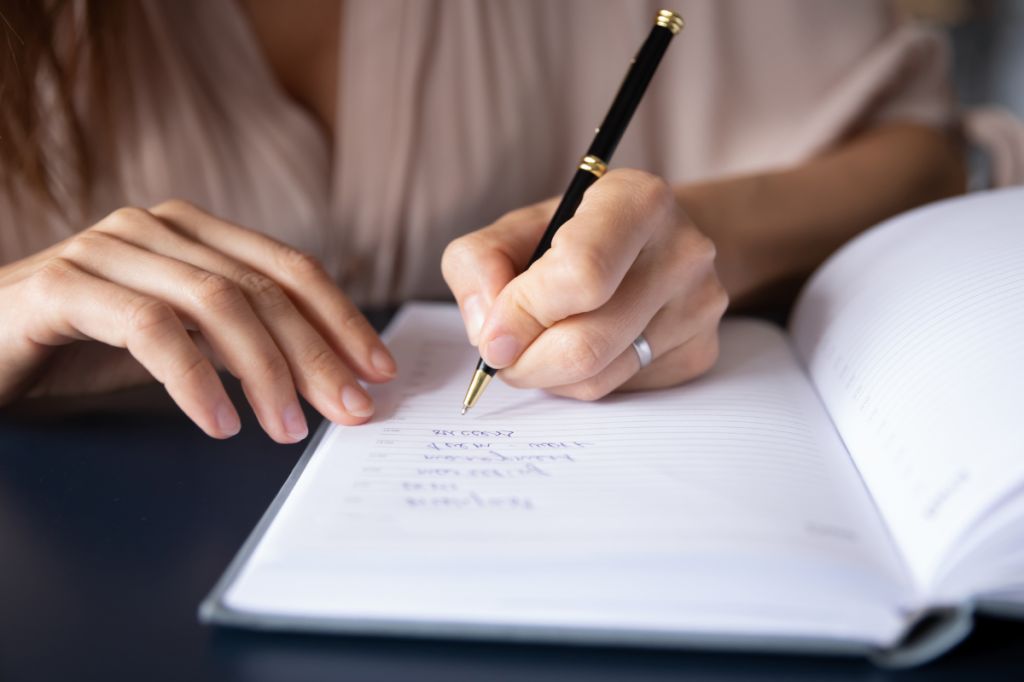
My pros-and-cons list grows longer by the day.
Pros: I like children. We only live once, and motherhood — from pregnancy to nurturing a newborn and watching a child grow — sounds like one of life’s most meaningful experiences.
Cons: Interrupted sleep. Less independence. Career disruption. Financial strain. A permanent shift in identity, body and relationship.
What unsettles me most is that parents are often the first to admit how hard it is. And yet, in the next breath, they describe a love unlike any other. Friends without children have embraced a different vision: travel, flexibility, financial freedom. ‘I enjoy babies,’ laughs my friend Lucy, ‘and then I enjoy handing them back when they start crying.’
Friends with children are candid about the exhaustion — but radiant about the joy. ‘The love I feel for my son is different to any other,’ says my best friend. ‘It is unconditional.’
How did they arrive at certainty so decisively?

Fear of parenthood: is it about babies — or something deeper?
In search of clarity, I speak to psychotherapist and coach Heather Garbutt. Rather than asking whether I want a baby, she asks about my life. My childhood. My sense of security.
‘It is important to identify and let go of baggage — past traumas, family history — in order to make your own plans,’ she explains. As we talk, one theme surfaces repeatedly: security. Money. Stability. The world itself feels precarious — politically, environmentally, economically. ‘I do not know if it is safe to bring a baby into the world,‘ I admit.
‘There will always be things to worry about,’ she says. ‘But every birth we choose to have is an act of hope.’ Her question lingers: Do I want to make life decisions based on fear — or hope?
Money, safety and the psychology behind big life decisions
As we dig deeper, my financial anxiety begins to look less like spreadsheets and more like something older.
A guided exercise takes me back to childhood bullying — hiding in a school bathroom cubicle, feeling isolated and alone. The physical sensation of fear in my gut suddenly makes sense. The word that surfaces is simple: alone.
Fear, I realise, shape-shifts. It disguises itself as practical concerns: ‘I am too old.’ ‘I do not earn enough.’ ‘It is not the right time.’
‘We often look outwards for obstacles,’ says Garbutt. ‘It feels easier to blame external factors than to explore the inner dynamics influencing our decisions.’
My fear of financial insecurity is not just about money. It is about dependence. About trusting that I will not have to carry everything alone.

Support systems, trust and preparing for motherhood
Motherhood, like any major life shift, requires vulnerability. ‘Having a baby requires support,’ Garbutt says. ‘You can prepare yourself so that if or when you decide to go for it, you have the self-care and support you need in place.’
For the first time, I speak openly with my husband about what I have uncovered. I admit that my independence has sometimes masked a reluctance to rely on others. ‘You find it hard to ask for help,’ he says gently.
We had never fully discussed children before. I thought I needed to reach certainty alone. But parenthood, by definition, is not a solo decision. ‘You do not have to worry,’ he says. ‘Trust me.’
And there it is: trust — the counterweight to fear.

Choosing hope: how I finally overcame fertility anxiety
Letting go of the belief that I must decide alone feels like loosening a knot.
Looking inward has clarified something else, too: the kind of mother I would want to be. Not driven by anxiety. Not governed by scarcity. But grounded, supported and self-aware. I do not want fear to make my decisions for me.
I choose hope.
For now, the ‘when’ remains open. But the ‘if’ — at last — feels answered.
Meet the Expert Heather Garbutt is a registered and experienced psychotherapist and relationship therapist
How to make that big decision
From having a child to moving to another country, psychotherapist and counsellor Heather Garbutt shares questions to ask yourself.
- Am I making this decision from the adult part of me?
- Am I making or not making this choice to please somebody else?
- What will be the consequences if I choose or don’t choose this – for me and for other people?
- What am I hoping for in choosing or not choosing this?
- What am I afraid of in choosing or not choosing this?
- When have I felt this fear before, and what was going on?
- How old was I when I felt afraid like this?
- When I was afraid before, what did part of me decide was true about me, others and the world?
- Is the inner, fearful part of me driving my life now?
- Do I need help to make this decision for my life?
Photograph: Getty Images