Why don’t I have more friends? How to create, maintain and enjoy strong companionships
Friendship is a human need, but if you’re hooked on the idea of a group dynamic, you may be seeking the wrong tribe in the wrong place. Emma Reed discovers how belonging can be found without a large posse of pals
By  Psychologies

My palms are sweaty and my pulse is racing as I walk nervously into the bar. I spot them immediately, sitting at a table near the front. My throat is dry with dread, yet I feel a simultaneous surge of hope. Could this be it – what I’ve been looking for most of my life? Before I approach, I feel momentarily paralysed. As they throw back their heads, shrieking with laughter and calling loudly for another bottle of fizz, I take a deep breath. Inwardly I want to flee but, yet again, I’m going to give it a go.
It’s a scenario I’ve lived through many times. I’ve arrived at exercise classes with a willing smile and studiously open body language, only to watch fellow attendees quickly fold into their well-established cliques. Even charity runs have left me feeling wretched, as I repeatedly end up behind groups of women huddled together, supporting each other every step of the way, as the cliche goes.
Friend or foe?
So, here’s my confession: large, noisy groups of women terrify me. And there’s a reason for that: They are a reminder of something I don’t have, yet feel I should – a solid group of female friends that I can rely on to help me navigate life’s ups and downs. I’ve been told I need it all my life, from the Spice Girls and girl power as a teenager, through the chick flicks I grew up watching to the constant bombardment on social media these days. You’d think I’d be over what I call ‘the playground mindset’ by now, but a quick scroll shows me groups of women on nights out and weekends away, celebrating their superglue bond.
‘The construct of the “posse” is propped up by social media,’ says therapist Sally Baker. ‘What it brings out for a lot of women are those schoolday insecurities when you weren’t sure whether you fitted in or not. There’s a lot of judgment that goes on in WhatsApp and Facebook groups and they are seldom a safe space unless you are a hugely conforming type. I know women in well-established groups who share no personal vulnerabilities. I think that superficiality is encouraged by social media – how things look, not how people feel,’ she says.

Opting out of group-think
When I have dipped a cautious toe into those choppy waters online, I realise how much I edit myself. If everyone is discussing their latest juice cleanse, I’m less likely to divulge that I have been sobbing into a box of chocolate eclairs. Frequently, the group’s entire existence seems founded on an endless cycle of mutual compliments. One Christmas, my WhatsApp was flooded with perfectly curated photos of people in front of their sparkly trees, accompanied by the inevitable flurry of praise and flattery.
It’s a concept known by psychologists as ‘stroking’. ‘It’s okay not to constantly stroke,’ Baker says. ‘We have to do enough of that in our lives. If you find that you are stroking and making excuses to your friendship circle, then it becomes a burden. It’s like another job.’
It’s one from which I’ve sought to resign. Conversations in these groups have so many layers, with many getting external validation from being liked and supported by the posse. Of course, there are many who thrive within this dynamic, but what if you struggle with it? Baker says that rather than expending all your energy on others, try tapping into your intuition to assess what you truly need from your friendships.
‘Do your friends make you feel good about yourself, or judged? You don’t need the raucous group spread over two tables at a bar. It could be that you prefer spending time in the garden with someone you really like to chat with,’ she says. ‘Do you need professional women who can encourage you to be braver or do you need someone empathetic and a good listener? Find out where the gap is.’

Recognising patterns with my real friends
Thinking about it, I often end up as an emotional sounding board for others. It can be draining and one-sided, so I know I need to make a conscious effort to create boundaries and seek out people who are good listeners too. That’s a community I am finding through my creative life with fellow writers.
‘Friendship is a two-way process,’ explains Robin Dunbar, an evolutionary psychologist and author of Friends: Understanding The Power Of Our Most Important Relationships, (Little, Brown, £20). ‘The human social world is a complex thing,’ he says. ‘According to developmental literature, it takes 25 years to acquire the necessary skills.’ This is why, he explains, human beings have such a long adolescence.
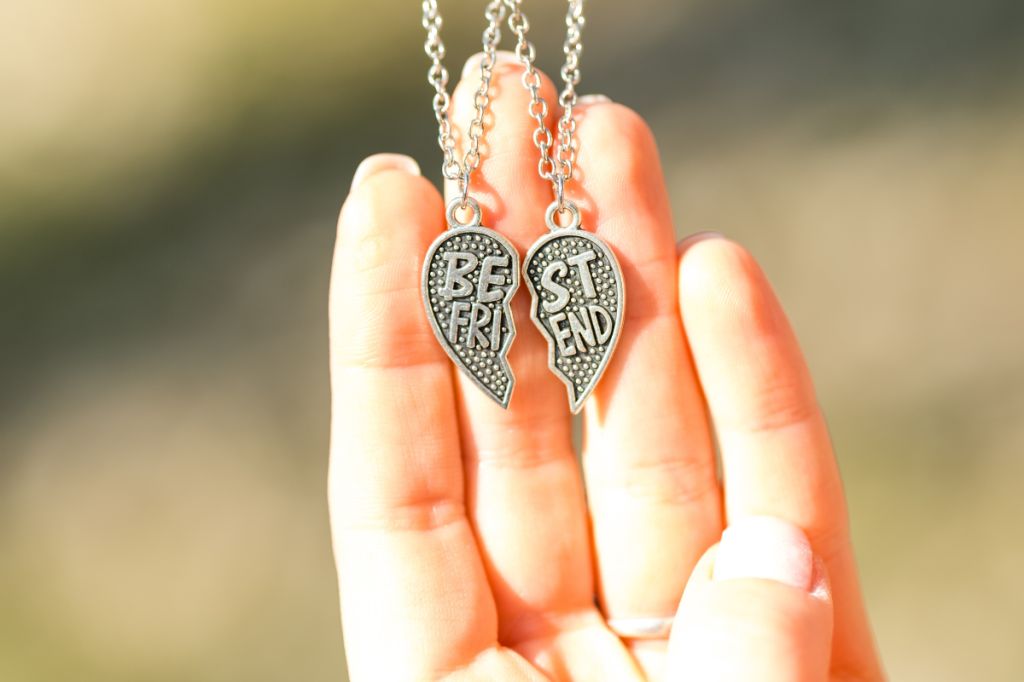
Changing what I’m looking for in friends
That encourages me to appreciate the fact that I do have close friends, and that I am making more connections with like-minded people through my work. Sure, we’re no cast-iron girl gang, but perhaps that’s something I will yearn for less in coming years: Dunbar says that as we mature, we sacrifice having so many friends to invest time and energy in those who are closest to us.
But what if I am still on the lookout for new pals? ‘It’s about finding the places that provide the opportunities to meet people,’ says Dunbar. ‘Where we notice things work really fast is singing and joining an amateur choir. What we call the “icebreaker effect” is instantaneous with complete strangers. You come out feeling as if you’ve known them for life.’
Both Baker and Dunbar advise trying to be relaxed about the situation. As you’re buffeted by life’s events – whether it’s a bereavement, divorce, relocation or a change of career – friendships will change with you. It’s very much the quality that counts over the quantity.
I’m gradually starting to realise that I haven’t failed at friendship, and perhaps I don’t need a posse to thrive after all. My long search to find it has made me open to welcoming new friendships at each stage of my life. I’m definitely going to join that choir though.
Words: Emma Reed
Photograph: Getty Images, Shutterstock