Your Shadow Doesn’t Need to Lead Anymore
As the long days of summer begin to wane and our shadows slowly grow larger again, it's easy to forget they never left. They were simply less noticeable in the light. This article explores how the protective patterns we developed to stay safe can quietly shape our lives, and how greater self-awareness can help us move from fear-driven choices to a more honest and wholehearted way of living.

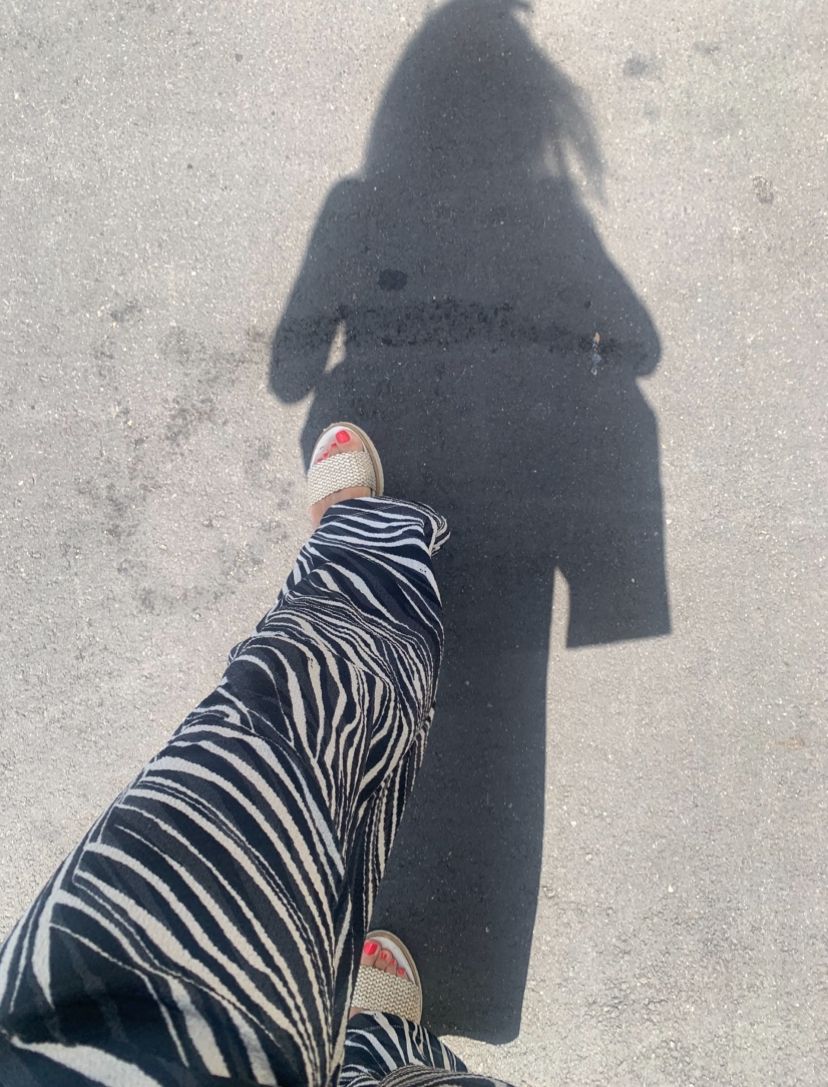
As summer arrives, something interesting happens to our shadows.
The higher the sun climbs in the sky, the smaller and less noticeable they become. At midday, they almost disappear beneath our feet.
Yet we know they haven’t gone anywhere.
They are still there, just less obvious.
Perhaps the same is true of our inner shadows.
We live in a world that rewards performance.
Be productive.
Be successful.
Be certain.
Be visible.
Keep going.
And many of us have become exceptionally good at it.
From the outside, life can appear full, functional, even impressive. Yet quietly, beneath the surface, many people feel disconnected from themselves. Exhausted not simply because life is hard, but because they have spent years becoming who they thought they needed to be.
This is often the work of what psychologist Carl Jung called the shadow.
The shadow is not the dark, dangerous part of ourselves. Rather, it is made up of the qualities, emotions, needs, and desires we learned to suppress because somewhere along the way we concluded they were unsafe, unacceptable, or inconvenient.
The shadow is not bad.
In fact, many shadow patterns begin as protection.
The people-pleaser learns how to stay connected.
The perfectionist learns how to earn approval.
The over-achiever learns how to feel worthy.
The controller learns how to feel safe.
The fiercely independent person learns how to avoid disappointment.
At first, these strategies help us survive.
They help us navigate family systems, schools, workplaces, relationships, and uncertain seasons of life.
But over time, survival strategies can quietly become identities.
And when that happens, fear begins to lead.
Not always loudly.
Often very successfully.
You can build an entire life from fear and still look accomplished on the outside.
That is why so many people today feel strangely fragmented. We know how to perform, but we no longer know how to fully inhabit ourselves.
We know how to achieve.
We know how to cope.
We know how to keep going.
But many of us have forgotten how to listen to ourselves.
This is where I believe a different kind of work is needed.
Not more self-improvement.
Not another version of optimisation.
But reorientation.
A return to the parts of ourselves that have been waiting patiently beneath the performance.
The values that matter most.
The strengths that come naturally.
The beliefs that shape our choices.
The dreams and desires that have been drowned out by responsibility, expectation, or fear.
Because transformation does not happen through becoming someone else.
It happens through becoming more honest about who you already are.
To live fully is not to become all light or all shadow.
It is to become aware enough to hold both.
To recognise the protective patterns that once served you without allowing them to dictate every decision.
This changes things.
The people-pleaser learns they can disappoint others and still belong.
The perfectionist learns their worth is not earned through flawless performance.
The controller learns uncertainty, while uncomfortable, is survivable.
The over-achiever discovers that rest is not failure.
And slowly, life becomes less performative and more coherent.
You stop organising your choices around fear.
You begin making decisions from alignment instead of protection.
You stop asking:
“What will keep me safe?”
And start asking:
“What feels true?”
This does not mean life suddenly becomes easy or certain.
It means you become less fragmented within yourself.
More connected.
More curious.
More creative.
More able to move through uncertainty without abandoning who you are.
Perhaps this is what maturity really looks like:
not becoming fearless,
but becoming aware enough to notice what is driving us,
and brave enough to choose differently.
Because your shadow may always have a voice.
But it does not need to lead anymore.
Just as the summer sun does not remove our shadow, greater self-awareness does not eliminate our fears, insecurities, or protective instincts.
It simply helps us see them more clearly.
And perhaps that is enough.
Not to live without a shadow.
But to live in such a way that it no longer determines our direction.
Reflection: Meeting Your Shadow
As you enjoy the longer days of summer, take a moment to notice what may still be quietly following you.
- Which protective pattern shows up most often in your life?
When you feel uncertain, vulnerable, or under pressure, do you tend to please, perfect, achieve, control, withdraw, or go it alone? - What might that pattern be trying to protect?
Approach it with curiosity rather than judgement. What fear, belief, or past experience taught you that this strategy was necessary? - What would become possible if this part of you no longer had to lead?
What choice, conversation, boundary, or next step might feel more aligned with your values, strengths, and deepest sense of self?
Like the shadows cast on a summer’s day, our inner shadows do not disappear simply because we stop noticing them.
The invitation is not to get rid of your shadow.
It is to understand it.
To thank it for how it once protected you.
And then to choose, with greater awareness, what will guide your next step forward.
Your shadow may walk beside you.
But it does not have to choose your direction.
I’m Sarah Cretegny, an Accredited Transitions Coach. I help individuals, groups and teams to navigate real life transitions without losing themselves.
I’m particularly effective when time is limited and the stakes are high. I draw on evidence-based coaching approaches, strengths expertise, and my lived experience of balancing leadership, family life, and international living. I’m deeply passionate about partnering with people to coach their wild, because the world needs more radically authentic leaders now more than ever.
I am based in Lausanne, Switzerland and coach virtually globally. Find my links: https://linktr.ee/discover.your.wild

Coach Your Wild – Sarah Cretegny
Transitions Coach
Sarah Cretegny is a Transitions Coach, Founder of Coach Your Wild. and Author of "The Wild Within - Finding yourself in times of change." Sarah works alongside people navigating changes in their role, work or world, creating space to reconnect with who they are, notice what matters now and find their own way forward. Originally from the UK and now living in Switzerland with her husband and three teenage children, Sarah has personally navigated changing countries, careers, roles and seasons of life. Through Coach Your Wild, she offers 1:1 coaching virtually, in person and through walking coaching. Something changing in your role, work or world? Start with one conversation. Coaching for real life. Real transitions. The real you. Coach Your Wild is a creative oasis in the wildness of life – your thinking partner for what matters most. International Coaching Federation Associate Certified Coach, Gallup certified CliftonStrengths Coach and Postgraduate Certificate in Business and Personal Coaching.