
Netflix’s new Charles Manson documentary uncovers chilling insight into his disturbed mind
unheard prison recordings of Manson and firsthand accounts of those who lived through his orchestrated murders, offer a fresh perspective on one of the defining criminal cases of the
By 
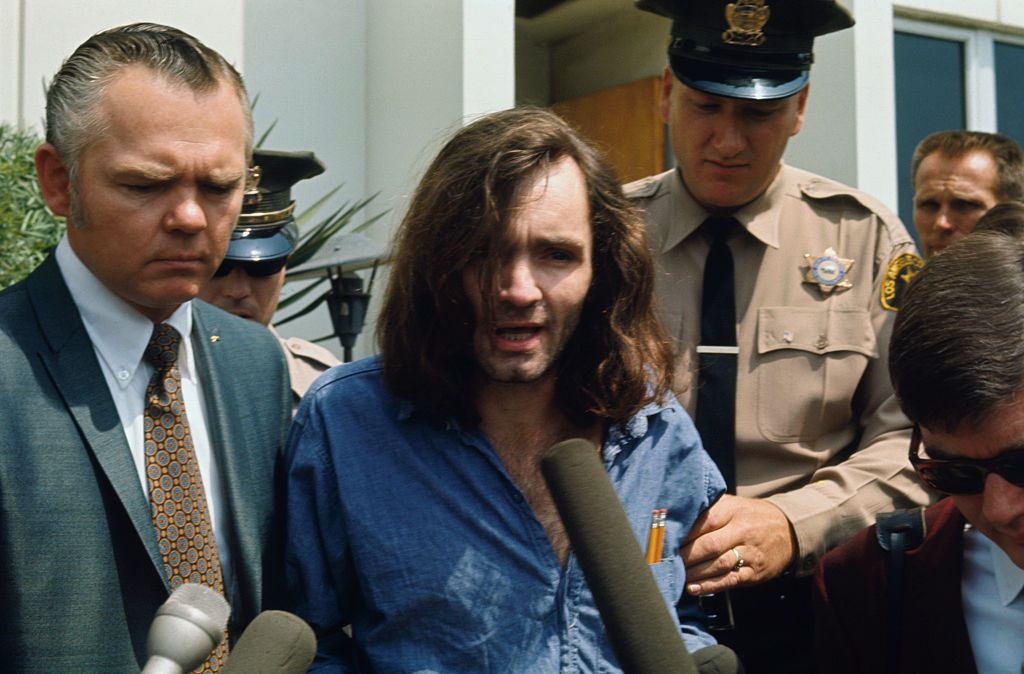
In Conversations with a Killer: The Charles Manson Tapes reviously unheard prison recordings of Manson and firsthand accounts of those who lived through his orchestrated murders, offer a fresh perspective on one of the defining criminal cases of the twentieth century.
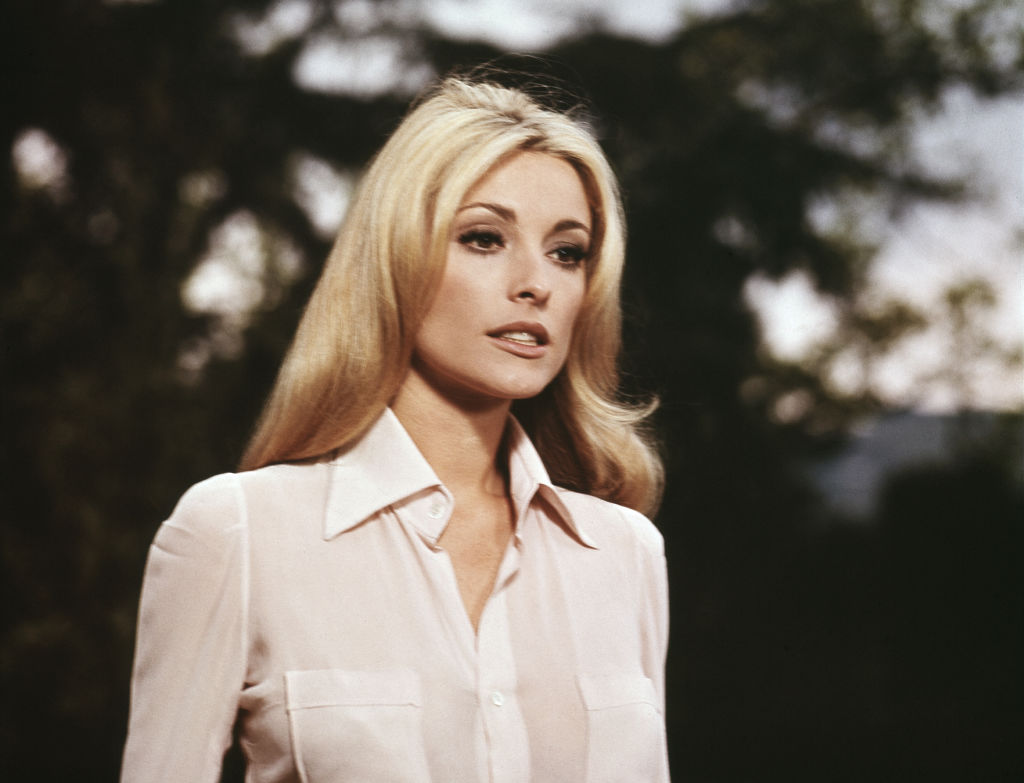
The murder of pregnant actress Sharon Tate and six other people in 1969, committed by members of the Manson Family exposed the dark and disturbing reality in Hollywood Hills.
The brutal killings took place over two nights in affluent Los Angeles neighbourhoods. On 8 August 1969, members of the Manson Family murdered Sharon Tate and four others at her home in Benedict Canyon.
The following night, Manson’s followers murdered two others, married couple Leno and Rosemary LaBianca, in their home in LA’s Los Feliz neighborhood.
Luring his followers
At the height of the late-1960s counterculture movement, Manson – who spent much of his early life in reform schools and prison for petty crimes – attracted young, disillusioned followers with promises of love and freedom from society’s rules.
Former Family members say that once he had drawn them into his world, Manson used psychological control and manipulation to coerce them into theft, burglary, assault and, ultimately, murder.
For decades, the accepted story behind the Charles Manson murders was that the cult leader ordered his followers to kill in an attempt to start an apocalyptic race war he called “Helter Skelter”.
But a new Netflix documentary challenges that notorious theory, arguing that the 1969 killings were instead the result of a chaotic series of crimes, cover-ups and disastrous decisions.
The three-part Conversations with a Killer: The Charles Manson Tapes features previously unreleased prison audio from Manson and members of his so-called Family, including Charles “Tex” Watson, Susan Atkins and Leslie Van Houten.
The series also draws on 137 phone calls Manson made to a retired detective during the final nine years of his life.
“As we bring Conversations with a Killer to a close, I wanted our final season to focus on the figure who, more than anyone else, ushered in the modern era of America’s fascination with true crime,” director and executive producer Joe Berlinger told Netflix.
The theory that ‘never added up’
Prosecutors later argued that Manson believed a race war was imminent and interpreted songs from the Beatles’ White Album as messages about the coming conflict. They claimed the Tate-LaBianca murders were designed to provoke that war.
But after studying the previously unreleased recordings, Berlinger argues the murders were instead a desperate attempt to cover up “a series of blunders.”
“This whole idea of starting a race war was a false idea,” Berlinger told Fox News Digital. “He certainly believed a race war was coming, or at least that’s what he told his followers to control them. But the murders, in particular the Tate and LaBianca murders, were an attempt to get associate Bobby Beausoleil out of prison. He told his followers, ‘He’s my friend. You guys owe me a favor. Let’s get him out of prison.’”
“The truth is I believe, and others believe, that if they had succeeded in this crazy idea of getting Bobby Beausoleil out of prison, I think Manson would’ve killed him because he was a liability,” said Berlinger.
A botched drug deal and a brutal murder
According to the documentary, the chain of events began when Tex Watson stole money from drug dealer Bernard “Lotsapoppa” Crowe, prompting Crowe to threaten retaliation.
Manson later shot Crowe and mistakenly believed he had killed him. Although Crowe was not a member of the Black Panthers, Manson reportedly became convinced the organisation would seek revenge.
Berlinger told Fox News Digital: “He goes back to Spahn Ranch and becomes paranoid that the Black Panthers are going to come after him. He becomes friends with Bobby, tells him to join the family and also to help protect the ranch. Bobby becomes tight with some bikers who were also invited to protect the ranch from the Black Panthers.”
Manson invited members of the Straight Satans motorcycle gang to Spahn Ranch to provide protection, allegedly offering them access to his female followers in return.
But the bikers also wanted drugs. Beausoleil obtained a supply from music teacher Gary Hinman, but the gang complained about its quality and demanded its money back.
“Bobby tries to get his money back from Gary and can’t get it,” said Berlinger.
Court records:
Court records show that Manson went to Hinman’s home during the confrontation and slashed his face with a sword, cutting from his left ear towards his chin. Hinman was held and tortured for around three days before Beausoleil stabbed him to death.
“Gary Hinman is killed because Manson comes in, wields a sword and then tells Bobby ‘finish the job’ to cover the tracks,” Berlinger said.
The words “Political Piggy” were written on a wall in Hinman’s blood, alongside a paw print intended to implicate the Black Panthers.
Beausoleil was arrested around a week after Hinman’s body was discovered. He was driving Hinman’s vehicle and, according to Berlinger, had “the murder weapon stupidly in the stolen car.”
The Tate-LaBianca murders
Berlinger argues that Manson then ordered further killings in an attempt to persuade the police that Beausoleil could not have murdered Hinman.
On August 8, 1969, Manson’s followers entered a home in LA’s Benedict Canyon that had previously been rented by music producer Terry Melcher, who had declined to sign Manson to a recording contract.
Watson, Atkins and Patricia Krenwinkel murdered actress Sharon Tate, who was eight-and-a-half months pregnant, along with Abigail Folger, Wojciech Frykowski, Jay Sebring and Steven Parent. Tate’s husband, director Roman Polanski, was working in London at the time.
“The murder is tried to be made to look like it was part of Gary Hinman’s murder,” said Berlinger. “But when Manson picks up the paper the next day, and there’s no information about these two murders being linked, they do another murder. The logic is, ‘We’ve got to make people think that Bobby, who is sitting in prison, is not guilty.’”
“This was all a series of blunders, a bunch of bad, spontaneous decision-making.”
The following night, wealthy grocer Leno LaBianca and his wife, Rosemary, were stabbed to death at their Los Feliz home. The killers left words and phrases written in blood, including “Pigs” and the misspelled “Healter Skelter”.
‘A brilliant legal theory, but a false story’
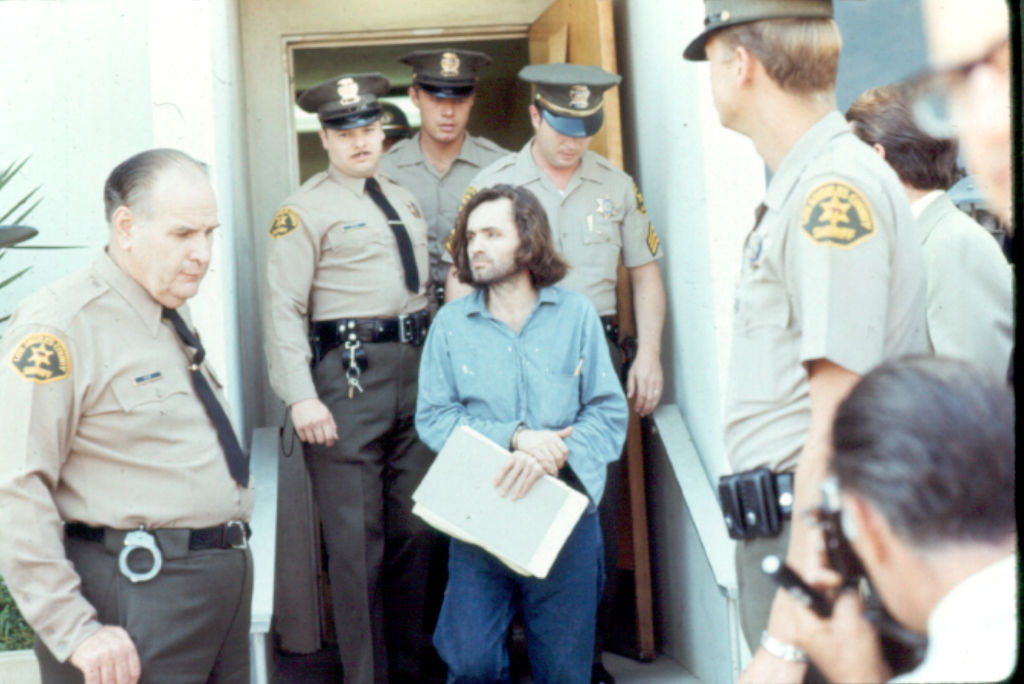
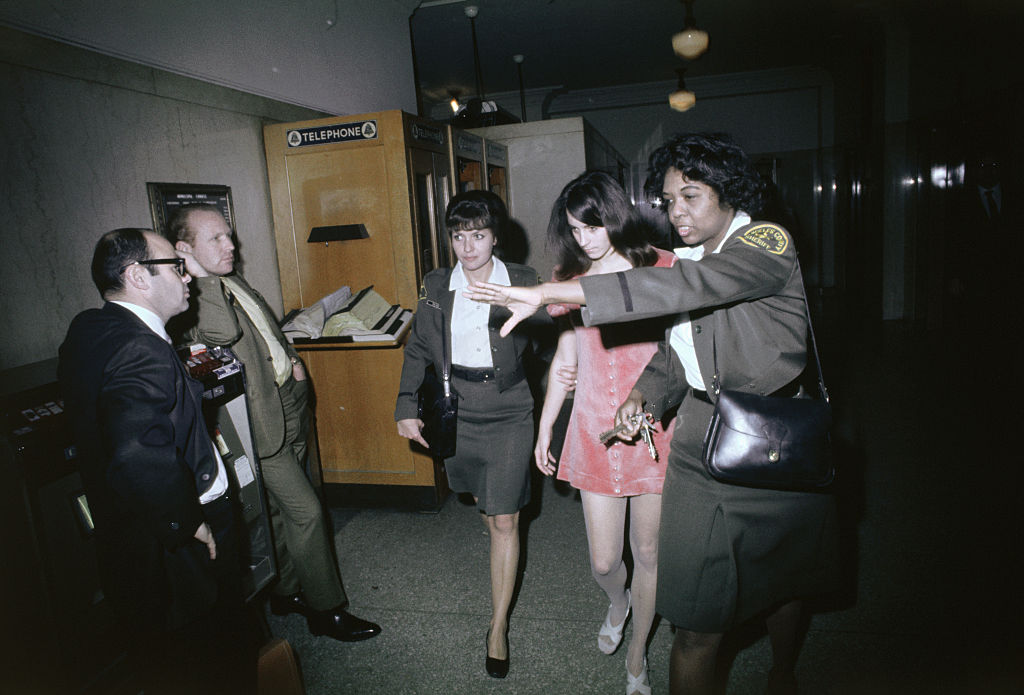
Manson was arrested in October 1969 and convicted in 1971 alongside Atkins, Krenwinkel and Van Houten. Watson was convicted in a separate trial later that year.
Although Manson was not present during the Tate-LaBianca killings, prosecutors persuaded the jury that he had masterminded the crimes.
“Prosecutor Vincent Bugliosi” had to come up with a legal theory to convict a guy who actually didn’t do the killings,” Berlinger said. “Manson wasn’t even there when the Tate-LaBianca killings took place. So how do you convict somebody who wasn’t there? Well, you come up with this organizing principle that he convinced his followers that a race war was coming, and he was trying to make that race war happen. It was a brilliant legal theory, but it’s a false story.”
Sentencing:
Manson and four of his followers were sentenced to death, but their sentences were commuted to life imprisonment when California temporarily abolished the death penalty in 1972.
Manson died aged 83 in November 2017 after almost five decades behind bars. Atkins died in prison in 2009, while Van Houten was released on parole in 2023. Watson and Krenwinkel remain incarcerated.
“The Manson murders are much more tragic, but much more banal than this idea of some crazy cult trying to start a race war,” Berlinger continued.
“This was a drug deal gone bad, trying to cover up Gary Hinman’s killing by doing another murder the next day to make it look like a copycat murder, which were the Tate murders. And when that murder didn’t hit newspapers like a Black Panther murder, they did the LaBianca murders. It’s a series of blunders by people who were trying to cover their tracks, not this grand scheme of ‘Helter Skelter.’”
Berlinger says the series aims to move beyond Manson’s mythology and examine the manipulation that allowed him to exert such control over his followers.
“Rather than adding to the mythology surrounding Manson, our goal was to examine the systems of manipulation and control he created, while centering the voices of those who lived through it and continue to grapple with its aftermath,” he says. “Their firsthand accounts — along with remarkable archival material, including never-before-heard prison phone recordings of Manson himself — offer a fresh perspective on one of the defining criminal cases of the twentieth century.”