I was burned out and overwhelmed – but picking up my paintbrush helped me reclaim joy again
By  Psychologies
In a culture that prizes productivity, reclaiming joy through creativity isn’t indulgent — it’s a powerful act of self-alignment that fuels energy, confidence and mental health
When was the last time you did something purely because it delighted you? Not because it was useful, productive or self-improving — but because it made you feel energised, absorbed, more fully yourself. For many adults, that question takes a moment to answer. Somewhere along the way, joy becomes optional.
I’d always loved to create. Sewing, painting, knitting. As children, we create instinctively. We draw, build, dance, write stories and lose ourselves in books. We don’t question whether it’s worthwhile. We simply follow what feels exciting.
Adulthood, however, expands to fill every available space. Work, relationships, family, logistics and invisible emotional labour accumulate. We become efficient, dependable and capable. And gradually — almost imperceptibly — we stop doing the things that once lit us up.

How adulthood sidelines creativity
Executive coach and motivational speaker Taz Thornton sees this often in her clients. Over time, she says, we start saying yes to what’s needed and no to what nourishes us. It’s rarely a dramatic decision. It’s a cancelled class here, a hobby postponed there, a guitar gathering dust or a novel left unfinished on the bedside table. Creativity becomes something we’ll return to ‘when things calm down’. They rarely do.
Thornton has noticed something interesting. Many men — not all, but often — continue engaging in the hobbies they loved when they were younger: football, cycling, gaming, music, weekends away with friends. Rather than criticising that pattern, she sees it as instructive. There’s something powerful, she says, about staying connected to what gives you a buzz. That thread of enjoyment can run right through your life.
The takeaway isn’t comparison; it’s permission. Adults of any gender benefit from maintaining spaces that are simply for pleasure and self-expression. Hobbies aren’t indulgent extras. They’re anchors. They remind us who we are outside of obligation. When we abandon them entirely, life can begin to feel functional rather than vivid.
The quiet belief that keeps us settling
One of the biggest blocks to reclaiming joy is the quiet belief that wanting more is ungrateful. I should be happy with what I have. I should be content. I should just get on with it. Thornton challenges that immediately. If someone you loved said, ‘I’ll just settle,’ would you want that for them? We encourage our friends and children to thrive, yet quietly ask ourselves to make do.
Reclaiming joy isn’t about dismantling your life. It’s about expansion rather than escape. It’s about noticing where you’ve slipped into autopilot and asking whether it still fits.
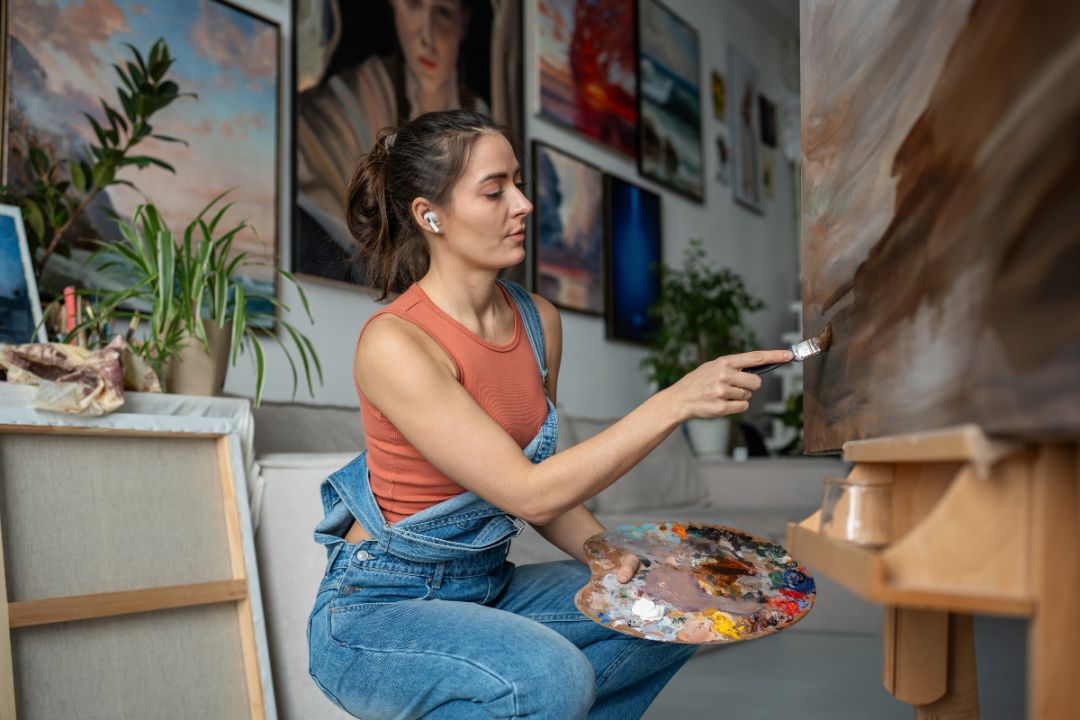
It’s telling that when I did start to paint again — after a break of decades — it was to help my son. He needed support with a school project, and of course, I was there to help. But the joy I felt at getting my hands dirty in the paint was massive. I felt alive! Getting in touch with my creativity really did help me to reclaim my joy.
Creativity as alignment, not aesthetics
Thornton’s not surprised. She lives this life, and embodies what she teaches. With bright pink hair, visible tattoos and bold slogan T-shirts paired with sharp tailoring, her appearance is expressive and unapologetically creative. But she’s quick to clarify that creativity doesn’t have to look like hers. It isn’t about dressing a certain way, she says; it’s about alignment. Does how you show up reflect who you actually are?
For years, she followed a more conventional mould — natural hair, corporate pinstripes, fitting neatly into expectations. Over time, she realised she had shaped herself according to what was considered appropriate rather than what felt authentic. The shift wasn’t rebellion. It was congruence.
Creativity isn’t limited to canvases and instruments. It shows up in how we dress, speak, decorate our homes and structure our days. It’s the difference between living by default and living by design.

How to reconnect with creative joy as an adult
If joy feels distant, Thornton suggests starting with a pause. When did you last feel completely absorbed? When did you last feel energised?
Then go further. What did you love doing as a child or teenager? Roller skating, writing stories, sewing, climbing, coding, painting, making playlists, reading for hours under the covers. When did you last do anything like that?
Often, the answer is years ago. We assume those parts of us were just phases, she says. But they’re still there. The aim isn’t to recreate childhood exactly; it’s to reconnect with the feeling — curiosity, immersion, freedom.
One reason adults hesitate to return to creative pursuits is fear of being bad at them. We’re used to competence. We measure outcomes and compare ourselves. Children don’t.
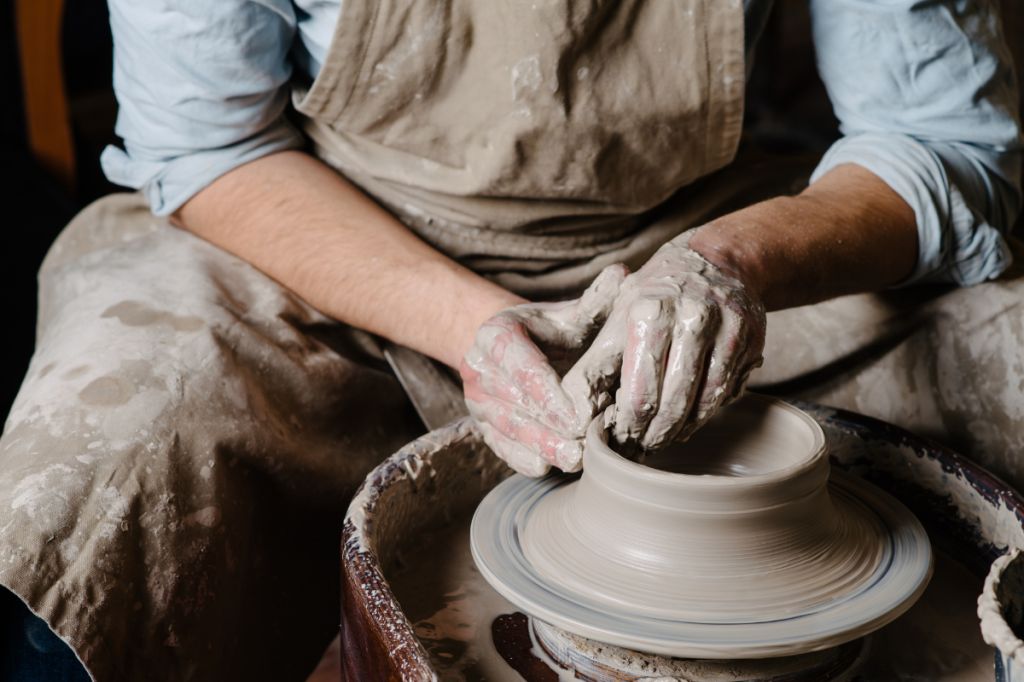
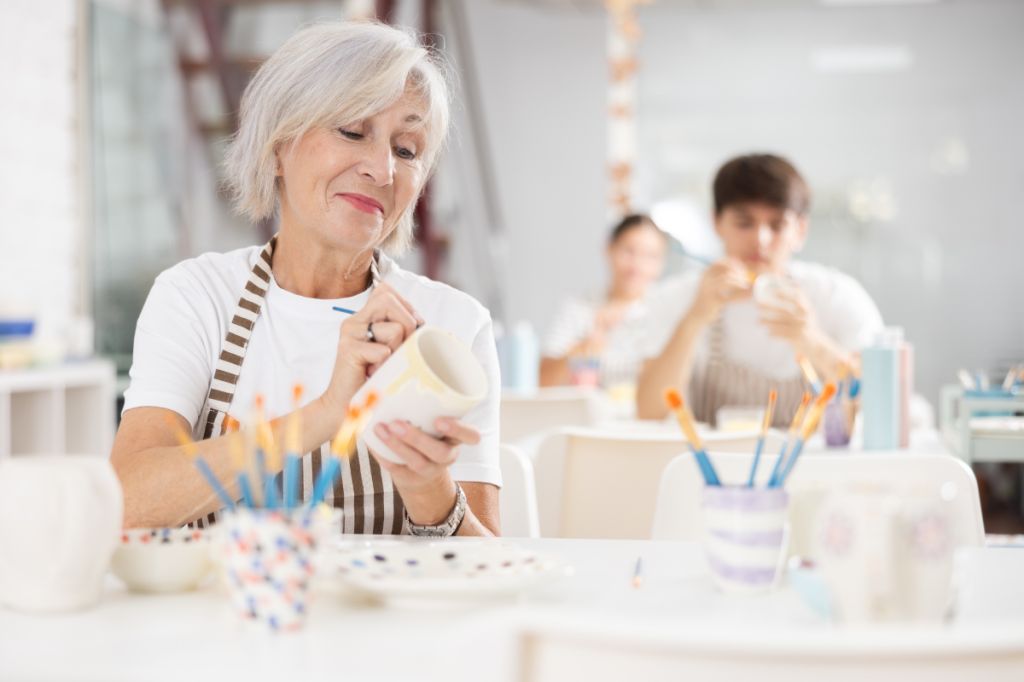
Reclaiming joy means lowering the stakes. Buying the brightly coloured trainers because you love them. Taking a pottery class without needing to excel. Reading a novel in one sitting. Dancing in your kitchen. Painting with your hands and making a mess. It’s about expression, not evaluation.
Small acts matter. Each time you choose something that feels alive, you reinforce the message that your aliveness matters.
Why creativity fuels resilience and mental wellbeing
Thornton likens it to updating a computer system. Over time, we accumulate programmes — beliefs about who we’re supposed to be: sensible, accommodating, efficient, agreeable. Many were absorbed unconsciously. Occasionally, it’s worth asking: is this belief mine? Does it energise me or restrict me?
Reclaiming joy through creativity often requires gently uninstalling outdated scripts. Saying no without over-explaining. Protecting time that isn’t ‘useful’. Trying something new without a guarantee of mastery. Courage grows with repetition. What feels bold the first time soon becomes natural.
In a culture that prizes productivity, choosing creativity can feel frivolous. It isn’t. Play is not the opposite of seriousness; it is a source of resilience. It is often in moments of absorption — cooking, running, painting, building, singing, gardening — that we feel most present.
Joy isn’t a reward for finishing everything else. It’s fuel. The real question isn’t whether you have time for it. It’s whether you’re ready to give yourself permission.
Meet the Expert Taz Thornton is an inspirational speaker, visibility coach and motivator who helps people reboot their lives and businesses