More than just good friends? The psychological benefits of dog ownership
Rather than the predicted baby boom, the pandemic prompted a craze for pets - and puppies in particular. Rebecca Frank explores why we feel such a special bond with our four-legged companions
By  Psychologies
With 13 million dogs now living in the UK — a figure that could soon rival the number of children in the country — our attachment to canine companions is more than a passing post-pandemic trend. In anxious, uncertain times, dogs are providing something deeply human: connection, comfort and a renewed sense of purpose.
As the puppy boom continues, our growing dog ownership story is as much about mental health as it is about pets. From easing loneliness and anxiety to creating daily structure and encouraging outdoor exercise, the psychological benefits of having a dog are increasingly recognised by researchers and therapists alike. In homes reshaped by remote working, shifting family dynamics and record-low birth rates, dogs have become emotional anchors — offering companionship, stress relief and a reliable source of unconditional affection in uncertain times.
Understanding the puppy boom
It’s a drizzly, cold morning and I’m watching my little one play in the leaves. ‘How old?’ asks a smiling woman, strolling towards me. ‘Still a baby,’ I say, dashing over as Lola lunges into a muddy puddle. ‘Just you wait for the teenage phase,’ she says. ‘That’s when I nearly handed Bertie back!’ I look behind her as Bertie bounds towards us, all long limbs and scruffy hair, tongue hanging out of his open mouth. ‘Cute!’ I say, and she smiles proudly.
We’re talking about dogs, of course, although anyone listening might easily think we were new mothers, rehoming jokes aside. Since acquiring Lola the labradoodle, a lockdown puppy, my early morning pre-work routine involves a trip to the park or woods, where I invariably end up talking about feeding and sleeping habits, toilet training and behaviour with similarly obsessed, slightly crazed new puppy owners. After passing a few more pleasantries with Bertie’s mum, I do a couple of laps of the park, whizzing off the odd email as I walk, and wondering if Lola is tired enough yet: too soon and I’ll regret it in an hour, when I’m having a soggy ball repeatedly placed on my lap as I work. I think how it’s just like a decade ago when my children were toddlers… only this time I am, marginally, less tired.
The pull of a puppy
Head to any park in the morning, especially now the weather is finally starting to brighten a little, and you’ll probably find a similar scene. Recent figures show a steep increase in the number of dog adoptions and purchases since the pandemic, with the number of pet dogs in the UK rising from nine to 12.5 million between 2019 and 2021, and now predicted to be well over 13 million. The headlines tell us that dogs outnumber children in one in three neighbourhoods.
But when you consider what else the headlines tell us, it’s not hard to understand why, in these uncertain and anxiety-provoking times, many of us have felt the pull of a puppy.
The psychological benefits of having a dog
The vet Rory Cowlam, author of The Secret Life Of A Vet (Hodder & Stoughton, £9.99), has observed the rising number of new dog owners at his practice. ‘Some of it comes down to simply having more time to take on a new pet,’ he says, ‘but there is also a psychological aspect. The past years have been stressful, and we know from studies and our personal experiences that dogs are excellent for our mental health and wellbeing. They help tackle depression and myriad mental health issues.’
In numerous studies, pets have been proven to make us feel happier, providing company, and something to love and feel loved by. Study after study has shown that dogs can support mental health and emotional wellbeing. Stroking a dog can lower cortisol levels, helping to reduce stress and anxiety. Regular dog walking increases physical activity, which is closely linked to improved mood and reduced symptoms of depression.
The need to feel needed
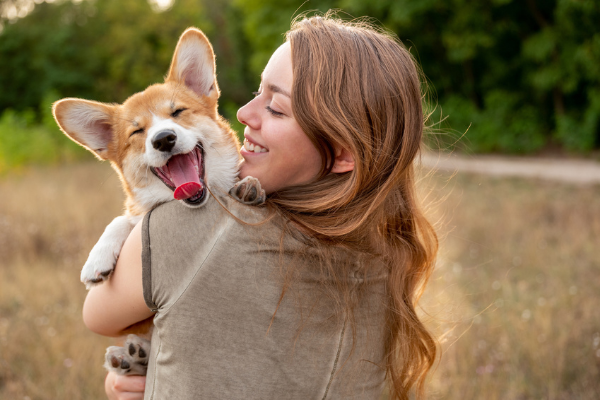
But there is more to it than simply the mechanical benefits of more walking and falling cortisol levels. One father of teenage girls confides quietly in the park that it’s ‘nice to have someone in the house who’s pleased to see me when I get home from work’. His dog gazes up adoringly, uncomplicated in its devotion. In households where children are growing up or moving out, dogs fill not just physical space, but emotional space too. They restore a sense of being needed.
Millennials, too, are embracing dog ownership — sometimes delaying parenthood, sometimes rethinking it entirely. In 2021, UK birth rates fell to a record low, with the average number of children per family at 1.5. For some couples, a dog offers a way to nurture and care without the permanence and pressure of raising a child. For others, it simply offers certainty in uncertain times: love that is immediate and reciprocal.

More than just a best friend
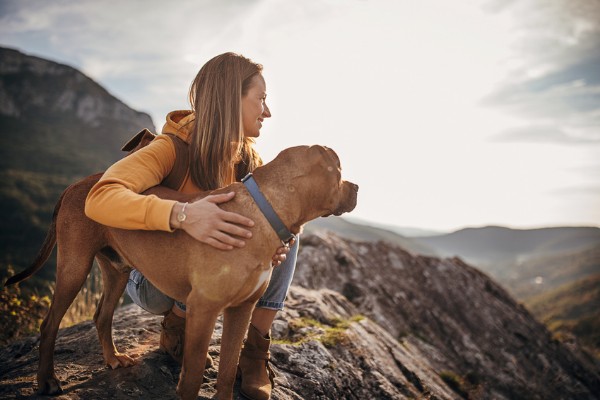
Beyond companionship, dogs give us structure. They pull us out of bed on grey mornings. They insist on fresh air when we’d rather scroll. Research shows dog owners walk thousands more steps each day than non-owners — but the psychological benefit may matter even more than the physical. Routine is grounding. Responsibility can be protective. When anxiety spirals, the simple act of clipping on a lead and stepping outside becomes a form of mindfulness.
Dogs also widen our social circles. From spontaneous chats between strangers to puppy training classes and walking groups, they create low-pressure opportunities for connection. In an era marked by loneliness, especially after long stretches of isolation, that matters.
The downsides of dog ownership
Of course, it’s not all fluffy cuddles. Puppies are exhausting. They chew, they wake in the night, they test boundaries. According to Dogs Trust, traffic to its ‘giving up your dog’ pages surged by 182 per cent after lockdown restrictions lifted in 2021. The reality of juggling work, family and social life with a high-energy animal can be overwhelming.
Cowlam cautions that anxiety can run both ways. Owners who worry excessively can inadvertently create nervous dogs. ‘If you’re constantly anxious around your dog,’ he explains, ‘they can develop behavioural problems.’ Loving a dog isn’t about hovering over them. It’s about offering calm leadership and realistic expectations.
There’s also a cultural shift at play. From boutique dog hotels to debates about ‘pawternity leave’, we risk over-humanising our pets. While strong bonds are healthy, projecting all our unmet emotional needs onto a dog can blur boundaries. Dogs thrive when they’re allowed to be dogs — social, resilient, adaptable.
The transformation of owning a dog
And yet, despite the challenges, the emotional return on investment remains profound. When my children were toddlers, I was permanently exhausted. This time around, with a puppy at my feet, I am — marginally — less tired, and perhaps more aware. I notice the dawn chorus while waiting in the garden. I look up at the stars on late-night toilet trips. I walk in rain I would once have avoided.
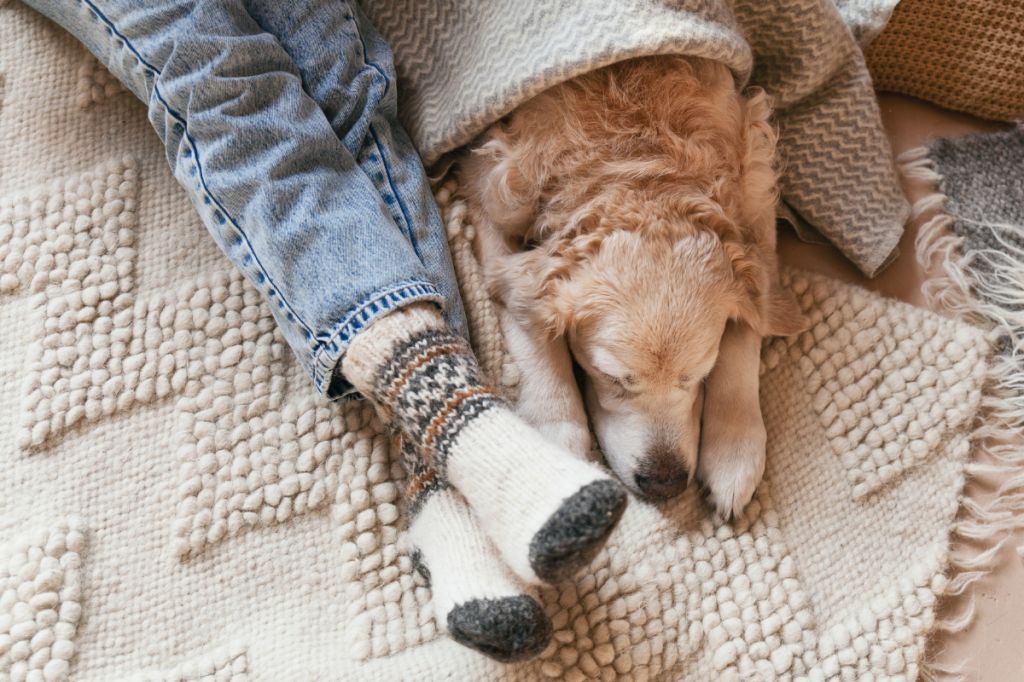
There is something quietly transformative about being greeted with unfiltered joy, about feeling a warm, steady presence at your feet while you work. In a culture that prizes productivity and independence, dogs offer something softer: attachment without judgement, affection without agenda.
So why are we still getting dogs post-pandemic? Because even as life speeds back up, many of us have realised what we were missing. Structure. Touch. Companionship. A reason to step outside. A living reminder that we are needed.