
What does it mean to identify as agender?
Our sense of self underpins confidence and wellbeing – who we are, what we do, where we belong. But what if these things are not clear or if life undermines them? In the first of our identity series, Ellen Tout speaks to Tyler Ford about their experience of being agender
By  Ellen Tout
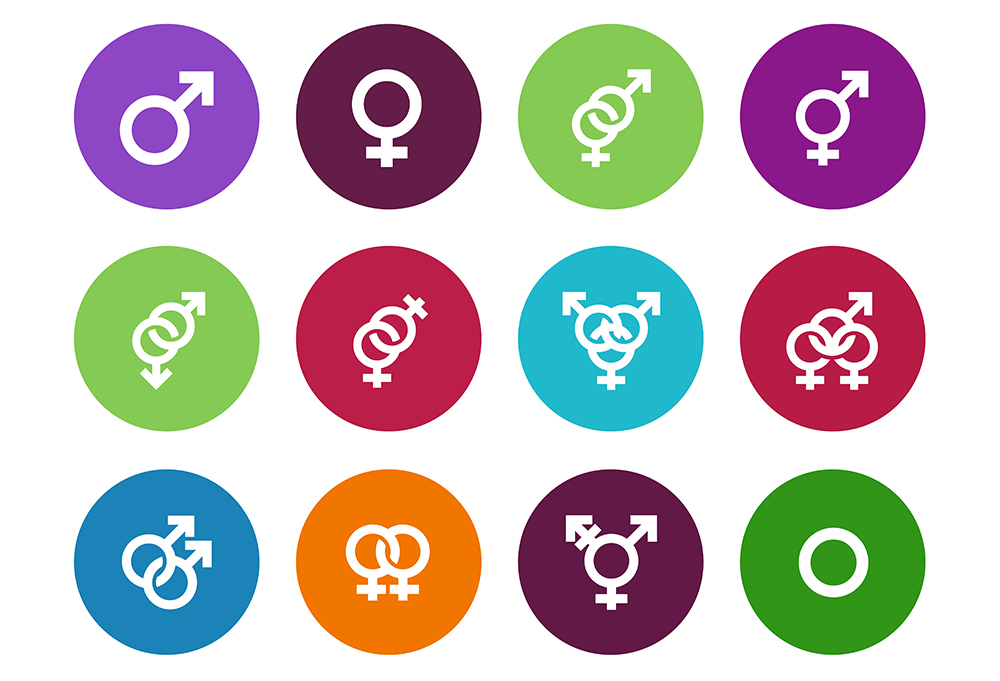
Half of all millennials believe gender shouldn’t be limited to the categories of male and female, according to Fusion’s massive millennial poll. Raised as a girl, and now identifying as agender, Tyler Ford is a 25-year-old writer, speaker and campaigner for transgender awareness.
‘I grew up confused about my gender. No one around me ever talked about gender in a way that I related to. There was never any room for ambiguity, just, ‘You’re either a man or a woman.’ I never had the words to describe myself or how I felt.
My mum loved me for me, and let me wear what I wanted, but you can only experiment so much when you lack a fundamental understanding of who you are. At secondary school, I started wearing skirts and make-up to look hot for the boys, because that’s what seemed to matter, but I soon became depressed and began hiding my body.
I was trying to figure out my identity and sexuality, but I didn’t even know that my gender could be questioned. Then at college, people started to misgender me. Dinner ladies would say, ‘What would you like, sir?’ and I would think: ‘Wait, what?’ It would happen so often that I began to think: ‘What are these people seeing that I’m not?’
Eventually, I saw a video of a trans man online and thought, ‘This could be me’. I was 20 and it was the first time I’d ever heard the term ‘transgender’. I started taking hormones and lived as a trans man for two years, but even this felt wrong. I knew I wasn’t really a man.
So I decided to experiment on my own to find who I was, and that required a lot of introspection. I finally realised that if I didn’t find the answers then that’s OK, but I need to do what feels right for me at any given time. I settled upon the term ‘agender’ and here I am, two years later, a beautiful and out agender person.
Every moment of my life, I’m coming out as agender. Every time I meet someone, I have to ask them to use the pronoun ‘they’ instead of ‘he’ or ‘she’. It’s very important to me that I support myself emotionally. Being confident, loving myself and being comfortable with who I am definitely helps in the face of adversity.
I live my life by what feels right for me and I’ll always be true to myself, even when it’s hard. That carries me through everything I do; speaking in schools and educating people.
Lacking a role model was a big factor in why I felt so confused growing up, so I want to be the representation for others that I never had.’
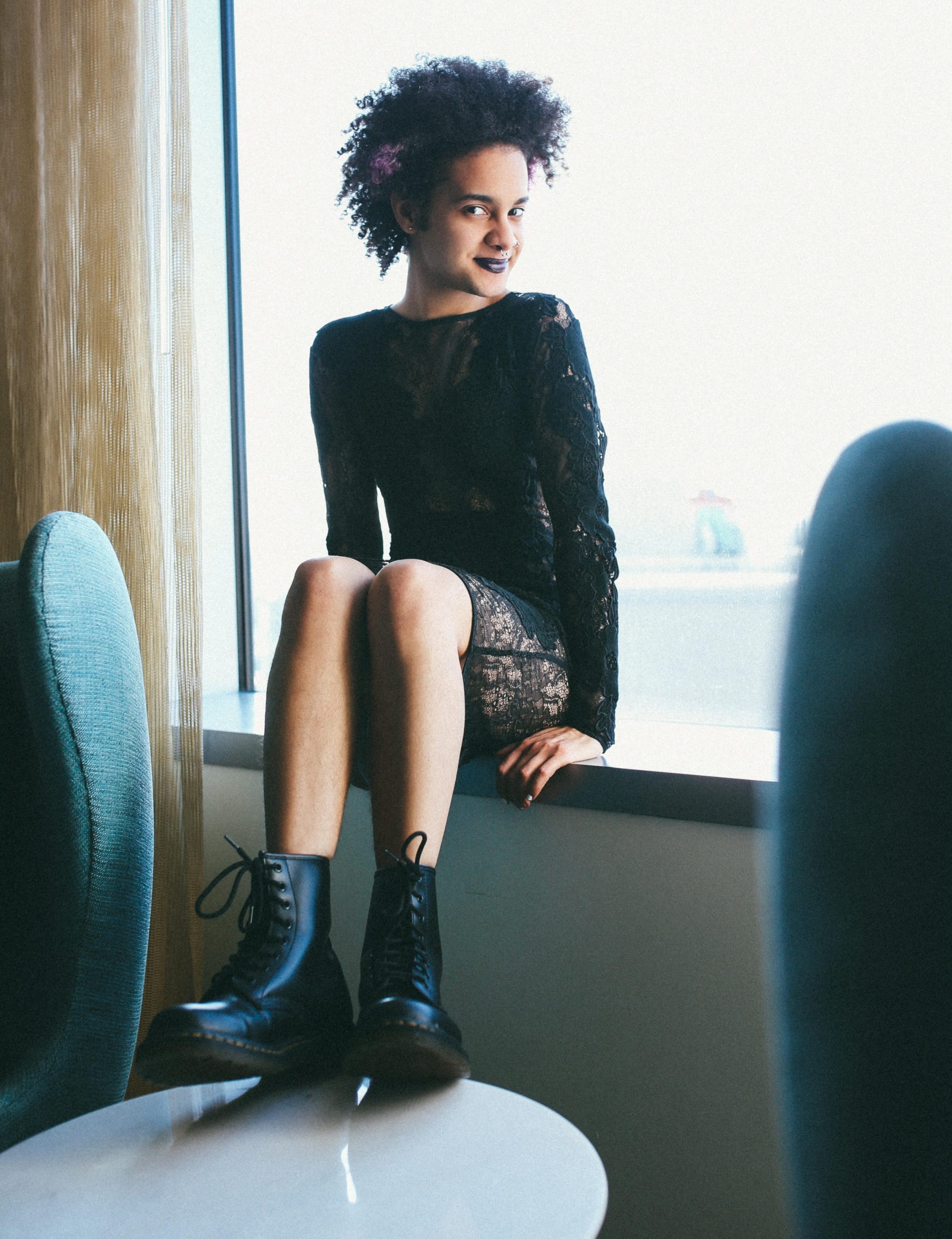
Photo of Tyler Ford by Jones Crow
Interview: Ellen Tout